 By st20113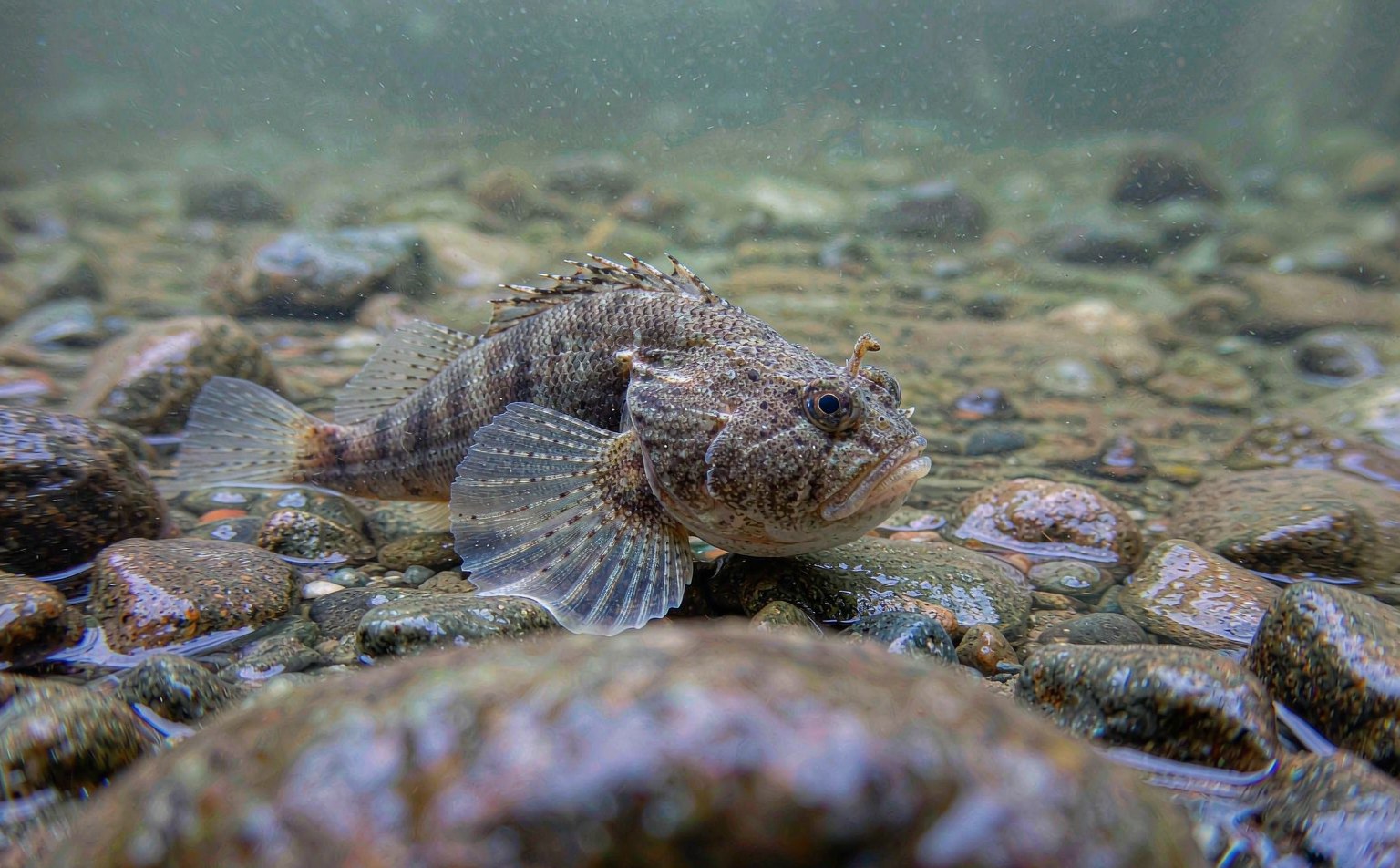
Cottus gobio | European Bullhead
Introduction
The European Bullhead (Cottus gobio) is a small, broad-headed river fish of the sculpin family, common in clean streams and rivers across Europe. Also known as the miller’s thumb for the shape of its head, it is superbly camouflaged against stones and spends its life close to the bed. Lacking a swim bladder, it is a poor long-distance swimmer and instead creeps and lurks among gravel and rocks, ambushing tiny prey. Though easily overlooked, it is one of the most characteristic fish of healthy, fast-flowing upland and lowland rivers.
Taxonomy
Cottus gobio belongs to the family Cottidae, the sculpins, a widespread group of bottom-dwelling fishes more closely related to the cods than to carps. It is the common European freshwater sculpin and is distinct from the marine bullheads and sea scorpions of coastal waters. Its broad, flattened head and merged pectoral fins set it apart from the slender cyprinids it lives alongside, such as the Minnow. Several local forms exist, and in some regions what was called C. gobio has been split into separate species, but the familiar river bullhead remains the best known. It has no recognised subspecies across its main range.
Physical Characteristics
Adults are typically 6 to 10 centimetres long, with a large, flattened, tadpole-like head and a tapering body that lacks scales. The skin is smooth and slimy, mottled with browns, greys and blacks that match the riverbed, and males are often darker and more contrastingly marked than females. The eyes sit high on the head, giving good upward vision for spotting prey. The pectoral fins are broad and fan-like, used like arms to hold position in current, and the pelvic fins are small. There are two small dorsal fins and a rounded tail. A key feature is the absence of a gas bladder, so the fish sinks rather than floats and stays grounded.
Habitat
Bullheads need clear, well-oxygenated streams and rivers with gravel, cobble or stone bottoms and moderate to fast flow. They hide by day under stones and among roots, becoming active at night to feed. They are strongly sensitive to silt and low oxygen and disappear from channels that have been muddy or polluted, which makes them a reliable indicator of river quality. They share cool, stony runs with the Brown Trout and the Atlantic Salmon, both of which also depend on unpolluted, gravely water, and with the European Perch of slower margins.
Diet
Bullheads are sit-and-wait predators. From a stone they dart out to seize mayfly and caddisfly larvae, small crustaceans, worms and the fry of other fish, using their wide mouths to suck prey from the bottom. They also take drifting insects caught in the current. Because they forage on the bed, they help control populations of invertebrate larvae that live among stones. Their own soft bodies make them prey for larger trout and eels, placing them squarely in the middle of the river food web.
Reproduction
Spawning occurs in spring, when the male claims a hollow beneath a stone and cleans it thoroughly. Females enter to lay a pad of sticky eggs on the roof of the cavity, and the male then guards the clutch, fanning it with his fins to keep it supplied with oxygen and chasing away rivals. He remains with the eggs until they hatch, but gives no care afterwards. The young drift into shallower nursery habitat, where they grow into the cryptic little bottom-dwellers of the adult stage.
Conservation
The European bullhead is rated Least Concern over its broad range, but it is vulnerable at the local scale wherever rivers are silted, polluted or stripped of stony habitat. Its dependence on clean gravel makes it an early casualty of poor land management and channelisation. It benefits from riparian shade that keeps water cool and from the retention of natural cobble beds. Although not usually a target of specific protection, healthy bullhead populations signal a river in good condition, and they gain from the same measures that help trout and salmon.
Fun Facts
- Its nicknames “miller’s thumb” comes from a head shaped like a miller’s thumb.
- It has no swim bladder, so it sinks and must cling to the bottom.
- The male alone guards the eggs under a stone until they hatch.
- Its colour shifts to match the gravel it rests on.
- It can breathe through its skin as well as its gills when oxygen is low.