 By Iris
Polypterus senegalus | Senegal Bichir
Species Profile · Polypteridae
Senegal Bichir
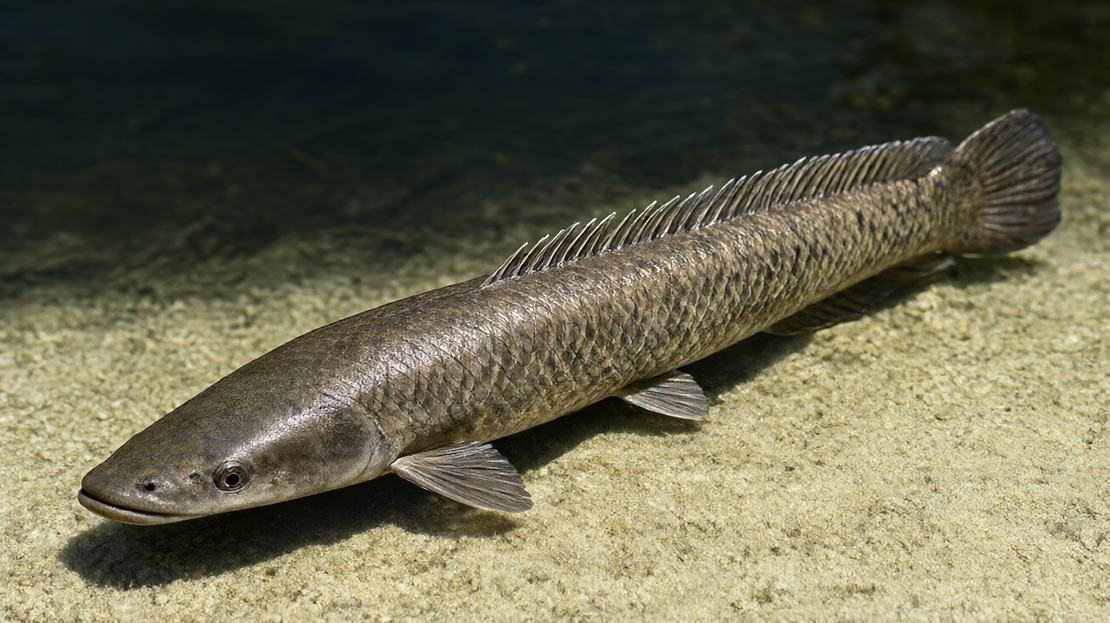
A long armoured fish rests on the bottom of a muddy pool.
Least Concern
Length
Weight
Scales
Air
Range
Rating
The Senegal Bichir
The fish that breathes air
A long fish rests on the bottom of a muddy pool. Bony plates cover its body like armour. A row of small fins runs along the back.
The animal can breathe air, and it does so whenever the water turns foul. On wet nights it leaves the pool and crosses damp ground. Few fish manage that, and this one does it on its pectoral fins.
The species lives across West Africa in slow rivers and flood plains. Because it lives in poor water, it turns up in places where other fish die.
Family tree
Polypteridae, an ancient line
Its proper name is Polypterus senegalus, one of about a dozen bichirs. The family belongs to an ancient line of ray finned fish. Because the group is so old, it keeps features that most fish lost long ago.
Spiracles on the skull let the animal gulp air at the surface, and bichirs sit close to the lobe finned fish that include the coelacanths. Two subspecies are recognised, one western and one eastern. Keepers call it the grey bichir, and it is common in the aquarium trade.
Armour and fins
How to tell one
Adults run 25 to 35 cm, and large fish reach 40 cm, though weight stays low for the length since the body runs slender. Ganoid scales form a hard cover, and each scale carries a shiny outer layer. Because the armour resists drying, the fish can cross land for short distances.
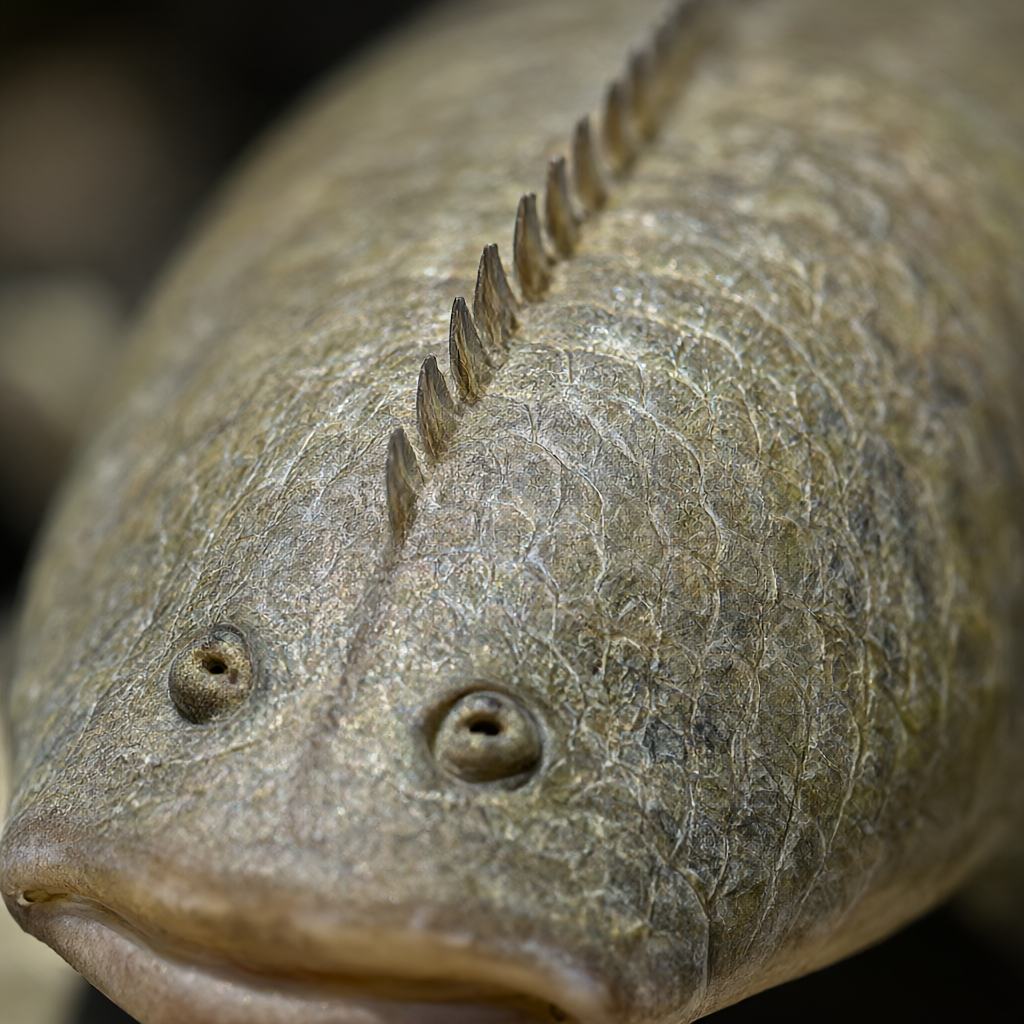
A dorsal fin splits into 8 to 11 small finlets along the back. Pectoral fins carry a fleshy base, and the fish uses them as props. A blunt snout ends the head, with two small nostrils on stalks.
Eyes run small, and the fish hunts by smell. Colour runs olive grey above and pale below. The swim bladder works as a lung, whereas no other common fish has one.
1
2
3
Foul warm water
Where it lives
Slow rivers, swamps and flood plains hold the species, and because the water often loses oxygen, air breathing keeps the fish alive. Mud bottoms and dense weed give cover by day. Flooded grassland gets used after heavy rain.
It lives in water too warm and too foul for most species. It also crosses wet ground at night, which spreads it between pools. A coelacanth belongs to an older line still, and both fish carry fleshy fins that look alike.
Small fish and worms
What it eats
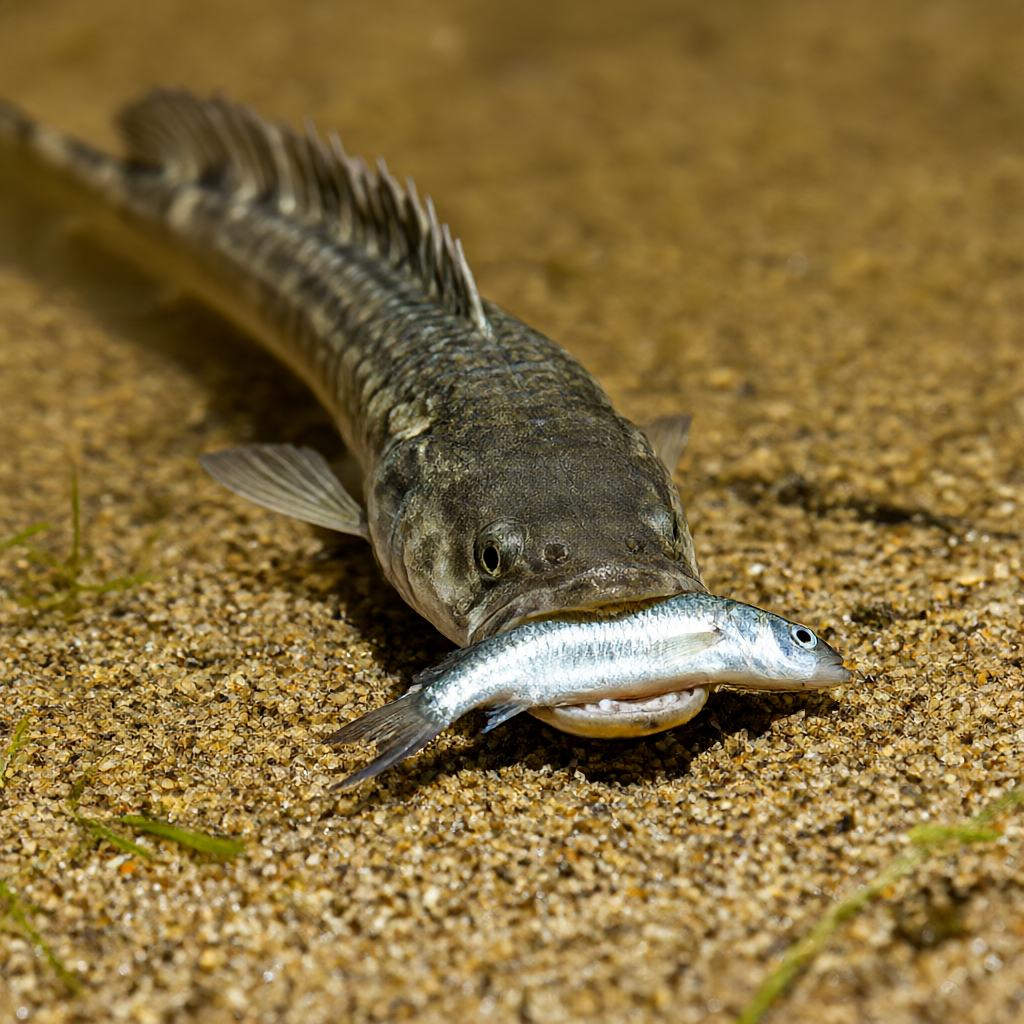
Small fish make up most of the food. Insects, crustaceans and worms get taken from the bottom. Because the fish hunts by smell, it feeds after dark.
Prey gets sucked into the mouth with a quick expansion of the throat. Young fish eat insect larvae almost entirely. An axolotl also hunts larvae in still water, though it never leaves the pool.
Eggs left unguarded
The breeding cycle
Breeding follows the rains, when flooded grass offers cover. The female scatters eggs among plants, and the male fertilises them, and because no parent guards the eggs most get eaten. Larvae hatch with external gills, and they look like small tadpoles.
Gills shrink as the young fish grows. Sexual maturity comes within a year. Adults spawn more than once in a long wet season.
Aquarium trade
Conservation
The Red List calls the species Least Concern. Drainage takes flood plains across West Africa. Because the fish breathes air, pollution kills it more slowly than its neighbours.
Collectors take large numbers from the wild. Nothing suggests a rapid decline yet. Protection depends on the wetlands, which few reserves cover.
Side by side
How It Compares
| Trait | Senegal Bichir | European Eel |
|---|---|---|
| Family | Polypteridae | Anguillidae |
| Length | 25-35 cm | 60-100 cm |
| Scales | hard ganoid plates | tiny, buried in skin |
| Air | gulps at the surface | takes it through the skin |
| Fins | row of small dorsal fins | one long fin |
| Rating | Least Concern | Critically Endangered |
Common misreadings
What People Get Wrong
- Not a snake. The body runs long, and the fish is not a reptile. A row of small fins along the back gives it away, and no other common fish carries that broken ridge of spines.
- Not a lungfish. Air breathing happens through a modified swim bladder. That organ lets the fish survive water too warm and too foul for most species, and it surfaces to gulp when oxygen runs out.
- Not a rare fish. It is common across West Africa. It turns up in slow rivers, swamps and flooded grassland, and it survives in pools that dry to mud between the rains.
Going further
Sources and Further Reading
Quick hits
Five things to remember
- It can breathe air.
- It walks across wet ground.
- Its scales work like armour.
- Its dorsal fin splits into finlets.
- Its swim bladder works as a lung.