 By st20113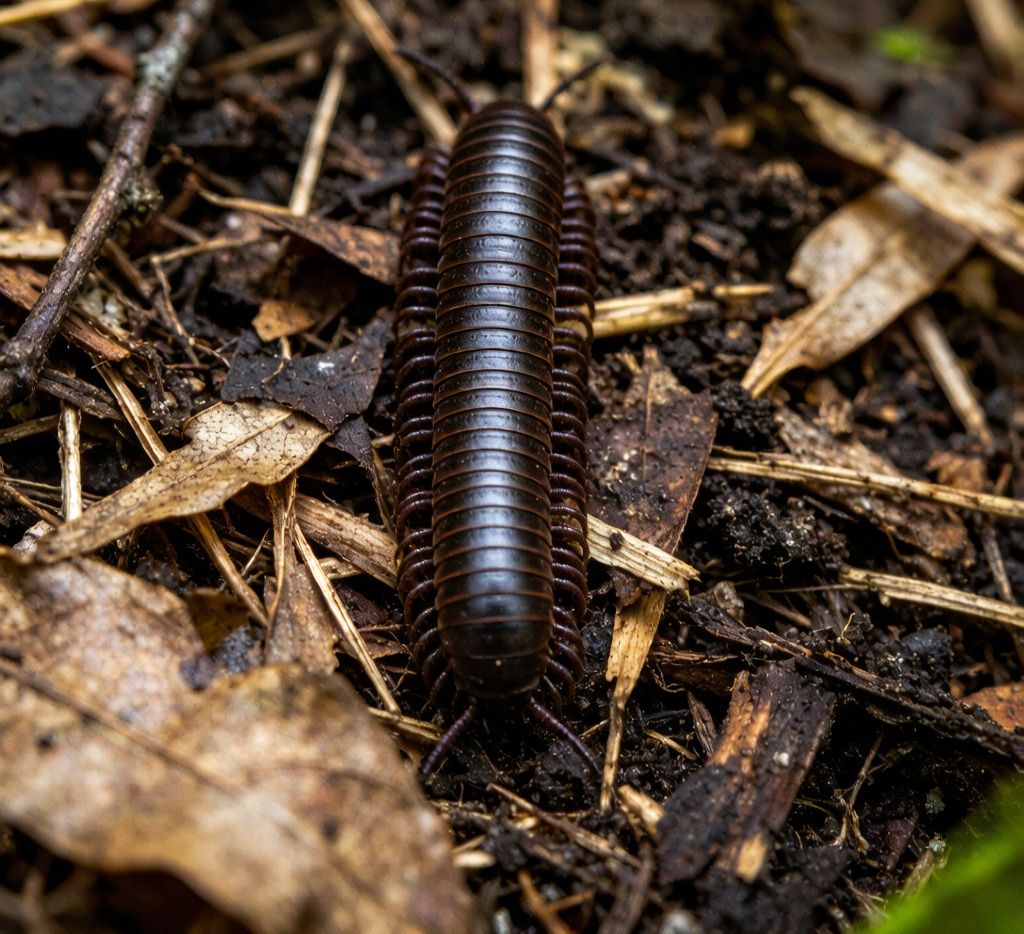
Introduction
Millipedes are ancient, predominantly terrestrial arthropods comprising the class Diplopoda, distinguished by their many-legged, cylindrical bodies and a key ecological role as decomposers. Although the name means “thousand feet,” most species have between 30 and 400 legs, with the record held by a species possessing over 1,300. Found on every continent except Antarctica, millipedes thrive in leaf litter, soil, and rotting wood, where they break down dead plant matter. They are among the oldest known land animals, with a fossil record extending over 400 million years. earthworm snail
Taxonomy
Millipedes belong to the subphylum Myriapoda, alongside centipedes, within the phylum Arthropoda. The class Diplopoda contains over 12,000 described species across numerous orders, including the giant African millipedes and the cylindrical round-backed forms familiar in temperate gardens. Each body segment in adult millipedes bears two pairs of legs, a defining trait reflected in the class name. Molecular phylogenetics has clarified relationships among the major lineages, revealing a deep split between basal burrowing orders and the more derived surface-dwelling groups that dominate today’s diversity.
Physical Characteristics
Millipedes have elongated, segmented, tube-shaped bodies with two pairs of legs per visible segment and a hard, often calcareous exoskeleton. Colouration ranges from dull brown and black to vivid orange, red, or blue in some tropical species as a warning. They bear short antennae, simple eyes or none, and a rounded head with mandibles adapted for chewing. Unlike centipedes, millipedes cannot bite or sting; instead, many secrete defensive chemicals including hydrogen cyanide and benzoquinones from lateral glands, producing a pungent odour. Their slow, wave-like locomotion is powered by numerous legs working in coordinated metachronal rhythm.
Habitat
Millipedes are found in virtually all terrestrial ecosystems that retain moisture, from tropical rainforests to temperate woodlands and deserts with隐蔽 microhabitats. They require damp environments because they breathe through trachea and lose water rapidly through their cuticle. Leaf litter, rotting logs, soil, and moss provide both food and the humidity they need. Some species are cavernicolous or live in deep soil, while others occur in gardens and compost heaps. They are most active at night or during wet weather, retreating underground during dry periods to avoid desiccation.
Diet
Millipedes are primarily detritivores, consuming decaying leaves, wood, and other plant debris rich in microbes. By fragmenting litter and stimulating microbial decomposition, they accelerate nutrient cycling and soil formation, making them essential ecosystem engineers. Some species also feed on fungi, roots, or living plant tissue and may occasionally become minor agricultural pests in seedlings. They ingest soil alongside organic matter, further enriching the substrate with processed minerals. In captivity, many species accept decaying vegetation and calcium-rich supplements to support their exoskeleton.
Reproduction
Millipede reproduction varies by group but generally involves males depositing a spermatophore that females take up to fertilise their eggs. In many species males use modified legs to transfer sperm directly or construct webs to deliver the packet. Females lay eggs in moist soil or protected chambers, sometimes coiling around them to provide guarding. Young hatch as smaller versions with few segments and leg pairs, adding segments and limbs with each moult through a process called anamorphosis. They may take one to several years to reach maturity, depending on species and environment, and can live for several years as adults.
Conservation
Most millipede species are not globally threatened, but many have highly restricted ranges, particularly island endemics and cave-dwelling forms vulnerable to habitat loss and invasive predators. Because they are sensitive to soil disturbance, pesticides, and drying, millipedes serve as useful bioindicators of forest and soil health. Conservation of intact leaf litter and deadwood is essential for maintaining their diversity. New species are still being discovered regularly, especially in tropical regions, indicating that current diversity is substantially underestimated by described taxonomy.
Fun Facts
The name “millipede” means a thousand feet, but no species actually has that many; the record holder has just over 1,300 legs. Millipedes curl into a tight spiral when threatened, protecting their soft undersides and presenting a hardened, chemically defended exterior. Some tropical species produce light in the dark through bioluminescence, a rare trait among terrestrial arthropods. They can live for over a decade in favourable conditions, unusually long for arthropods of their size. Fossil millipedes include some of the first animals to colonise land, with relatives that grew over two metres long in the Carboniferous period.