 By st20113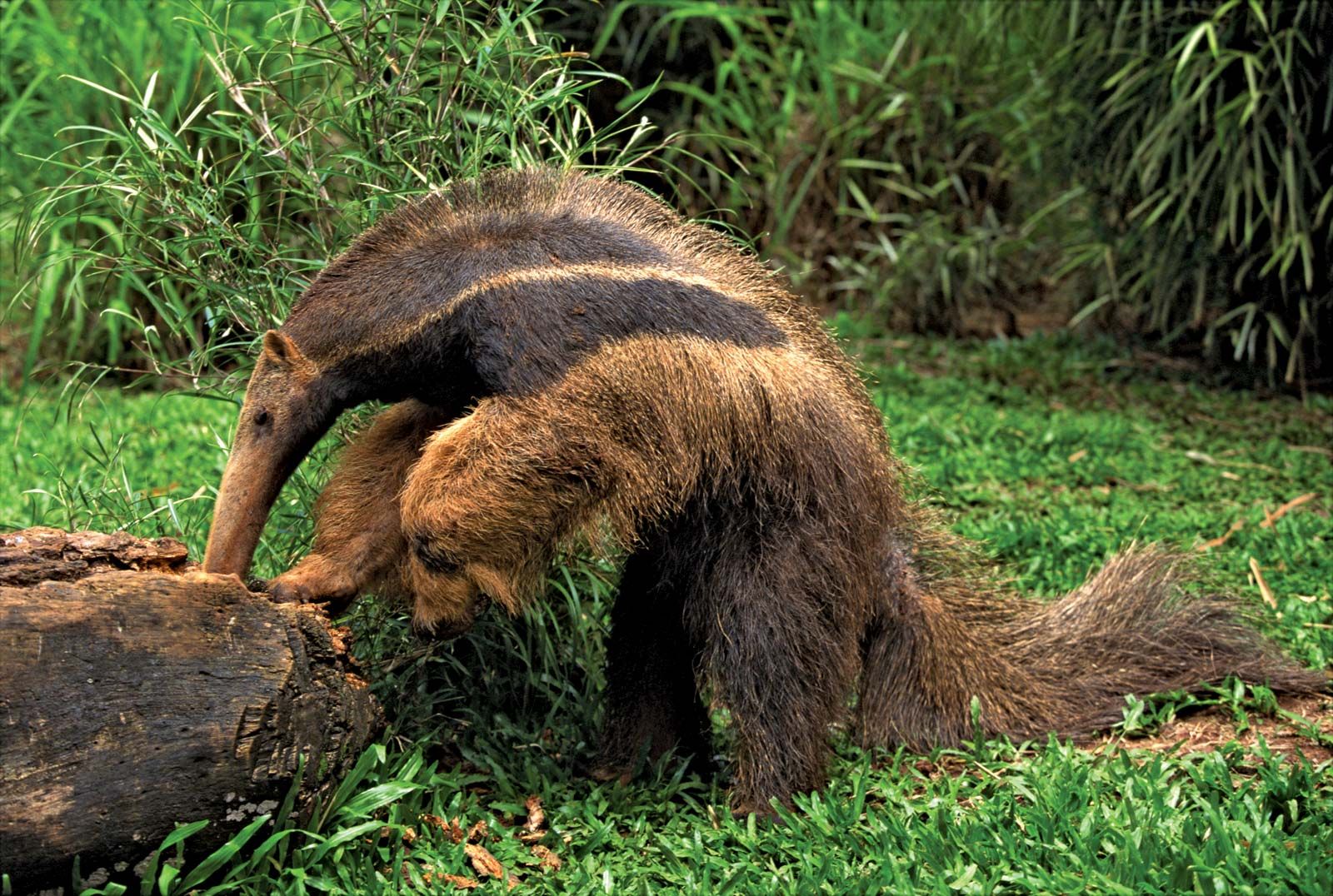
Introduction
The giant anteater (Myrmecophaga tridactyla) is the largest of the four anteater species, recognizable by its elongated snout, distinctive black-and-white striped shoulders, and massive bushy tail. Found throughout Central and South America, the giant anteater is a specialized insectivore with remarkable adaptations for hunting and consuming ants and termites.
Taxonomy and Classification
The giant anteater belongs to the order Pilosa, which also includes sloths. Within this order, it is placed in the family Myrmecophagidae, alongside the southern tamandua, northern tamandua, and the critically endangered silky anteater. The genus name Myrmecophaga means “ant-eater” in Greek.
Physical Characteristics
Adults measure 1.8 to 2.2 meters (6 to 7 feet) in total length and weigh 22 to 40 kg (48 to 88 lbs). Its elongated head is narrow and tube-shaped, ending in a small, toothless mouth with a tongue that can extend up to 60 cm (24 inches). The front feet have three prominent, powerful claws. The coat is coarse and long, with a distinctive black band bordered by white running diagonally across the shoulders.
Distribution and Habitat
Giant anteaters are found from Honduras in Central America through Brazil and northern Argentina. They inhabit grasslands, savannas, wetlands, and rainforests. They are most commonly associated with open landscapes and are primarily terrestrial.
Diet and Feeding Behavior
Using their keen sense of smell — 40 times more powerful than humans’ — they locate termite mounds and ant nests. Upon locating a colony, they tear into the structure with their powerful claws, then extend their long, sticky tongue at a rate of about 160 times per minute. A giant anteater consumes approximately 30,000 ants or termites per day.
Reproduction
Female giant anteaters give birth to a single pup after a gestation of approximately 190 days. The mother carries the pup on her back for several months, where the pup’s striped pattern provides camouflage. Young anteaters begin foraging independently at around 10 months.
Conservation Status
The giant anteater is listed as Vulnerable by the IUCN. Major threats include habitat loss from agricultural expansion, being struck by vehicles on roads, hunting, and fires.
[…] mammalian insectivores on Earth, with termites comprising over 90% of its diet. Unlike the Giant Anteater of South America, the Aardwolf does not break open termite mounds. Instead, it laps up foraging […]