 By Iris
Saturn | Ringed Planet
Species Profile · Solar System
Saturn
A world lighter than water, wrapped in 280,000 km of ice, and circled by more than 270 moons.
Gas giant
Diameter
Mass
Density
Year
Day
Moons
Light enough to float
Second largest, and the least dense
A bucket of Saturn would float, since the whole planet is less dense than water. Nothing solid waits underneath the clouds. Hydrogen and helium make up almost all of it. Sunlight warms the top of a deep ocean of gas, and pressure does the rest.
Sixth from the Sun, it ranks second in size among all the planets. One orbit takes 29.5 years, though a single spin takes only 10.7 hours. That fast spin flattens the globe at both poles. Winds tear the cloud tops into long pale bands.
A sheet of ice circles the equator, bright enough for a small telescope to pick out from a city garden. Even so, the planet holds more mass than 95 Earths.
Hydrogen down to a metal
Inside the atmosphere
Pressure climbs quickly as you sink below the visible clouds. Hydrogen and helium stay gaseous near the top, then turn liquid as depth increases. Deeper still, hydrogen loses its grip on electrons, behaves like a metal, and carries the current that drives the field. That current produces a magnetic field hundreds of times stronger than ours.
A rocky core sits at the centre, perhaps 15 times the mass of Earth. Heat left over from the formation of the planet still leaks outward. Slow contraction of the interior supplies much of that surplus, because the planet is still cooling. Jupiter runs the same engine, though its internal furnace burns hotter.
Warmth rises as convection, so it stirs the weather far above. Nothing inside ever stops moving.
Ice, gaps and a dark seam
The rings and the Cassini Division
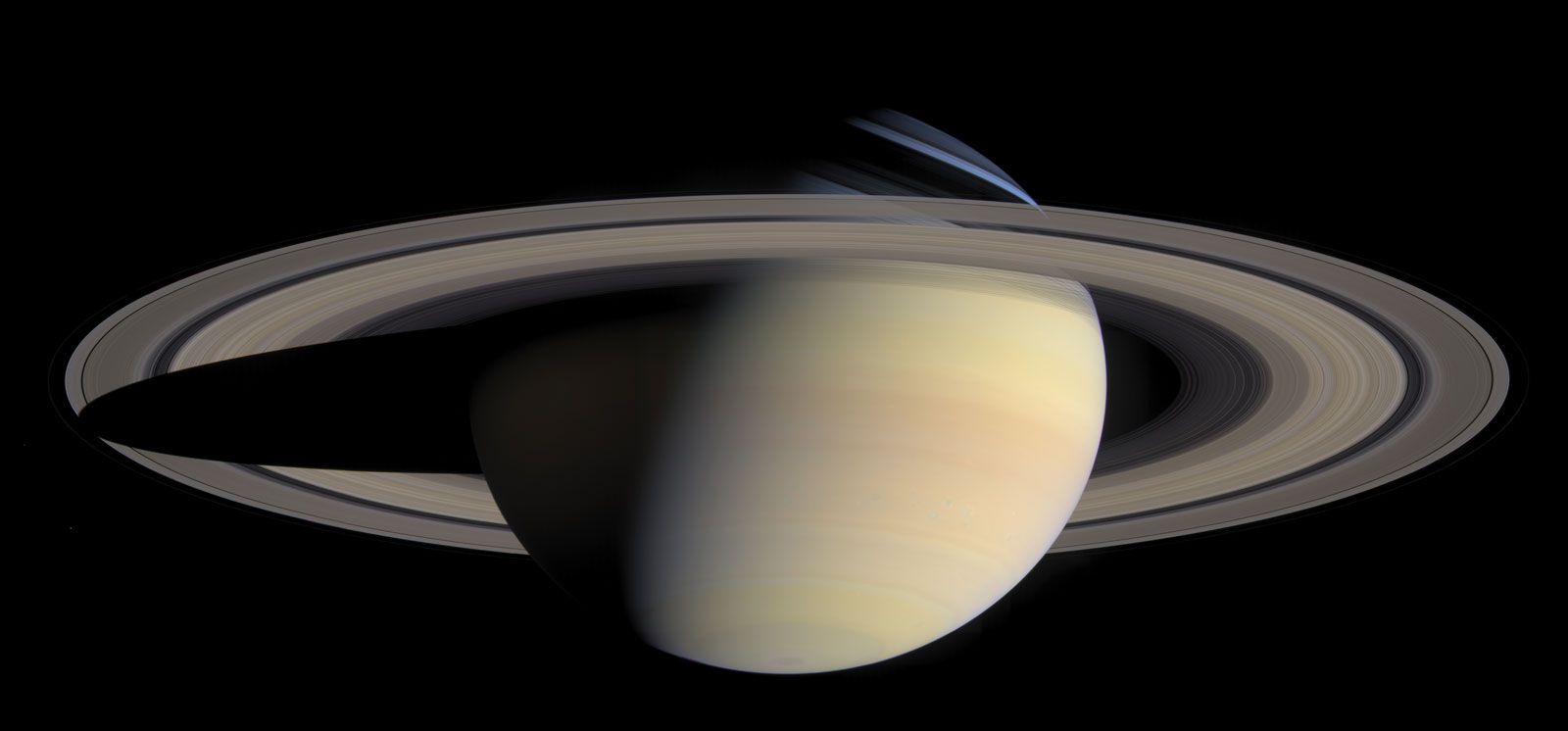
Ice defines this planet more than any other feature. Countless chunks of water ice circle the equator, from grains to boulders metres across. The full span reaches about 280,000 km across. Thickness stays near 10 m in most places, so the sheet is absurdly thin. Three bright zones carry the letters C, B and A, counted outward from the planet.
The B ring outshines the rest and holds most of the system’s mass. A dark gap called the Cassini Division splits B from A. Gravity from the moon Mimas, in turn, keeps that lane clear of drifting debris. Fainter rings, from F to G, lie beyond the bright three. Pounded together, the ice would make a moon only a few hundred km wide.
Because the ice stays bright, the rings throw back most of the sunlight that reaches them. Fresh ice and a steady rain of dust suggest a young age, perhaps 100 million years. Pale yellow bands of cloud show above the bright rings, and one dark seam cuts the disc on the right side of the view.
1
2
3
A six-sided storm at the pole
Bands, jets and white outbreaks
Butterscotch belts wrap the globe, softened by haze. Ammonia crystals give the cloud tops their colour. Winds at the equator reach 1,800 km/h. That beats every wind ever recorded on Earth, since nothing here comes close.
A six-sided jet stream rings the north pole. The hexagon spans about 30,000 km across, wide enough to swallow two Earths. However, no one fully explains why the corners hold their shape. Giant white storms appear every few decades, then fade.
One outbreak in 2010 covered a huge share of the northern tropics. Lightning flashes in water clouds far below the visible deck, unseen from above. Storms here fade sooner than those on Jupiter, yet each one still covers ground that would swallow several Earths.
Methane lakes and ice geysers
Titan, Enceladus and the rest
More than 270 moons circle the planet, and the count keeps rising. Titan is the largest, wider than Mercury and wrapped in orange haze. Nitrogen fills its air, with methane close behind. Methane falls as rain, cuts river channels and pools in lakes near the poles.
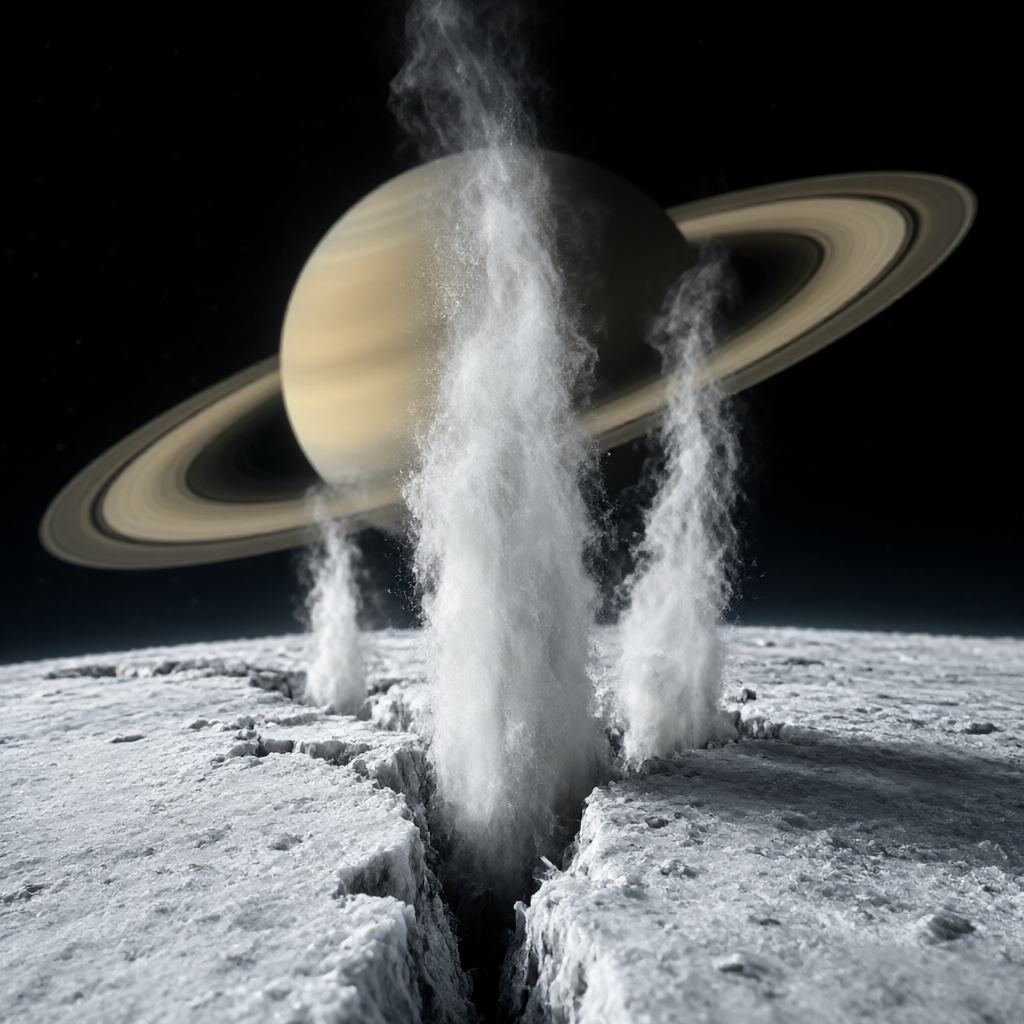
Haze hides the ground from orbit, so the Huygens probe had to land to see it. Enceladus is small, bright and covered in cracked ice. Jets of water vapour and ice burst from fissures near the south pole, and a buried ocean feeds them from below. That buried water makes the little moon a target for life hunters.
Mimas wears one huge crater, while Iapetus shows two tones. Ice from Enceladus also feeds the wide E ring.
Rings that open and close
A 29.5 year orbit and its seasons
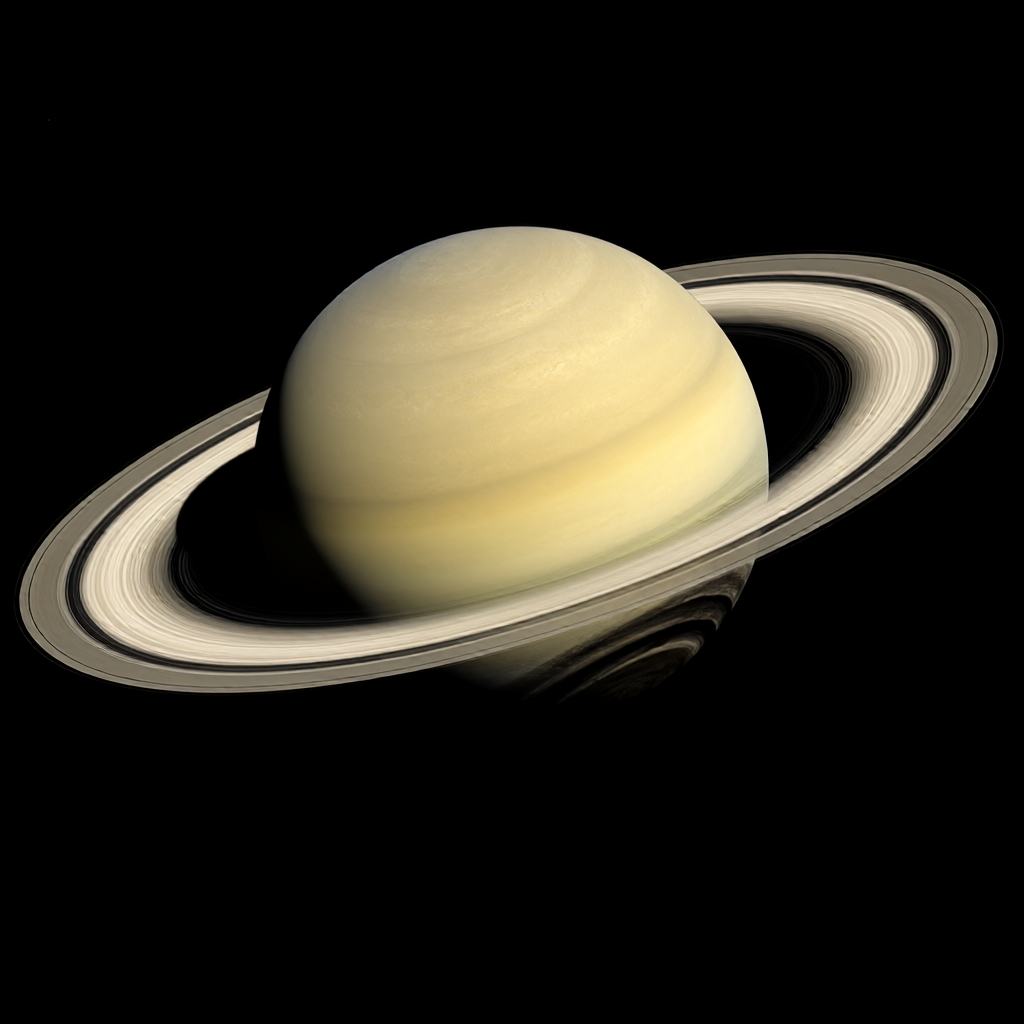
The axis leans 27 degrees, close to the tilt of Earth, and one orbit takes 29.5 years. That lean, not distance, drives the seasons. For half of each orbit, one hemisphere leans toward the Sun and warms. Twice per orbit the rings turn edge-on and nearly vanish.
Because the tilt holds steady, the rings open and close like a slow hinge across one full orbit. Ring shadows fall across the cloud tops for years at a time. Each season here runs about seven of our years.
Four probes and one rotorcraft
How we have looked at Saturn
Pioneer 11 arrived first, in 1979. It skimmed the rings and sent back coarse pictures. Voyager 1 followed in 1980, while Voyager 2 came a year later.
Their cameras found braided ringlets and a hexagon at the pole. Cassini spent 13 years in orbit, from 2004 until 2017. It dropped the Huygens probe, which landed on Titan and phoned home pictures of river beds.
Fuel ran low, so the team steered the craft into the clouds. That ending kept the moons clear of stray microbes, although the risk was small. Dragonfly, a nuclear-powered rotorcraft, should fly over Titan in the 2030s.
Side by side
How It Compares
| Trait | Saturn | Jupiter |
|---|---|---|
| Diameter | 120,536 km | 142,984 km |
| Density | 0.687 g/cm3 | 1.33 g/cm3 |
| Day | 10.7 hours | 9.9 hours |
| Rings | bright ice, 280,000 km | faint dust, narrow |
| Moons | 274 known | 95 known |
| Storms | pale bands, rare spots | Great Red Spot, fierce belts |
Common misreadings
What People Get Wrong
- Guides often call the rings solid, yet every ring is a swarm of separate ice chunks. A spacecraft crossing the ring plane would meet almost empty space between the chunks.
- Popular art shows a planet you could stand on, but nothing here offers a footing. Gas turns to liquid slowly, with no firm surface anywhere along the way down.
- Many assume the rings are permanent, though the ice is being worn away. Dust and meteor strikes grind the chunks down, while fresh ice keeps the whole system bright.
Going further
Sources and Further Reading
Five things to remember
Quick hits
- A day lasts 10.7 hours.
- The rings are 10 m thick.
- Saturn would float in water.
- Its north pole has six sides.
- Enceladus sprays ocean water into space.