 By st20113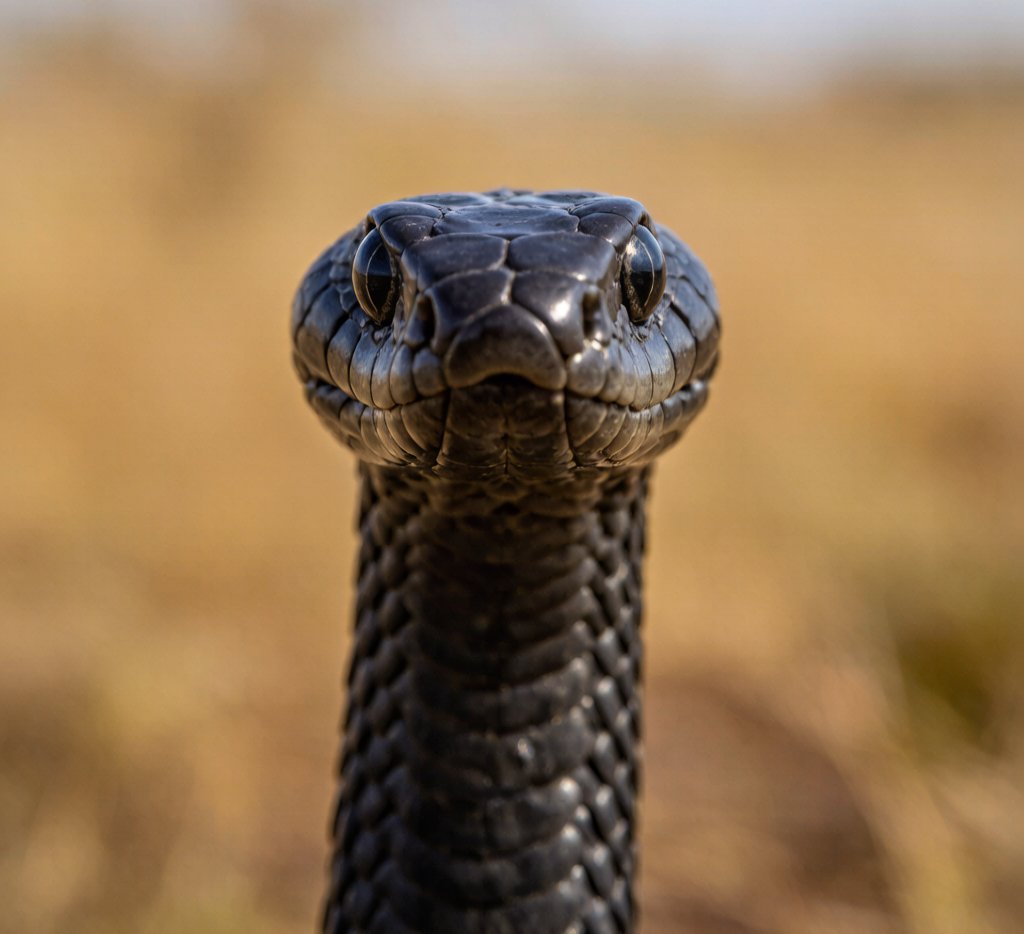
Introduction
The black mamba is the longest venomous snake in Africa and the fastest land snake in the world. Found across the savannas and rocky hills of sub-Saharan Africa, it is simultaneously one of the most feared and most misunderstood reptiles on the continent. Despite its fearsome reputation, the black mamba is shy and nervous, preferring to escape rather than fight. Yet when cornered, it strikes with astonishing speed and delivers a potent neurotoxic venom that demands immediate medical attention.
Taxonomy
The black mamba belongs to the family Elapidae, the group of front-fanged venomous snakes that also includes cobras, kraits, and sea snakes. It is one of four species in the genus Dendroaspis, meaning “tree cobra,” alongside the green mambas of West and East Africa. The species was described by the German-British zoologist Albert Günther in 1864. Unlike vipers, elapids possess fixed, grooved fangs at the front of the mouth that cannot fold away, a feature that sets them apart from the pit vipers and adders of the same continent.
Physical Characteristics
Despite its name, the black mamba is not black; its body is typically olive, grey, or brown, with a paler belly. The name comes from the ink-black interior of its mouth, which it displays when threatened. Adults commonly measure 2 to 2.5 meters, but exceptional specimens exceed 4 meters, making it the second-longest venomous snake after the king cobra. It is slender and fast, can raise a third of its body off the ground when striking, and has bursts of speed recorded at nearly 20 kilometers per hour, the fastest of any snake.
Habitat
The black mamba occupies open woodland, savanna, rocky outcrops, and scrubland across much of sub-Saharan Africa, from Ethiopia and Senegal southward to South Africa, sharing its vast range with reptiles such as the Nile crocodile. It avoids true rainforest and arid desert. It shelters in termite mounds, hollow trees, rock crevices, and abandoned burrows, and individuals often maintain a favored den used for years. This widespread distribution makes it one of the most commonly encountered large snakes in rural Africa.
Diet
The black mamba feeds mainly on warm-blooded prey, including hyraxes, rodents, bats, and birds, and it will occasionally take other snakes. It is an active hunter that pursues prey by day, delivering a rapid series of bites before waiting for the venom to take effect. Its venom contains powerful neurotoxins that attack the nervous system, causing paralysis and, without antivenom, respiratory failure. Death can occur within hours, which makes every bite a medical emergency and explains the mamba’s fearsome reputation among local communities.
Reproduction
Mambas are oviparous, laying eggs rather than giving birth to live young. Mating occurs in spring, and rival males sometimes engage in wrestling combat for access to females. A clutch of 6 to 17 eggs is deposited in a hollow log, termite mound, or other sheltered site, and the female abandons them after laying. The eggs hatch after roughly three months, and the young, measuring about half a meter, are fully venomous and self-sufficient from their first day, capable of hunting small lizards and rodents almost immediately.
Conservation
The black mamba is classified as Least Concern by the IUCN, thanks to its vast range and large populations. The greatest threat is deliberate persecution, as many people kill mambas on sight out of fear, along with habitat loss and road mortality. Its few natural enemies include snake-eating birds such as the secretary bird and mammals like the honey badger, which are largely immune to its venom. Educational programs that teach snake identification and safe removal are gradually changing attitudes, since mambas rarely bite unless provoked and play a valuable role in controlling rodent populations.
Fun Facts
The black mamba can strike repeatedly in a single attack, injecting venom with each bite. Its scientific name, Dendroaspis polylepis, means “many-scaled tree cobra.” The venom of the black mamba is being studied for potential painkiller development, as some of its toxins are extremely potent pain-blocking agents. It is also one of the few snakes that can raise its head more than a meter off the ground when confronting a threat.