 By st20113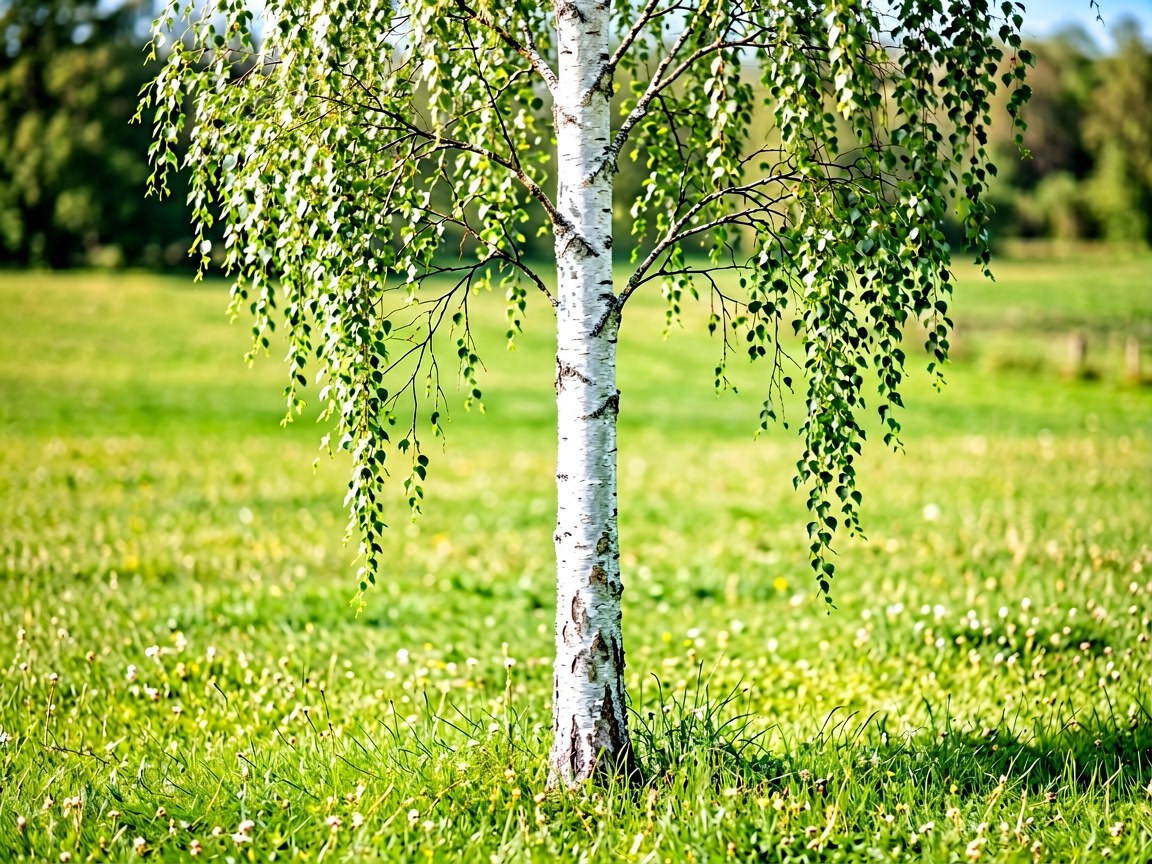
Betula pendula | Silver Birch
Introduction
The Silver Birch (Betula pendula), also known as the warty birch or European white birch, is a slender, fast-growing deciduous tree that has become one of the most familiar and beloved sights of the northern European landscape. Typically reaching 15–25 m in height, with a slender trunk and a characteristic cascade of drooping branchlets, it is prized for its luminous white bark that stands out against dark conifer forest and snow alike.
As a classic pioneer species, the Silver Birch is among the first trees to colonise bare ground, burned clearings, and abandoned grassland, preparing the soil for slower, longer-lived trees to follow. Beyond its ornamental appeal, it supports a surprising wealth of associated life—from fungi and lichens to hundreds of insect species—and has been woven into the folklore, medicine, and crafts of northern peoples for millennia.
Taxonomy
Betula pendula was described by the German botanist Albrecht Wilhelm Roth in 1788; the genus name Betula is the classical Latin for birch, and pendula refers to the gracefully hanging (pendulous) twigs. It belongs to the family Betulaceae, the birch family, alongside alders, hazels, and hornbeams, and is closely related to the downy birch (Betula pubescens), from which it is told apart by its hairless shoots and warty bark.
Like all green plants, the Silver Birch is fundamentally dependent on the process described in our article on Photosynthesis (the plant energy process), by which its leaves capture sunlight to build the sugars that drive its rapid growth and feed the diverse community of organisms living on and around it. Within Betulaceae it forms ectomycorrhizal partnerships with soil fungi, trading carbon for minerals in a relationship typical of the family.
Physical Characteristics
The Silver Birch is easily recognised by its chalk-white bark, which in young trees is smooth and marked with horizontal dark warts (lenticels); on older trunks the base becomes rugged and splits into black, diamond-shaped fissures. The twigs are slender, hairless, and markedly drooping, and the leaves are triangular to rhombic, 3–7 cm long, with a doubly serrated edge and a pointed tip.
The foliage turns a clear golden yellow in autumn before falling. In spring the tree produces both male and female catkins: the long, dangling male catkins release wind-borne pollen, while the short, erect female catkins develop into small cone-like clusters of tiny winged seeds. The wood is pale, fine-grained, and strong for its weight, and the bark is rich in the waxy compound betulin, which gives it both its colour and its resistance to decay.
Habitat
The Silver Birch favours bright, open sites and is supremely tolerant of poor, acidic, and sandy soils where heavier trees struggle. It ranges across almost the whole of Europe and into western and central Asia, from the Mediterranean mountains to the Arctic tree line, and is a characteristic component of heathland, dry woodland edges, bog margins, and young secondary forest.
Intolerant of deep shade, it is a light-demanding pioneer that establishes readily on disturbed and burnt ground, roadside verges, and cleared woodland, where its light canopy lets other plants grow beneath. Because it improves soil and moderates conditions as it grows, it is a key nurse species: birch thickets commonly give way over decades to oak, pine, or spruce, and its presence on a site is often the first sign of forest returning.
Diet
The Silver Birch is autotrophic, manufacturing its own food by photosynthesis in its leaves and drawing water and mineral nutrients from the soil through an extensive, mycorrhiza-assisted root system. It is a strong net producer, converting sunlight, carbon dioxide, and soil minerals into the wood, leaves, and seed crops that build a fast-maturing tree.
Its carbon economy is intimately linked to its associates: the tree supplies sugars to ectomycorrhizal fungi in exchange for improved access to water and nutrients, and its leaves, when they fall, form a leaf litter that feeds a specialised decomposer community. The abundant, oil-rich seeds represent a major seasonal investment of stored energy, packaged to be dispersed widely by wind and to germinate on bare mineral soil.
Reproduction
The Silver Birch is monoecious, bearing both male and female catkins on the same tree. In early spring the long male catkins shed clouds of wind-borne pollen, which fertilises the tiny female flowers at the tips of the short catkins; the fertilised flowers then develop through summer into slender, woody catkin-cones holding hundreds of minute, winged seeds.
Seed dispersal begins in autumn and can continue through winter, with the light seeds carried long distances by wind to colonise open ground. Germination is rapid on bare, sunlit soil, and seedlings grow quickly—often reaching 2–3 m within a few years. The tree begins flowering and seeding while still young, typically by 5–10 years, ensuring it can exploit temporary gaps in the canopy before being shaded out by later-successional species.
Conservation
The Silver Birch is widespread and listed as Least Concern, and in much of its range it is abundant and even increasing as abandoned agricultural land returns to woodland. It is, however, an important ecological indicator: in Britain its presence is taken as a sign that a wood is not “ancient” (ancient woodland is defined partly by the long-term absence of birch), which matters for conservation prioritisation.
Climate change is a mixed blessing—warming allows the birch to extend northward and to higher altitudes, yet prolonged drought and heat stress its southern and lowland populations. Conservation value centres less on the tree itself than on the species it supports, from the birch polypore fungus to numerous moths and aphids, and on its role in restoring degraded land; planted birch belts are widely used to reclaim pit heaps, dunes, and eroded slopes.
Fun Facts
- The white bark’s colour comes from betulin, a compound with natural antifungal and antibacterial properties that helps the tree resist decay.
- Silver Birch was one of the first trees to return to Scandinavia after the last Ice Age, a true post-glacial pioneer.
- In early spring the rising sap can be tapped and fermented into a mildly alcoholic birch wine or boiled down into syrup.
- A single tree can release millions of winged seeds in a season, scattered far and wide by the wind.
- Historically, birch bark was used as paper—Russian medieval manuscripts were written on specially prepared birch bark.
[…] and beams. That is where the English name comes from. The closest relative in European woods is the silver birch, another member of the same […]
[…] tree shares the genus with the Silver Birch. That tree hangs its branches lower. It also favours drier ground. Our tree carries softer […]