 By st20113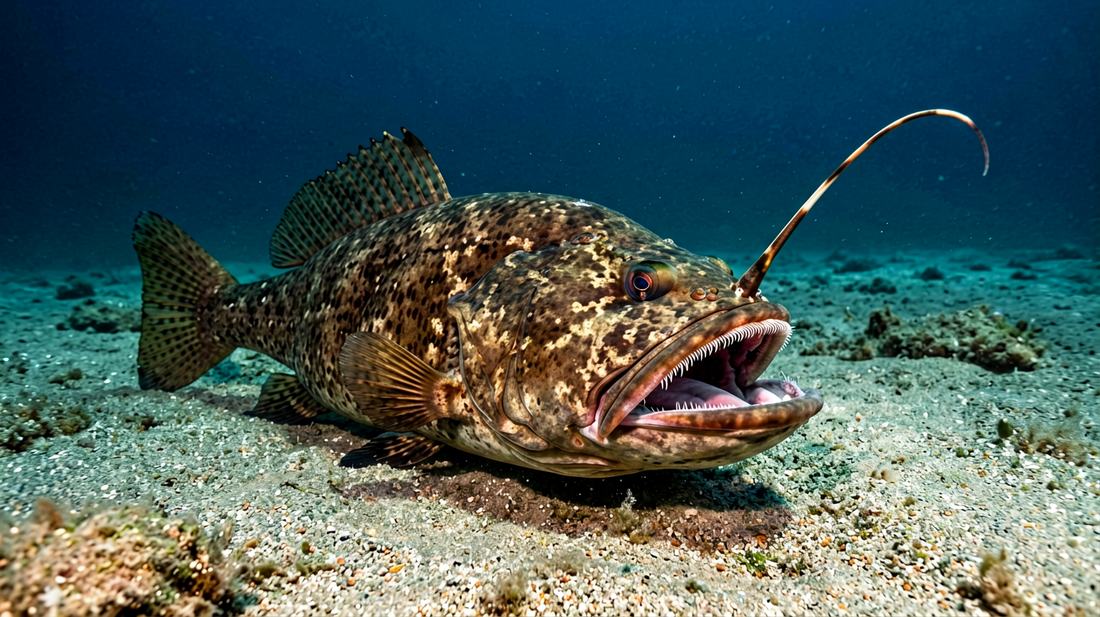
Lophius piscatorius | Anglerfish
Species Profile · Lophiidae
Anglerfish
A seabed ambush hunter with a fishing rod on its snout, a mouth that opens wider than its own head and a market name of monkfish.
Not assessed by IUCN
Range
Length
Depth
Lure
Eggs
A fish that fishes
The anglerfish
The anglerfish is a fish that lives on the sea bottom. Its head looks too big for its body. Its mouth can swallow a fish half its own size. A built-in rod grows from its snout. It lies on the seabed, half buried in sand and mud, and waits. The rod is a changed fin spine called the illicium.
It has a fleshy tip that twitches and glows. Small fish come to look and are pulled into a trap. The trap shuts faster than the eye can see. In shops this fish is sold as monkfish. Only the firm, boneless tail is usually eaten. The huge head is thrown away or used for stock.
Anglerfish live in the cool north-east Atlantic and the Mediterranean. They range from shallow coast down to a kilometre deep. They grow slowly, mature late and live for decades. They are among the most valuable fish in western Europe. In some places the stocks have been fished hard for over a century.
Family tree
Kin of the cod, but a very different hunter
The anglerfish is in the class Actinopterygii. It is in the order Lophiiformes and the family Lophiidae. It is the largest member of that family in European waters. Its best-known kin in the Atlantic fishery is the Atlantic Cod. That is a plain fish with a smooth body and a front mouth. It has a normal tail. The two share the same seabed but hunt in different ways.
The cod chases its food through open water and swallows it whole. The anglerfish lies still and makes the food come to it. The order Lophiiformes has over three hundred species. It includes deep-sea anglerfish with glowing lures. It also includes odd, bottom-walking frogfishes of tropical reefs. The whole group is set by one trick. The first spine of the dorsal fin moved forward onto the head.
It became a lure. The family Lophiidae has about twenty-five species. Several are sold. The European anglerfish is the largest and most key of them. It was named by Linnaeus in 1758. Its name refers to the look of the head as a monk’s hood. That gives the market name monkfish.
Rod, lure and jaws
How the trap works
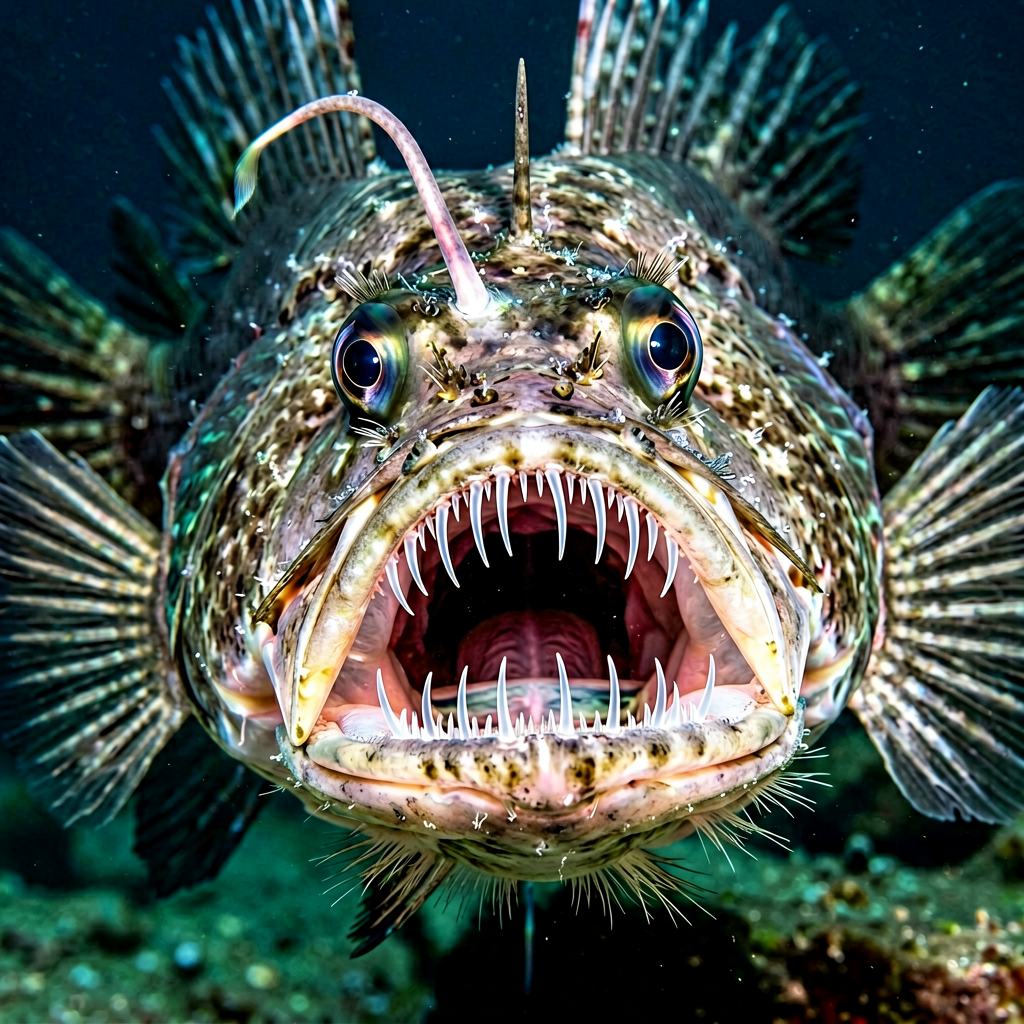
An adult anglerfish reaches 1 to 1.5 metres long. The largest known approach 2 metres. They weigh more than 50 kilograms. The head is huge, broad and flat. It is about a third of the total length. The body tapers to a short tail. The mouth has rows of long, curved teeth that point inward. They make escape almost impossible once prey is seized.
The jaws can open so far that they look out of place. The skin is smooth, scaleless and mottled. Its shades are brown, grey and olive. The pattern breaks up the shape against gravel and mud. A fringe of flaps and threads lines head and body. It gives cover. The fish shifts its shade to match the seabed. Three dorsal spines rise from the head.
The first is the illicium, a long bendy rod. It has a fleshy tip that waves in any direction. The side fins are broad and strong. They are used to walk slowly across the seabed, not to swim. The tail is weak next to a cod’s tail. Females grow much larger than males and live longer. The two sexes are otherwise hard to tell apart.
1
2
3
On soft seabed
Where it waits
The anglerfish lives in the north-east Atlantic. Its range runs from Iceland, Norway and the Barents Sea. It goes south along the British Isles, France, Spain and Portugal to West Africa. It is also in the Mediterranean. It favours soft ground, sand, muddy sand, gravel and mixed sediment. It can bury itself and wait for prey. It is usually found between 20 and 500 metres deep. Records go down to about 1,000 metres.
Around the British Isles it is commonest on the shelf edge. It is also on offshore banks. It moves into shallower water in spring and summer. It goes back to deeper water in winter. Young fish live in shallower water than adults. They settle on the seabed a few centimetres long. They grow slowly and steadily. The species tolerates a range of temperatures.
It is most common in cold, oxygen-rich water between about 2 and 12 degrees Celsius. Each fish is highly territorial. They move very little for long stretches. Local groups are wiped out by fishing faster than they are replaced. Tagging shows most travel only a few kilometres a year. Some stay in one small patch of seabed for months.
What it eats
Waiting for the food to come
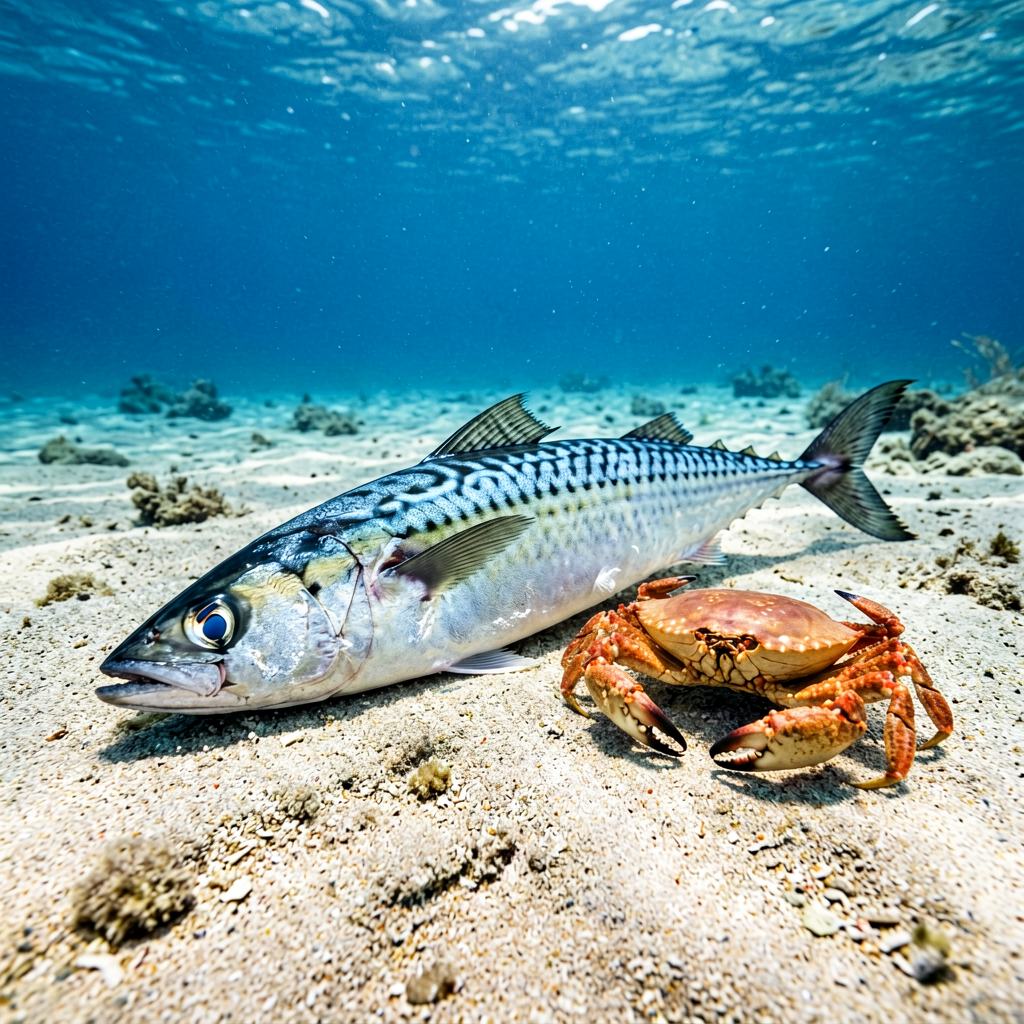
The anglerfish is an ambush hunter and one of the least picky eaters in the sea. It waits on the seabed with the illicium curving forward. It twitches the lure in front of its mouth. Now and then it makes a small puff of sand to draw notice. When an animal comes close it opens its jaws and sucks the prey in. Fish make up most of the diet. They include cod, haddock, whiting, flatfish and herring.
Also sandeels, dogfish and small rays. The species is strongly cannibalistic. This is most true where anglerfish are many. Crustaceans, squid and octopus are eaten too. Stomach finds include seabirds, and anglerfish that rise off the bottom have been found with auks inside. Other diving birds show up too. The fish cannot chew, so prey is swallowed whole.
The stomach can stretch to hold an animal almost as big as the anglerfish itself. Digestion is slow. A single large meal can feed an anglerfish for several weeks. This helps in cold, food-poor water. Adult anglerfish have few enemies. They are occasionally taken by large sharks, conger eels and seals. Their eggs and larvae are eaten by other fish.
A million eggs in jelly
Spawning and larvae
Anglerfish spawn in spring and early summer. They do so in deep water along the edge of the continental shelf. A female releases her eggs in a striking form. It is a long, flat ribbon of clear jelly. At times it reaches ten metres long and half a metre wide. It floats and slowly breaks apart. Each ribbon may hold hundreds of thousands, even over a million, eggs.
Several males add sperm to the ribbon. The eggs hatch into small larvae about four to six millimetres long that drift in open water. Long, spiny fin rays stream out from their bodies as the larvae drift for several months. They feed on small crustaceans and slowly change shape. By the time they reach four to six centimetres they look like adults. They settle on the seabed and stay there for life. Growth is slow.
Females do not mature until about seven or eight years old. They are then 70 to 90 centimetres long. The largest may be twenty years old or more. Males mature a little earlier and at a smaller size. The species lays huge numbers of eggs but few reach adulthood. Because adults mature late, the stocks are easily overfished.
Monkfish on the menu
A valuable, slow-growing catch
The anglerfish is not seen as a globally threatened species. Yet several European stocks have been heavily fished. Some are thought to be outside safe limits. It is one of the most valuable fish in the north-east Atlantic. Landings are led by France, Spain and the United Kingdom. It is caught mainly by bottom trawlers and gillnetters on the shelf edge.
Because it grows slowly, matures late and is strongly territorial, it is open to overfishing. Removing large adults cuts the breeding stock for years. Management in European waters uses a total allowable catch. This is agreed between the European Union, Norway and the Faroe Islands. Some areas set minimum landing sizes. The rules vary and enforcement at sea is hard.
Throwing back undersized fish used to be common. The landing rule changed the fishery but not the basic pressure. Scientists studying the stocks advise lower catches. They want better data on the age and size of landed fish. Anglerfish are hard to age and the fishery has been poorly recorded.
Quick hits
Five things to remember
- The anglerfish rod is a changed fin spine. It can be waved forward to dangle its fleshy lure in front of the mouth.
- Its jaws open so wide it can swallow prey almost as big as itself. It is strongly cannibalistic.
- Anglerfish have been found with whole seabirds in their stomachs. The birds include auks.
- A female lays her eggs in a ribbon of jelly. It can be ten metres long and hold more than a million eggs.
- Only the tail is normally eaten. Monkfish in the market is almost always a piece of an anglerfish tail.
[…] was said to wait at the door of the net for the other fish. The John Dory shares its class with the anglerfish. The anglerfish is another big-headed hunter of the same coasts. It also has a wide mouth and lies […]