 By st20113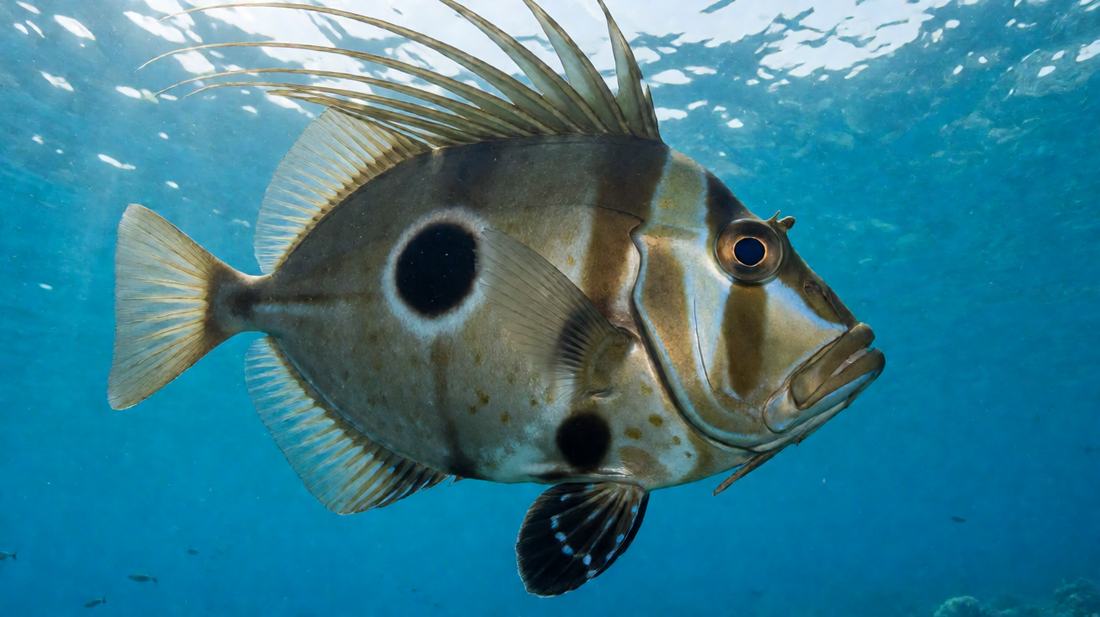
Zeus faber | John Dory
Species Profile · Zeidae
John Dory
The thin, big-headed fish with a thumbprint on its flank — a slow ambush hunter that sucks its prey in with a sudden shot of its tube-like jaws.
IUCN: Least Concern
Range
Length
Mark
Depth
Food
The fish with a thumbprint
Thin, big-headed, and slow
The John Dory is one of the strangest fish in European waters. Once seen, it is never forgotten. The body is deep and flat, shaped like an oval plate. The head is huge and the mouth points upwards. On each flank sits a single dark round spot. The spot looks exactly like an eye. That mark has given the fish many folk names across Europe.
The best known one links it to Saint Peter. The body is a soft olive-brown or pale yellow-grey. It has a faint silvery sheen. The skin carries no true scales, only a smooth, slightly rough surface. Along the back runs a row of long thin spines. They trail behind the fish like threads. This gives the outline a ragged, flag-like look.
The John Dory reaches 65 cm and about 3 kg. Most fish sold in markets are far smaller, at 25 to 40 cm. It is a slow hunter. It stalks its prey across the seabed. Then it sucks the prey in with a sudden snap of its huge mouth. The species lives in the eastern Atlantic from Norway to South Africa. It also lives in the Mediterranean, the Black Sea, the Indian Ocean and the western Pacific.
Family tree
Zeidae, the dories
The John Dory sits in the family Zeidae, the dories. It belongs to the genus Zeus. Linnaeus described it in 1758. The family Zeidae sits in the order Zeiformes. This is a small group of thin-bodied fishes. They share a set of odd features. The head is very large. The mouth can be pushed forward like a tube.
The body is flattened from side to side. Within the family the John Dory is the best known member by far. It is the only species of its genus in European waters. The name Zeus comes from the Greek god. The species name faber is Latin for smith. The common name is a puzzle. Most workers trace it to the French words jaune doree, meaning golden yellow. That describes the colour of the fish when it is alive.
Another line traces it to Janitore, a word for a doorkeeper. The fish was said to wait at the door of the net for the other fish. The John Dory shares its class with the anglerfish. The anglerfish is another big-headed hunter of the same coasts. It also has a wide mouth and lies in wait. The 2 are set apart by their fins and by the way they catch prey. But they sit in the same great class of ray-finned fishes.
Dark spot, thin body
How to tell one
The John Dory grows to 65 cm and about 3 kg. It is built like no other fish in Europe. The body is deep and very thin. A fish of 40 cm is only about 3 or 4 cm thick. Small rough scales sit deep in the skin. The colour is olive-brown on the back and paler below. It carries a scatter of small silvery spots.
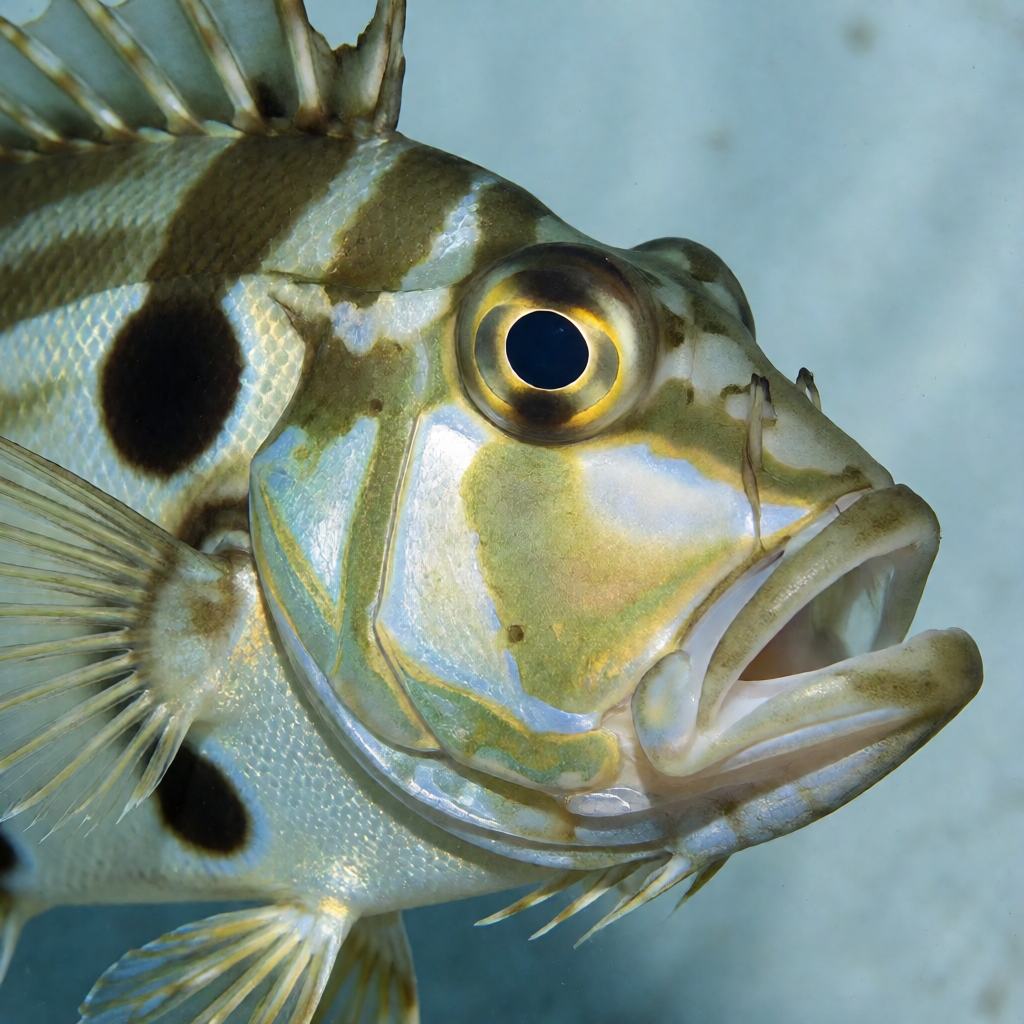
The single dark spot on each flank is 3 to 4 cm across. A fine pale yellow line rings it. The spot sits just below the front of the back fin. The head is huge. It takes up nearly 1 third of the whole body. The mouth is large and can be pushed forward into a tube. The jaws carry bands of small sharp teeth.
The eyes are large and set high. The fish can look forward and upward without turning its head. The first back fin has 9 or 10 long, bendy spines. They trail back over the body. The second back fin and the bottom fin are soft and rounded. The belly fins are long and trail behind. The tail is small and fan-shaped, and it looks odd on such a big fish.
1
2
3
Sand, mud and rough ground
Where it lives
The John Dory lives in coastal waters. It is found from the shore down to about 360 m. It is most often found between 50 and 150 m. It prefers a mixed bottom of sand, mud and rock. It is especially common around wrecks, rocky reefs and rough ground. Small fish gather in those places.
In the Mediterranean it is a familiar fish of inshore rocky areas. In northern Europe it is caught on the trawling grounds of the shelf. The species is a lone animal for most of the year. Adults hold small areas around a piece of rough ground. They hover just above the seabed and wait for prey to come close. Young fish live in shallower water than the adults.
They are often found in river mouths and sea grass beds. They move into deeper water as they grow. The fish has no swim bladder, or only a very small one. So it cannot float in mid water for long. Its flat, thin body and dull colour make it hard to see. It often drifts sideways and looks like a piece of weed.
Small fish, taken by suction
What it eats
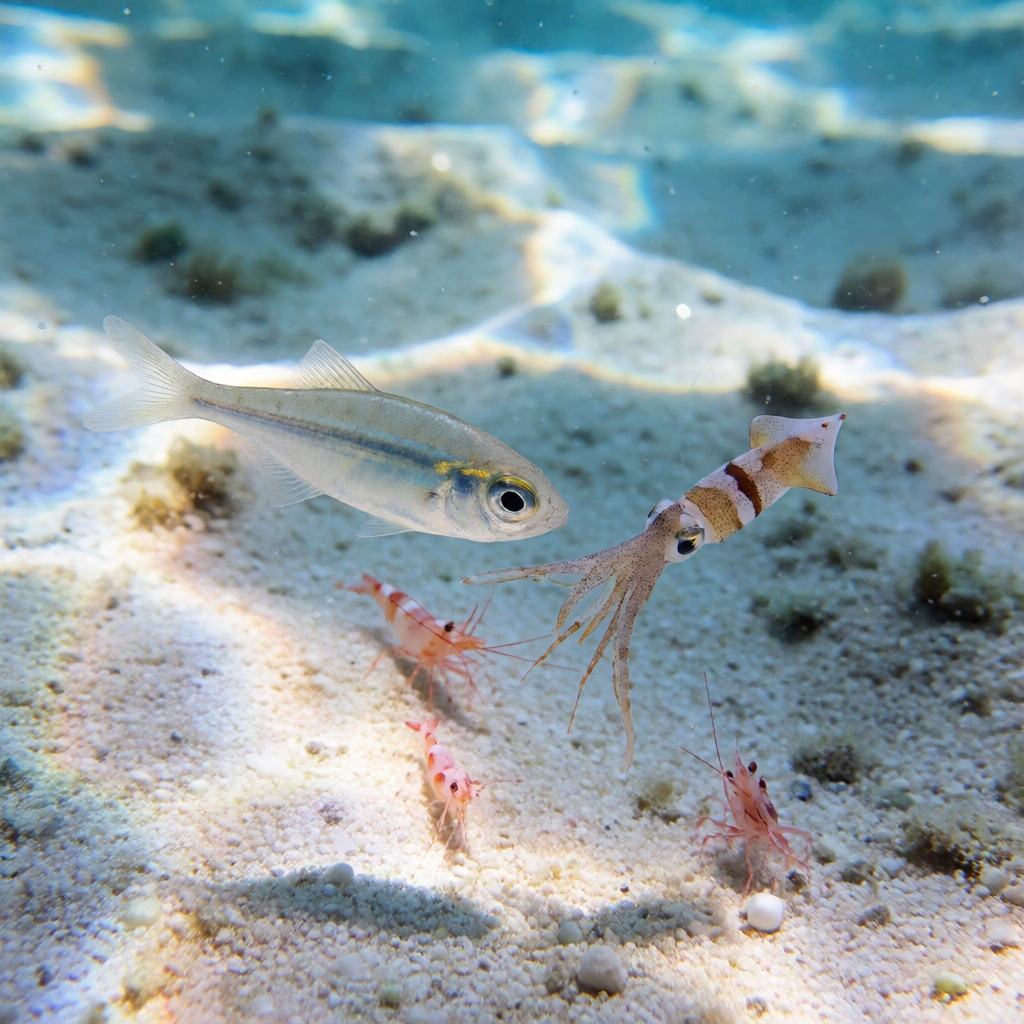
The John Dory is a hunter of small fish and soft prey. It hunts by stealth rather than by speed. The main food is small schooling fish. It takes sprats, pilchards, sand smelts and young herring. It also takes a great many squid and cuttlefish. Shrimp, small crabs and other bottom crustaceans make up the rest.
The method is unusual. The fish drifts slowly towards a shoal. It keeps its thin body edge-on, so it shows almost no target. Then it shoots its jaws forward into a tube. The sudden drop in pressure pulls water and prey into the mouth. The whole strike takes a fraction of a second.
This way of feeding lets the fish take a meal almost as long as its own head. Stomach contents have shown prey up to 20 cm. The fish hunts at dawn and at dusk. Between strikes it hangs motionless in the water. Because it feeds on schooling fish, it is often found near the edges of big shoals. Fishermen have long used the arrival of the dory as a sign that the pilchards are close.
Eggs freed to the open water
The breeding cycle
The John Dory spawns in the summer. In the north this runs from June to August. In the Mediterranean the season is longer. The fish gather in small groups over rough ground. The female lets her eggs go into the open water. The male then fertilises them. A single female can produce several hundred thousand eggs. The eggs are small and float near the surface.
The young that hatch are unlike the adult in almost every way. They are slender. They have a row of bony plates along the back and belly. They also carry long spines. These spines make them hard for small hunters to swallow. This stage lasts several weeks. The young fish drift with the currents. Then they settle on the seabed as small copies of the adult.
Growth is fairly slow. A fish reaches about 20 cm in its first 2 years. It reaches about 35 cm by the age of 5. The species can live for 12 years or more. Little is known about its breeding habits. It spawns in deep water, and the fish are hard to keep alive in tanks.
Least Concern, a valued catch
Conservation
The John Dory is not threatened worldwide. It is listed as a species of least concern. It is caught all year round. Most of it comes as a bycatch of trawling for other species. It is valued highly as a food fish, so fishermen keep it. The total catch in the north-east Atlantic is not large.
The species does not support a fishery of its own. So its numbers have not crashed in the way that cod and other big stocks have. The main risks come from bottom trawling. Dragging gear damages the rough ground and reef habitat the fish needs. The removal of large adults from small local groups is a further risk. The fish is lone and slow to gather.
So heavy local fishing can thin a group quickly. The catch records would not show it at once. The most useful step is to protect rocky reef from repeated trawling. That also helps the many small fish species that make up its food. There are no special plans for the John Dory anywhere in its wide range.
Quick hits
Five things to remember
- The round dark spot on each flank is said to be the thumbprint of Saint Peter, and the fish is often sold under his name.
- The fish has almost no swim bladder, so it cannot float in mid water and stays near the seabed all its life.
- Its jaws shoot forward into a tube, and the sudden pull can swallow a fish up to 20 cm long in a fraction of a second.
- The thin body is only about 3 or 4 cm thick on a fish of 40 cm, so the dory can drift edge-on and almost vanish.
- The young fish carry long spines and a row of bony plates, and they look nothing at all like the adults they will become.