 By st20113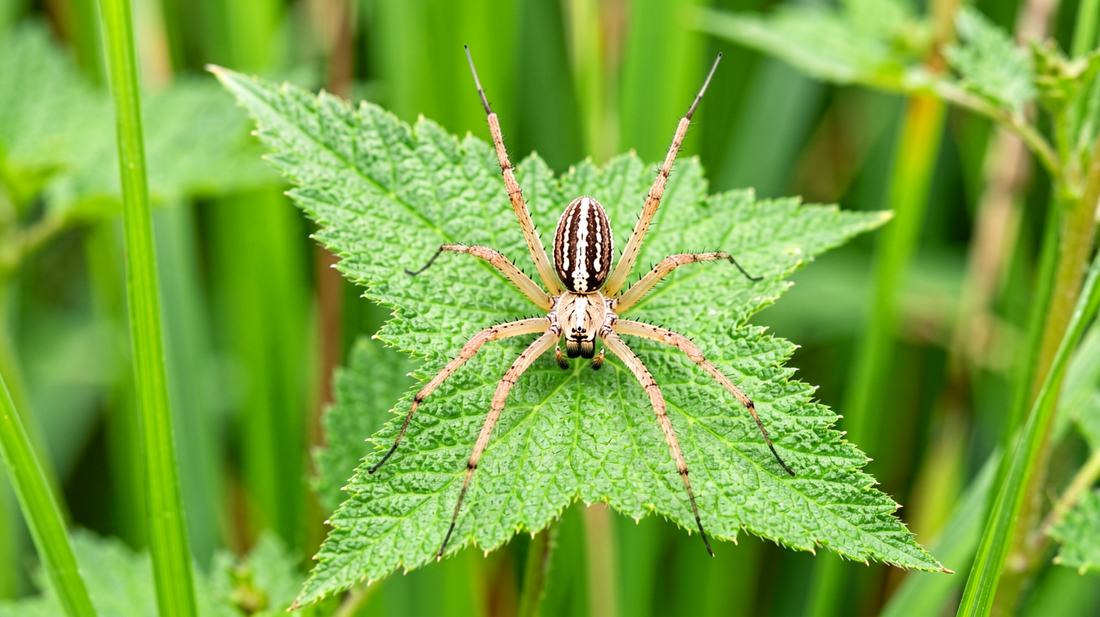
Pisaura mirabilis | Nursery Web Spider
Species Profile · Pisauridae
Nursery Web Spider
A slender brown hunting spider that catches prey by speed and sight, carries its egg sac in its jaws and guards its young in a silken tent.
Not assessed by IUCN
Range
Female
Prey
Eggs
Web
A spider that hunts
The nursery web spider
The nursery web spider is a slim brown hunter. It is common in tall grass, nettle beds and hedgerow edges across Europe. It does not build a web to catch food. It hides and then rushes at its prey. It often sits in the open on a leaf.
Its four pairs of legs make a flat X. The species is known for three odd acts. The male gives the female a wrapped food gift before mating. If he finds no prey, he may wrap a bit of plant instead. The female carries her egg sac in her jaws as she moves.
In her last weeks she builds a silk tent around the sac. She guards her young until they leave. Its bite is harmless to people. The spider is easy to keep and watch. This makes it one of Europe’s best-studied spiders.
Family tree
Kin of the orb weavers
The nursery web spider is in the order Araneae. It is in the family Pisauridae and the genus Pisaura. It is the only member of that genus in Britain and northern Europe. Its closest well-known kin is the Yellow Garden Spider. That spider is a big, bright orb weaver. It hangs head down in a large spiral web. It uses only silk to catch food.
The two show how one body plan can work in two ways. The orb weaver waits and traps with poor sight. The nursery web spider is an active hunter with sharp sight. It saves its silk for eggs, draglines and the nursery tent. The family Pisauridae has over three hundred species worldwide. It includes raft spiders that skim across pond tops. The group is close to wolf spiders.
People sometimes mix them up. Nursery web spiders are known by their long legs. They carry the egg sac instead of fixing it to a web. They also show a pale stripe down the body. The species was named in 1757. Its name comes from Latin for pea-bearer or chick-pea. That points to the round bundle the female holds in her jaws.
Stripe, legs and eyes
Built for speed and sight
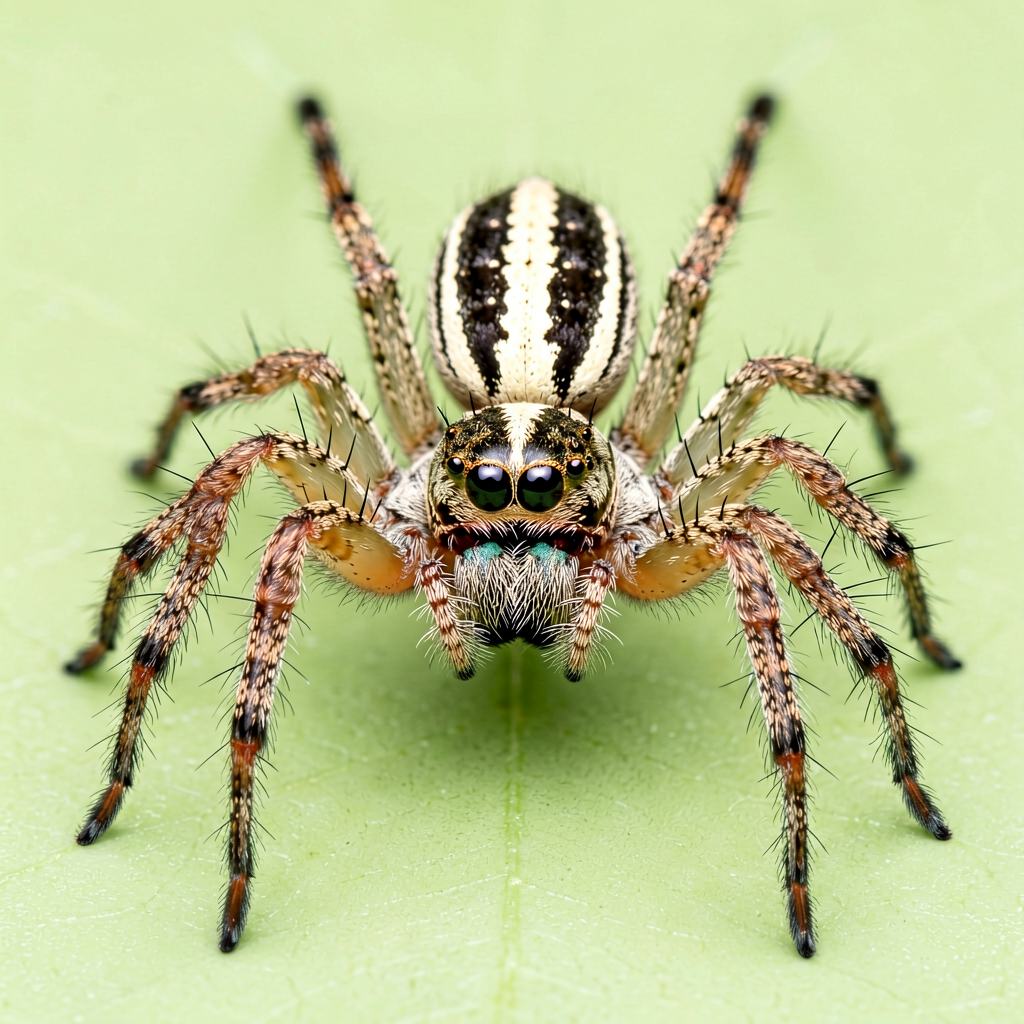
An adult female is 10 to 15 millimetres long. The male is a bit smaller at 10 to 13 millimetres. The body is slim and covered in fine hairs. Its colour is light brown to grey-brown. A wide pale stripe runs from the head down the abdomen. Dark bands edge the stripe. The legs are long, slim and often held straight out. They carry spines that look spiky on a leaf.
The eight eyes sit in three rows. The two front eyes are large and face forward. This gives the spider very sharp sight. It can judge distance before it pounces. Like most spiders it has venom glands and fangs. The venom is weak and is for insects, not people. The bite rarely breaks human skin. The abdomen ends in silk-making spinnerets.
The female holds the egg sac in her chelicerae. Those are the mouthparts that also hold the fangs. This needs the odd size and strength of those parts. Males have longer, thinner legs for their body. In the breeding season their abdomen is smaller and darker. The young look like small pale grey-brown adults.
1
2
3
Tall grass and nettles
Where to find it
The nursery web spider lives across Europe. It spreads through much of temperate Asia to central Asia. It has also been seen in North Africa. It needs tall, ungrazed or lightly grazed plants. It uses stems and leaves to hunt, bask and anchor its web. Common spots are rough grassland and nettle beds. Also roadside banks, hedgerow bases and woodland rides.
And clearings, marsh edges, dune slacks, gardens and allotments. It likes a warm, sheltered place. It is rare in deep shade or on grazed pasture. It builds no capture web. So it needs no special web support. It often rests on a wide leaf with legs spread. This helps it take in sun.
Nursery web spiders can walk on water. They cross small puddles and slow streams. They are sometimes seen on bare ground far from plants. They are active from spring to autumn. Adults peak in June and July. Young spiders not grown by autumn hide in leaf litter. They start again the next spring.
What it eats
An ambush hunter
The nursery web spider is an ambush hunter. It takes any insect that comes close enough. Its food includes flies, small beetles and bugs. Also leafhoppers, small butterflies, moths, ants and other spiders. It can overpower prey about its own size. It hunts in two ways. It may sit still on a leaf with legs spread.
It waits for an insect, then strikes fast. Or it stalks through plants and pounces from near. Its sharp eyes guide the leap. Prey is held with the front legs and bitten. The spider then eats it at once. A male making a gift may wrap prey in silk first. Nursery web spiders have been seen taking prey from flowers.
They even catch small insects at lit windows at night. In turn they are eaten by birds such as wrens and dunnocks. Also by larger spiders, harvestmen and parasitic wasps. Those wasps lay eggs in the spider or its sac. The species is not territorial. Several share one patch of plants without a fight.
A gift for the female
Courtship and the nursery web
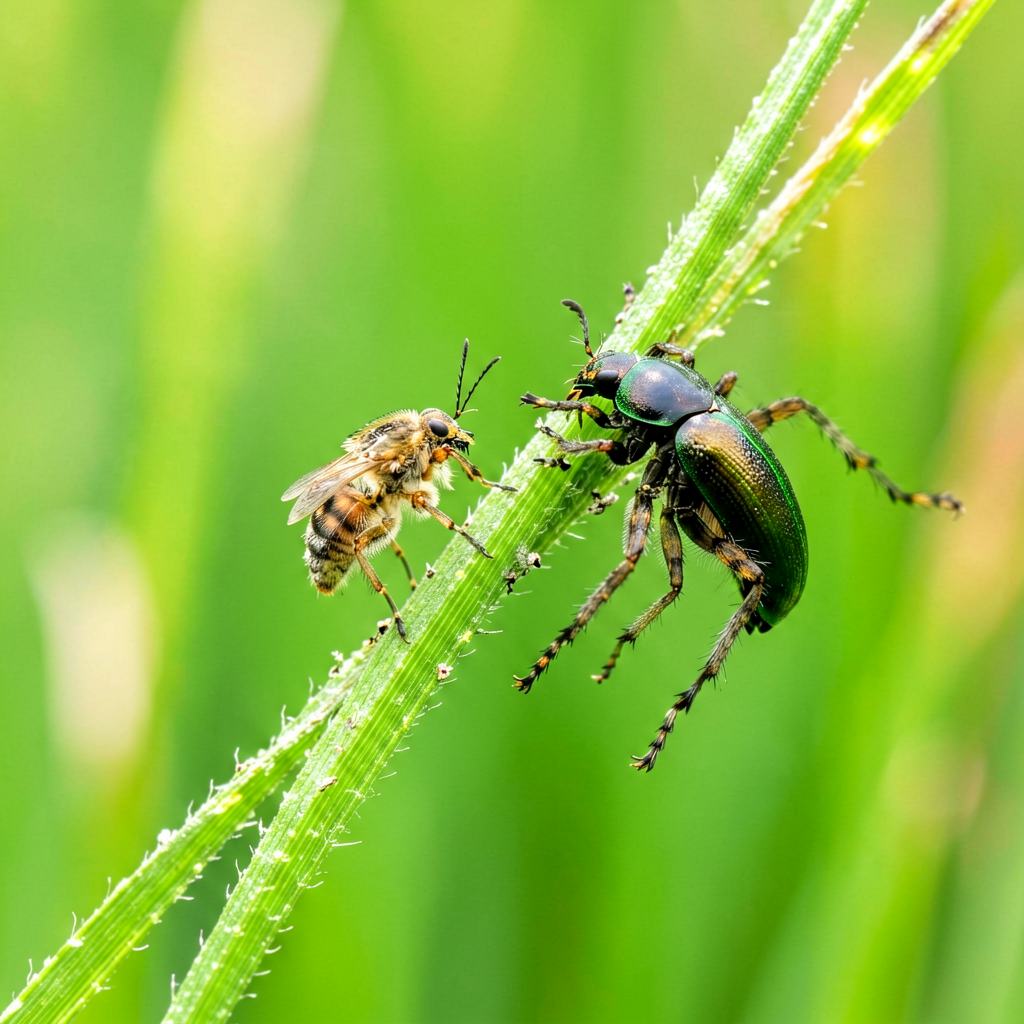
Courtship in this spider is among the best-studied of any. A male wraps prey in silk and carries it in his jaws. He looks for a female this way. When he finds one, he shakes his abdomen and legs on the leaf. Then he offers the wrapped parcel. The female usually grabs the gift and feeds. Mating happens while she eats. The gift keeps her busy while he finishes and flees.
This matters because females sometimes eat their mates. About a third of males find no prey first. Many wrap a leaf, seed or stem bit instead. The female learns the trick, but mating is usually done. After mating she makes a round egg sac. It holds up to a hundred eggs. She carries it in her chelicerae for one or two weeks. She cannot hunt well while she does so.
She then builds a silk tent, the nursery web, among tall plants. She fixes the sac inside and guards it from outside. The eggs hatch and the young stay about a week. Then they leave. Adults die in late summer or autumn. Males rarely live long after mating.
Rough corners matter
A spider of untidy places
The nursery web spider is common and widespread. It has no threatened status, local or global. It likes the untidy, ungrazed plants many insects need. It lives in gardens, allotments, road banks and brownfield land. It is also in nature reserves. Its main threats match those of lowland insects.
These are farm intensification and repeated verge cutting. Also draining of wet grassland and loss of rough corners. The female guards her young in an open silk tent for a week. So mowing or heavy grazing in the breeding season hits hard. A single cut in July can wipe out a local generation. There is no special plan to save it.
It relies on broad care of hedges, margins and rough grass. Long records in Britain show it steady or rising. This is likely because it tolerates warm, disturbed gardens and brownfield sites. These have become key safe spots.
Quick hits
Five things to remember
- A male with no prey wraps a leaf or seed in silk. He offers it as a fake gift to the female.
- The female carries her egg sac in her jaws for one or two weeks. This makes hunting almost impossible then.
- She builds a silk nursery tent and guards it outside. She stays until her spiderlings are ready to leave.
- The spider can walk on water and cross puddles. It uses this to reach new plants.
- Its two big front eyes give sharp sight. It hunts by eye, not by feeling the web move.