 By st20113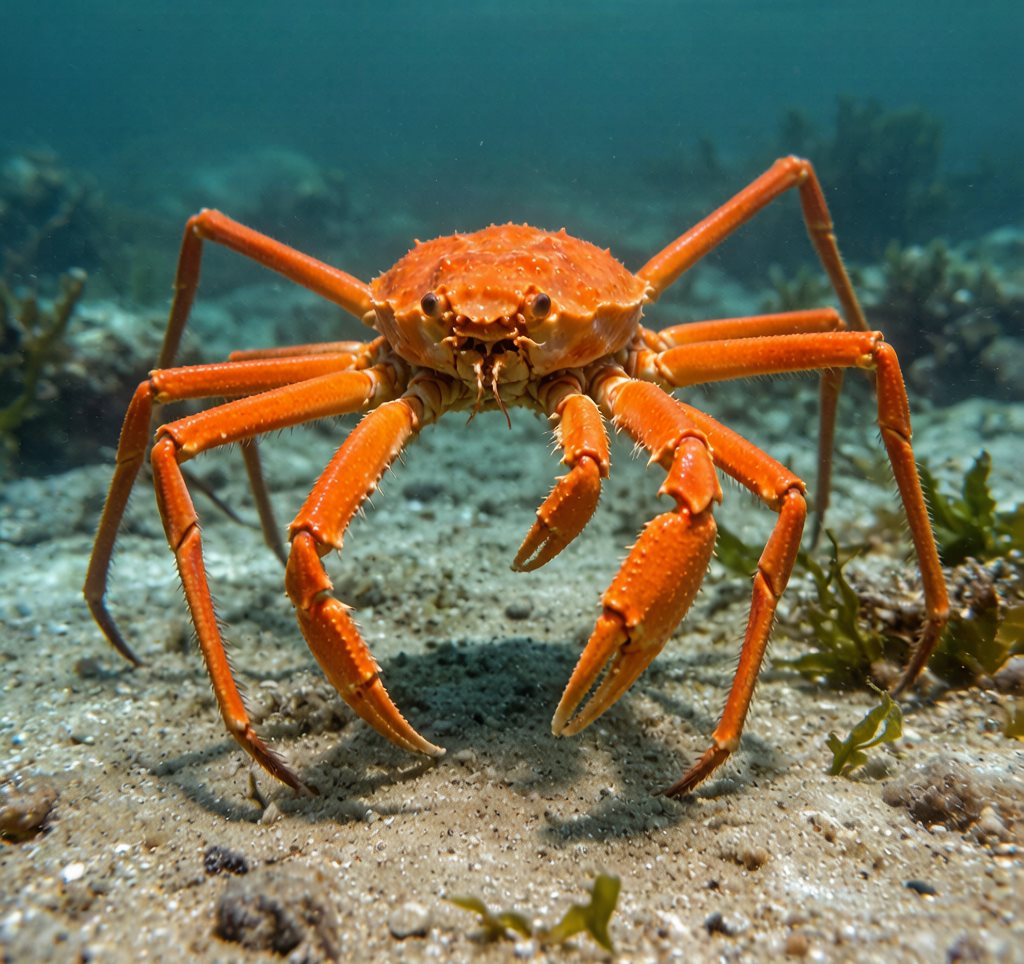
Introduction
The Japanese Spider Crab (Macrocheira kaempferi) is one of the most astonishing invertebrates on the planet, holding the distinction of being the world largest living arthropod, with some individuals possessing leg spans exceeding 3.7 meters and body weights approaching 20 kilograms. Found only in the waters surrounding Japan, it features long, slender legs, sharply pointed claws, and a vivid orange carapace covered in small spines and tubercles. Despite its intimidating appearance, the Japanese Spider Crab is a remarkably gentle giant, moving slowly and deliberately across the muddy seafloor in search of food and allowing divers to approach closely without displaying aggression. The species is named in honor of Engelbert Kaempfer, the German naturalist who first documented it scientifically in the nineteenth century.
In recent decades, the Japanese Spider Crab has attracted growing attention from conservation biologists concerned about the sustainability of wild populations, which have been subject to increasing fishing pressure due to the species reputation as a culinary delicacy in Japan. It has also become an important flagship species for the deep-water marine environments of the Pacific coast of Japan, helping to raise public awareness of the biodiversity of deep-sea habitats that are otherwise largely invisible to the general public.
Taxonomy
The Japanese Spider Crab was formally described by Coelebs Heinrich Philipp Jaeger in 1839, who assigned it the scientific name Macrocheira kaempferi. The genus name Macrocheira, derived from the Greek words makros (large) and cheir (hand), refers to the crab impressively large and powerful claws. The species name kaempferi honors Engelbert Kaempfer directly. The Japanese Spider Crab belongs to the family Majidae, the spider crabs, a diverse group characterized by their elongated legs and often spiny carapaces that provide effective camouflage among the rocky and vegetated seafloor environments they inhabit.
Among the Japanese Spider Crab notable relatives is the Coconut Crab (Birgus latro), the world largest terrestrial arthropod, which shares the Japanese Spider Crab impressive size and longevity but has independently evolved a fully terrestrial lifestyle on tropical islands. Within the genus Macrocheira, the Japanese Spider Crab is the sole surviving member, making it a taxonomically unique lineage with no close living relatives at the genus level.
Physical Characteristics
The Japanese Spider Crab most extraordinary feature is its leg span, which can reach up to 3.7 meters between the tips of the outstretched claws, making it the largest arthropod in the world by this measure. The body itself, measured as carapace width, is considerably more modest, typically ranging from approximately 30 to 40 centimeters in adult specimens. The elongated, spindly legs that give the species its common name can individually measure over a meter in length in large individuals. The front legs are modified into large, powerful pincers used for feeding and defense, while the remaining eight walking legs are considerably thinner and used primarily for locomotion across the soft mud and sand of the deep seafloor.
The coloration is a distinctive orange to reddish-orange, with white spots distributed across the carapace and legs that are thought to provide camouflage against the rocky and algae-covered substrates of its deep-water habitat. In its natural environment, the crab is often encrusted with sponges, barnacles, and other sessile organisms that break up its outline and provide effective camouflage. The Atlantic Horseshoe Crab, while not a true crab and only distantly related, shares the Japanese Spider Crab armored appearance and ancient evolutionary lineage.
Habitat
The Japanese Spider Crab is endemic to the waters surrounding the Japanese archipelago, found along both the Pacific coast of Honshu and the Sea of Japan coast, with its center of abundance centered on the waters off Sagami Bay and Suruga Bay. It inhabits depths of approximately 150 to 800 meters, though it has been recorded at depths ranging from 50 meters to over 2,000 meters. The preferred habitat is a soft-bottom environment consisting of mud or fine sand, with abundant rocky outcrops and boulders that provide shelter and anchor points for the sessile prey organisms that form part of the crab diet. During the breeding season in spring, many individuals migrate to shallower waters of approximately 50 meters depth to mate and spawn.
The deep waters of the Japanese continental shelf are characterized by consistently cold temperatures, high water pressure, and near-perpetual darkness. The substrate is typically a thick layer of soft sediment deposited over millions of years, rich in burrowing organisms such as polychaete worms, mollusks, and crustaceans that constitute important food sources for the crab. The species appears to be relatively rare compared to more abundant shallow-water crabs, with population densities typically measured in individuals per hundred square meters.
Diet
The Japanese Spider Crab is an omnivorous scavenger and active predator whose diet reflects the diverse food resources available in its deep-sea habitat. Its primary food items include algae, plant matter, shellfish such as clams and mussels, worms, and the decaying flesh of dead animals that sinks to the seafloor from above. The powerful pincers are used to crack open the shells of bivalve mollusks and the exoskeletons of large crustaceans. The crab also actively hunts slow-moving prey such as sea cucumbers, brittlestars, and small fish, though active predation represents a smaller portion of its total food intake compared to scavenging.
The long, slender legs allow the crab to span a large area while foraging, enabling it to cover considerable distances across the seafloor without expending excessive energy. The crab longevity, noted at up to 100 years in captivity with one documented individual reaching at least 106 years of age, is thought to be closely linked to its relatively slow metabolism and conservative energy expenditure, including a diet that emphasizes low-energy scavenging over high-energy active pursuit of prey.
Reproduction
The reproductive cycle is closely tied to seasonal patterns of water temperature and food availability. Breeding occurs during the spring months, typically from February through April, when adult crabs migrate from their deep-water habitats to shallower coastal waters. During this migration, males actively seek out females and engage in confrontations with rival males, using their large pincers in displays and contests that establish dominance hierarchies and determine access to receptive mates. After successful mating, the female carries a mass of fertilized eggs beneath her abdomen, held in place by specialized appendages called pleopods, where they develop over a period of several weeks. A large female may produce from approximately 500,000 to over 1.5 million eggs per spawning event.
The hatched larvae are planktonic, drifting in the water column for weeks to months before settling onto the seafloor and metamorphosing into juvenile crabs. Juvenile Japanese Spider Crabs settle in shallower water than adults, typically at depths of less than 100 meters, where food is more abundant and water temperatures are more favorable for rapid growth. As they mature, they gradually move into deeper water, a pattern of ontogenetic vertical migration common among many marine species. The Mantis Shrimp, though much smaller, shares a similar life cycle of vertical migration through the water column during its larval phase.
Conservation
The Japanese Spider Crab is classified as Near Threatened by the IUCN Red List, reflecting significant concerns about the sustainability of wild populations in the face of persistent overfishing pressure. The species is considered a prized delicacy in Japanese cuisine, where its meat is prized for its sweet, tender texture and sold at premium prices in upscale restaurants. Conservation biologists have expressed concern that the species slow growth rate and late sexual maturity, at approximately 9 to 10 years of age, make it particularly vulnerable to overfishing relative to faster-growing crab species.
Several conservation measures have been implemented in recent years, including minimum size limits, seasonal closures of certain fishing grounds, and the establishment of marine protected areas in parts of the species range. Japan domestic fisheries management agency has set quotas for Japanese Spider Crab catches in several prefectures. Aquaculture programs have also been developed, with hatchery facilities producing juvenile crabs for both commercial grow-out operations and restocking programs aimed at supplementing wild populations.
Fun Facts
The Japanese Spider Crab holds the Guinness World Record for the largest arthropod, with the greatest leg span of any living animal species, surpassing even the largest prehistoric arthropods whose fossils have been discovered. The species can live for an astonishingly long time, with captive individuals documented living for well over a century, making them among the longest-lived animals on Earth regardless of taxonomic group. In captivity, Japanese Spider Crabs are remarkably docile, with aquarium specimens regularly celebrating their fiftieth, seventieth, and even centenary birthdays. The legs continue to regenerate over successive molts if lost to predation or injury, a capability shared by all decapod crustaceans but particularly impressive in an animal of this size.
Despite its fearsome appearance and massive claws, the Japanese Spider Crab poses no threat to human divers who encounter it in its natural habitat. The crab often decorates its carapace with sponges, anemones, and other sessile organisms, a behavior called epibiont decoration that serves as camouflage and, in the case of sea anemones, may provide additional protection through the anemone stinging tentacles. The Common Octopus, another long-lived deep-sea invertebrate, shares the Japanese Spider Crab remarkable longevity despite a very different body plan and lifestyle.