 By st20113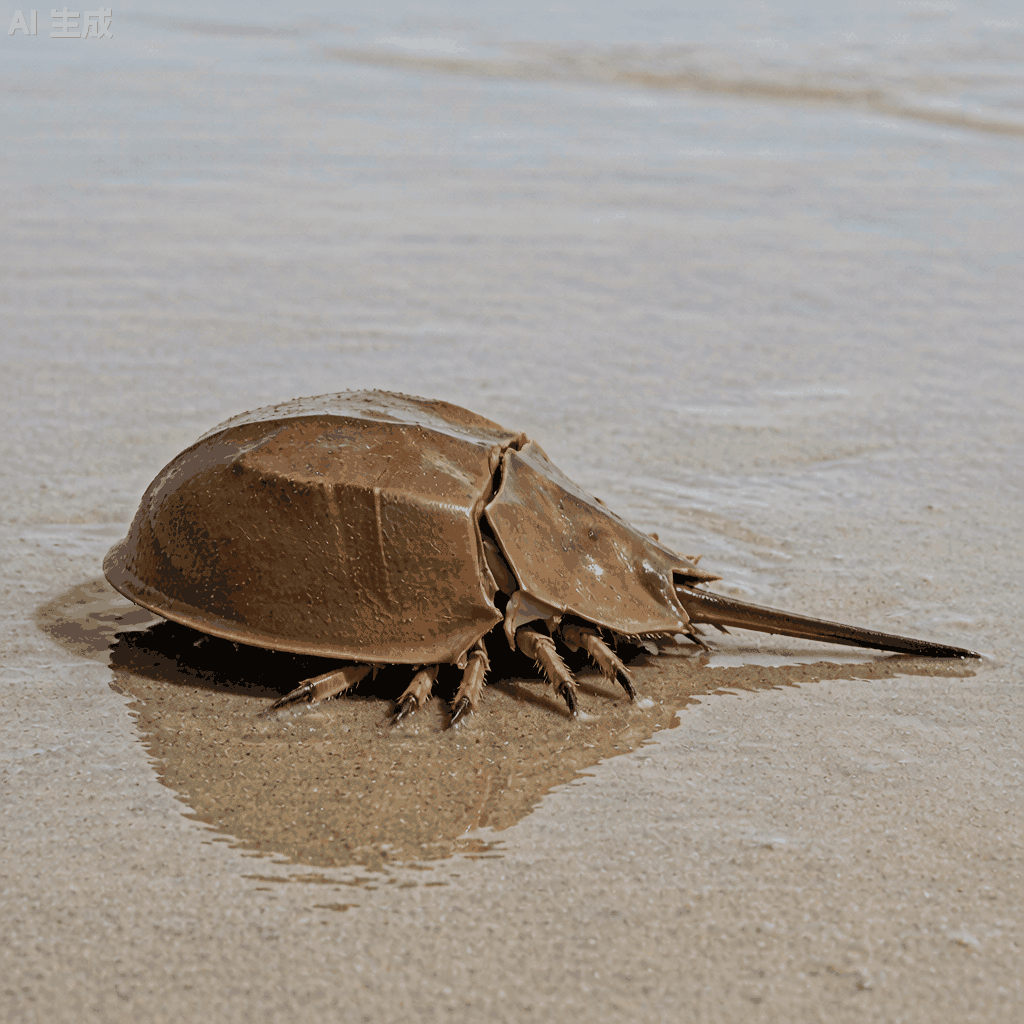
Introduction
The Atlantic horseshoe crab, scientifically known as Limulus polyphemus, is one of the most ancient and ecologically significant animals inhabiting the coastal waters of North America. Despite its common name, the Atlantic horseshoe crab is not a true crab at all, but rather a marine arthropod belonging to a lineage that has survived for over 450 million years — long before the first dinosaurs appeared on Earth. This makes Limulus polyphemus one of the oldest living animal species on the planet, a living fossil whose basic body plan has changed remarkably little since it first appeared in the fossil record during the late Ordovician period. Found along the Atlantic coast of the United States and Mexico, the Atlantic horseshoe crab is a keystone species in coastal and estuarine ecosystems, playing important roles in the food web, serving as a prey species for migratory shorebirds, and contributing to human medicine through the remarkable properties of its blue, copper-based blood.
The Atlantic horseshoe crab is perhaps best known for its distinctive horseshoe-shaped exoskeleton, which gives the species its common name and immediately sets it apart from all other marine animals found in its range. The body is divided into three main sections: a broad, arched prosoma at the front that houses the animal’s brain and main sensory organs including ten eyes; a midsection called the opisthosoma that contains the reproductive organs and gills; and a long, spike-like telson, or tail spine, that the animal uses for steering and for levering itself upright if it is accidentally flipped over. Despite its somewhat fearsome appearance, the Atlantic horseshoe crab is completely harmless to humans and poses no threat, using its tail not for stinging but purely as a mechanical tool for navigation and self-righting.
Taxonomy
Limulus polyphemus is classified within the phylum Arthropoda, the largest and most diverse phylum in the animal kingdom, which includes insects, spiders, crustaceans, and many other groups. Within Arthropoda, the horseshoe crab belongs to the class Merostomata, the order Xiphosura, and the family Limulidae. The genus name Limulus means askew or tilted to one side, a reference to the animal’s somewhat asymmetrical appearance, while the species name polyphemus honors Polyphemus, the one-eyed giant of Greek mythology, a reference to the two prominent compound eyes that dominate the animal’s lateral visual field. The species is the only horseshoe crab native to the Atlantic coast of North and Central America, though it shares the order Xiphosura with several other species found in Asia.
There are four living species of horseshoe crab in the world, all belonging to the family Limulidae. The Atlantic horseshoe crab (Limulus polyphemus) is found along the western Atlantic from Nova Scotia to the Yucatan Peninsula. The three other species — the Japanese horseshoe crab (Tachypleus tridentatus), the coastal horseshoe crab (Tachypleus gigas), and the mangrove horseshoe crab (Carcinoscorpius rotundicauda) — are all found in the Indo-Pacific region, ranging from Japan and Southeast Asia to India and the eastern coast of Africa. Molecular phylogenetic studies have confirmed that the Atlantic species diverged from its Indo-Pacific relatives approximately 50 to 60 million years ago, following the extinction of the dinosaurs and the opening of the Atlantic Ocean as the continents continued to separate.
Physical Characteristics
The Atlantic horseshoe crab has a distinctive and highly recognizable body form that has remained virtually unchanged for hundreds of millions of years. The prosoma, the front section of the body, is broad and semicircular, covered by a smooth, dark brown to olive-green exoskeleton that provides protection and serves as a site for muscle attachment. The prosoma houses the animal’s brain, located on its ventral surface, and two large compound eyes on its dorsal surface, along with several smaller eyes including a single median eye and several rudimentary frontal eyes that are sensitive to ultraviolet light. The animal’s compound eyes are among the most sensitive light-detecting organs in the animal kingdom, capable of detecting even single photons under optimal conditions.
The opisthosoma, or midsection, is narrower than the prosoma and is covered by a series of fused plates that bear six pairs of marginal spines, or branchial spines, along each side. The first five pairs of branchial spines conceal the animal’s five pairs of book gills, which are the primary sites of gas exchange and are also used for propulsion during swimming. The sixth pair of branchial spines is modified to form a pair of chelicerae, small pincer-like appendages that the horseshoe crab uses to manipulate food and transfer it to the mouth, located on the underside of the prosoma. The telson, or tail spine, extends from the rear of the opisthosoma and can measure 20 to 50 centimeters in length in adult specimens. Despite its intimidating appearance, the telson is not barbed or venomous, and the horseshoe crab uses it primarily to lever itself upright if overturned and to steer during swimming.
Habitat and Distribution
The Atlantic horseshoe crab is found along the western Atlantic coastline from southern Maine in the north to the Yucatan Peninsula in the south, including the Gulf of Mexico and the Florida Keys. The species is most abundant in the mid-Atlantic states of the United States, particularly in Delaware Bay, which hosts one of the largest concentrations of spawning horseshoe crabs in the world. Additional important populations are found along the coasts of Virginia, Maryland, North Carolina, and South Carolina, as well as in Florida and along the Gulf Coast. The Atlantic horseshoe crab is a coastal and estuarine species that requires both open marine habitats and sheltered tidal environments for different phases of its life cycle.
Adult Atlantic horseshoe crabs spend most of their lives in the shallow waters of the continental shelf, typically at depths of less than 50 meters, though they can occasionally be found at depths of up to 200 meters. They are strong swimmers, propelling themselves through the water using the flapping motion of their book gills, though they are equally comfortable crawling along the seafloor. During the breeding season, which peaks in the spring and fall in most parts of the species’ range, adult horseshoe crabs migrate into shallow coastal waters and onto sandy beaches where they congregate in large numbers to mate and spawn. Females lay their eggs in the sand above the high-water line, and the males fertilize them externally as they are deposited. These nesting beaches are critically important for the species’ reproduction and are protected in many states through beach closures and conservation programs.
Diet and Behavior
The Atlantic horseshoe crab is an opportunistic omnivore and scavenger that feeds primarily at night on the soft sediments of the seafloor. Its diet consists primarily of clams, mussels, other bivalves, and various soft-bodied invertebrates including marine worms, sea cucumbers, and small crustaceans. The horseshoe crab does not have true teeth but instead uses the grinding action of its chelicerae and the muscles of its foregut to crush and process food items before ingestion. The animal locates prey primarily using chemoreception, detecting chemical cues released by potential food sources in the surrounding water and sediments, and also uses tactile cues from its appendages to identify and capture prey items.
The behavior of the Atlantic horseshoe crab is closely tied to its annual breeding migration, which is one of the most dramatic natural events in the coastal ecosystems of the Atlantic seaboard. During the spring spawning season, which peaks in May and June in the Delaware Bay region, hundreds of thousands of horseshoe crabs converge on sandy beaches during high tides associated with the full and new moons. Males arrive first and await the arrival of females, which they clasp onto using specialized hooks on their prosoma called pedipalps. The paired male and female make their way to the surf zone, where the female deposits clusters of eggs in the sand as the male simultaneously fertilizes them. The eggs are buried in the sand above the high-water line, where they develop over the course of several weeks before hatching into tiny larval horseshoe crabs that make their way back into the ocean.
Reproduction
Reproduction in the Atlantic horseshoe crab is a seasonal event that is triggered by a combination of environmental cues including water temperature, tidal cycles, and lunar phase. The breeding season in most parts of the species’ range spans from approximately April to July, with peak spawning activity occurring during the highest tides of the spring and fall. Males use their modified pedipalps to clasp onto the opisthosoma of the female and release spermatophores as the female deposits her eggs. A single female can lay clusters of approximately 3,000 to 4,000 eggs per spawning event, and she may return to the beach to spawn multiple times during a single season, producing a total of up to 100,000 eggs in a single year.
The fertilized eggs of Limulus polyphemus undergo several developmental stages within the egg case before hatching as trilobite larvae, a form that resembles the larval stage of ancient trilobites and provides a living link to the deep evolutionary history of arthropods. The trilobite larvae spend several weeks in the plankton before settling to the seafloor and beginning the transition to the juvenile form. Juvenile horseshoe crabs molt periodically as they grow, shedding their old exoskeleton and expanding their body size with each successive molt. The species continues to molt throughout its life, though the frequency of molting decreases as the animal matures. Atlantic horseshoe crabs reach sexual maturity at approximately 9 to 11 years of age, and adults continue to grow and molt throughout their lives, with some individuals living for more than 20 years in the wild.
Conservation Status
The Atlantic horseshoe crab is currently listed as a species of Vulnerable by the International Union for Conservation of Nature (IUCN), reflecting significant population declines in parts of its range over the past several decades. The primary drivers of population decline include overharvesting for bait and for the biomedical industry, habitat loss and degradation of spawning beaches, and the impacts of coastal development on critical nursery and breeding habitats. The species is harvested extensively for use as bait in the eel and conch fisheries of the mid-Atlantic states, with millions of horseshoe crabs removed from the population each year. While some states have implemented harvest quotas and beach protection measures, the effectiveness of these regulations varies across the species’ range.
The Atlantic horseshoe crab is also critically important to human medicine, as its blue, copper-based blood contains a substance called Limulus Amebocyte Lysate (LAL), which clots in the presence of bacterial endotoxins. This remarkable property has made horseshoe crab blood an invaluable tool for detecting contamination in vaccines, injectable drugs, and medical devices, saving countless human lives. However, the biomedical harvesting process involves collecting blood from living horseshoe crabs and returning them to the ocean, and while survival rates are generally high, some individuals die as a result of the procedure. Conservation groups are working to develop synthetic alternatives to LAL that would eliminate the need for harvesting wild horseshoe crabs, though these alternatives are not yet widely adopted.
Fun Facts
The Atlantic horseshoe crab is often described as a living fossil because its basic body plan has remained essentially unchanged for over 450 million years, making it one of the oldest animal lineages on Earth. The species predates the dinosaurs by approximately 200 million years and has survived multiple mass extinction events that eliminated the majority of life on the planet, including the event that wiped out the non-avian dinosaurs. This remarkable longevity is a testament to the effectiveness of the horseshoe crab’s basic body plan, which has proven to be remarkably adaptable to changing environmental conditions over geological timescales.
The blue blood of the Atlantic horseshoe crab is one of the most valuable biological substances in modern medicine. Its ability to detect bacterial contamination has made it indispensable to the pharmaceutical and medical device industries, and the demand for horseshoe crab blood drives a multimillion-dollar industry. Every year, biomedical companies harvest hundreds of thousands of horseshoe crabs, extract their blood, and return them to the ocean. While the blood extraction process is designed to minimize mortality, conservation scientists estimate that between 10 and 30 percent of harvested crabs die as a result of the procedure. Researchers around the world are racing to develop reliable synthetic alternatives to horseshoe crab blood, with some promising candidates already in use, offering the hope that this ancient and valuable species may one day be freed from the demands of the biomedical industry.