 By st20113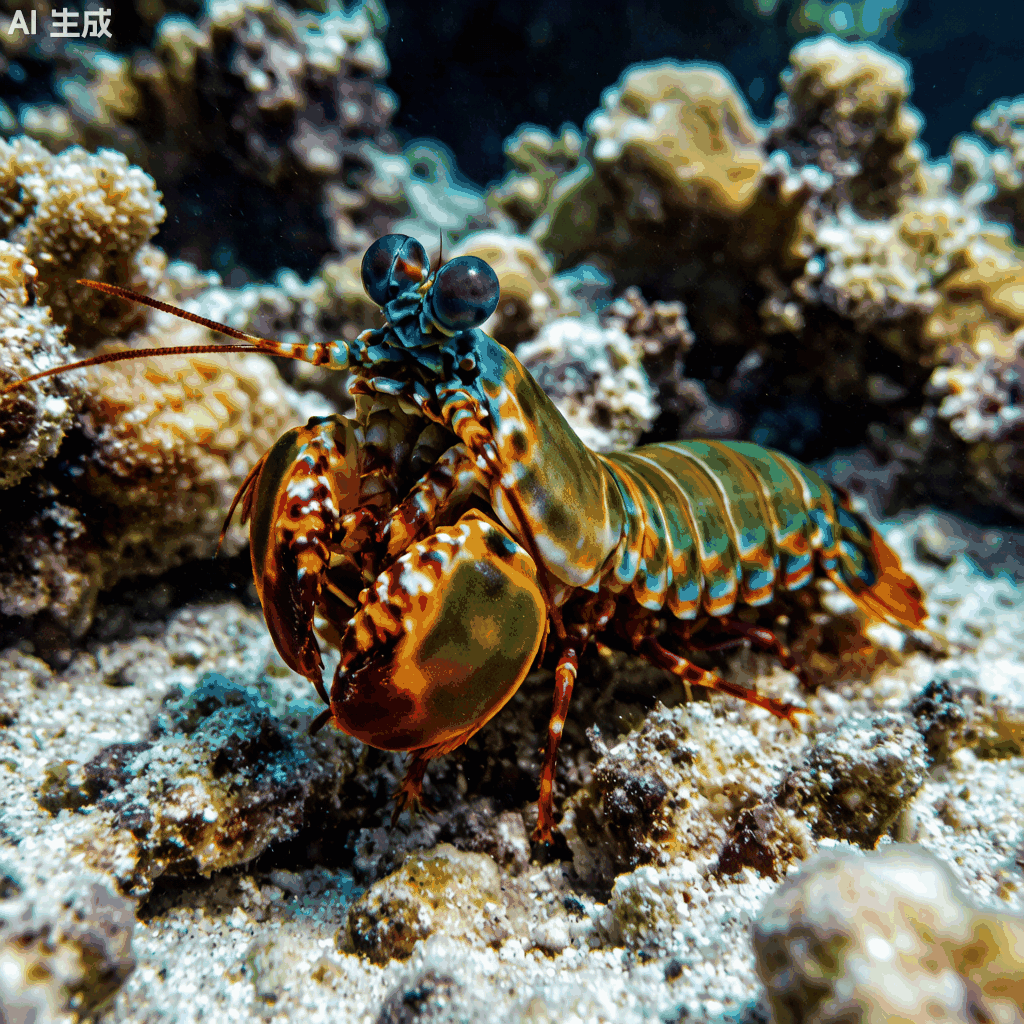
Introduction
The Mantis Shrimp, scientifically known as Odontodactylus scyllarus, is one of the most remarkable crustaceans in the ocean. Despite its name, it is neither a mantis nor a true shrimp, but belongs to the order Stomatopoda. These fascinating creatures are renowned for their extraordinary vision and powerful striking capabilities, making them one of the most formidable predators in their ecosystem.
Mantis shrimps have captured the imagination of scientists and marine enthusiasts alike due to their incredible abilities. They possess the most complex eyes in the animal kingdom and can deliver strikes with the speed of a bullet. Found in tropical and subtropical waters worldwide, these colorful creatures play important ecological roles as both predators and prey in coral reef ecosystems.
Taxonomy
Mantis shrimps belong to the order Stomatopoda within the class Malacostraca. They are crustaceans more closely related to lobsters and crabs than to true shrimp. The peacock mantis shrimp, Odontodactylus scyllarus, is one of approximately 400 species of stomatopods. These ancient creatures have existed for over 400 million years, with fossil records dating back to the Devonian period.
Stomatopods are divided into two main groups based on their hunting mechanisms: smashers and spearers. The peacock mantis shrimp is a smasher, equipped with club-like appendages for crushing prey. This adaptation distinguishes them from spearer species that possess sharp, barbed claws for impaling soft-bodied prey. Unlike the gentle common octopus, mantis shrimps are aggressive hunters.
Physical Characteristics
Peacock mantis shrimps are among the most colorful creatures in the ocean, displaying vibrant shades of green, blue, red, and orange across their bodies. Adults typically reach lengths of 3-7 inches, though some species can grow larger. Their most distinctive feature is their pair of raptorial appendages, which they fold beneath their bodies in a praying mantis-like posture, giving them their common name.
Their compound eyes are mounted on stalks and can move independently, providing 360-degree vision. Each eye possesses trinocular vision and can perceive depth with just one eye, unlike humans who require both eyes for stereoscopic vision. These remarkable eyes can detect polarized light and see colors across a spectrum far beyond human capability, including ultraviolet and infrared wavelengths. Their exoskeleton provides protection, though they share habitats with creatures like the blue-ringed octopus.
Habitat
Mantis shrimps inhabit tropical and subtropical marine environments, preferring coral reefs, rocky coastlines, and sandy bottoms where they can construct burrows. They are found at depths ranging from shallow intertidal zones to over 1,300 feet deep. These burrowing creatures excavate complex tunnel systems in sediment or occupy natural cavities in coral and rock formations.
Their burrows serve multiple purposes: shelter from predators, protection during molting, and ambush points for hunting. Mantis shrimps are territorial and will fiercely defend their burrows against intruders. In reef ecosystems, they often share space with green sea turtles that graze nearby. Temperature and water quality significantly influence their distribution, with most species preferring warm waters with stable conditions. Some larger species have even been known to smash aquarium glass, making them challenging to keep in captivity.
Diet
Mantis shrimps are voracious predators with a varied diet that includes mollusks, crustaceans, and small fish. Smasher species like the peacock mantis shrimp use their powerful claws to break open hard-shelled prey such as crabs, snails, and clams. Their strike generates forces exceeding 1,500 newtons, enough to shatter thick aquarium glass and easily crush the shells of their prey.
Their hunting technique involves waiting in ambush near their burrow entrance before unleashing lightning-fast strikes. The speed of their strike creates cavitation bubbles that generate heat nearly as hot as the sun’s surface upon collapse. This secondary shock wave can stun or kill prey even if the initial strike misses. Their diet varies seasonally based on prey availability. While they hunt near the seafloor, the tiger shark hunts in the waters above.
Reproduction
Mantis shrimps exhibit complex mating behaviors and reproductive strategies. Most species are solitary except during mating season, when males actively search for receptive females. Courtship rituals involve visual displays, color changes, and sometimes gentle tapping with their antennules. Mating typically occurs within or near the female’s burrow.
After fertilization, females carry their eggs in a mass beneath their tails, protecting them until they hatch. Egg masses can contain thousands of eggs, depending on the species and female size. The incubation period varies from several weeks to months, influenced by water temperature and species. Larval mantis shrimps are planktonic, drifting in ocean currents before settling to the seafloor and developing into juveniles. Unlike the coconut crab, mantis shrimp larvae spend considerable time in the water column.
Conservation
Mantis shrimps are not currently listed as endangered or threatened species. However, they face challenges from habitat destruction, particularly coral reef degradation due to climate change, ocean acidification, and pollution. As reef-dependent creatures, their populations are closely tied to the health of coral ecosystems, which face unprecedented threats globally.
Ocean warming and acidification affect both mantis shrimp habitats and the availability of their prey. Coral bleaching events reduce suitable habitat complexity and prey abundance. Pollution from coastal development and agricultural runoff degrades water quality. While not directly targeted by commercial fisheries, mantis shrimps are sometimes caught as bycatch or collected for the aquarium trade. Their popularity in marine aquariums has led to increased collection pressure in some regions. Marine protected areas help safeguard their habitats alongside species like the humpback whale.
Fun Facts
Mantis shrimps can deliver punches so fast that they break the sound barrier, creating audible cracks that sound like gunshots. Their strike accelerates from 0 to 50 mph in just three milliseconds, faster than the human eye can perceive. This makes them one of the fastest animals on Earth relative to their size.
Each mantis shrimp eye contains over 10,000 ommatidia and can see 12-16 types of photoreceptor cells, compared to humans who have only 3 for color vision. They are the only animals known to detect circular polarized light. Their incredible vision has inspired advances in camera technology and optical sensors. Scientists study their eyes to develop better cancer detection methods and improved DVD technology. Despite their aggressive nature, they are popular in the aquarium trade, though their ability to break glass requires special housing considerations.