 By st20113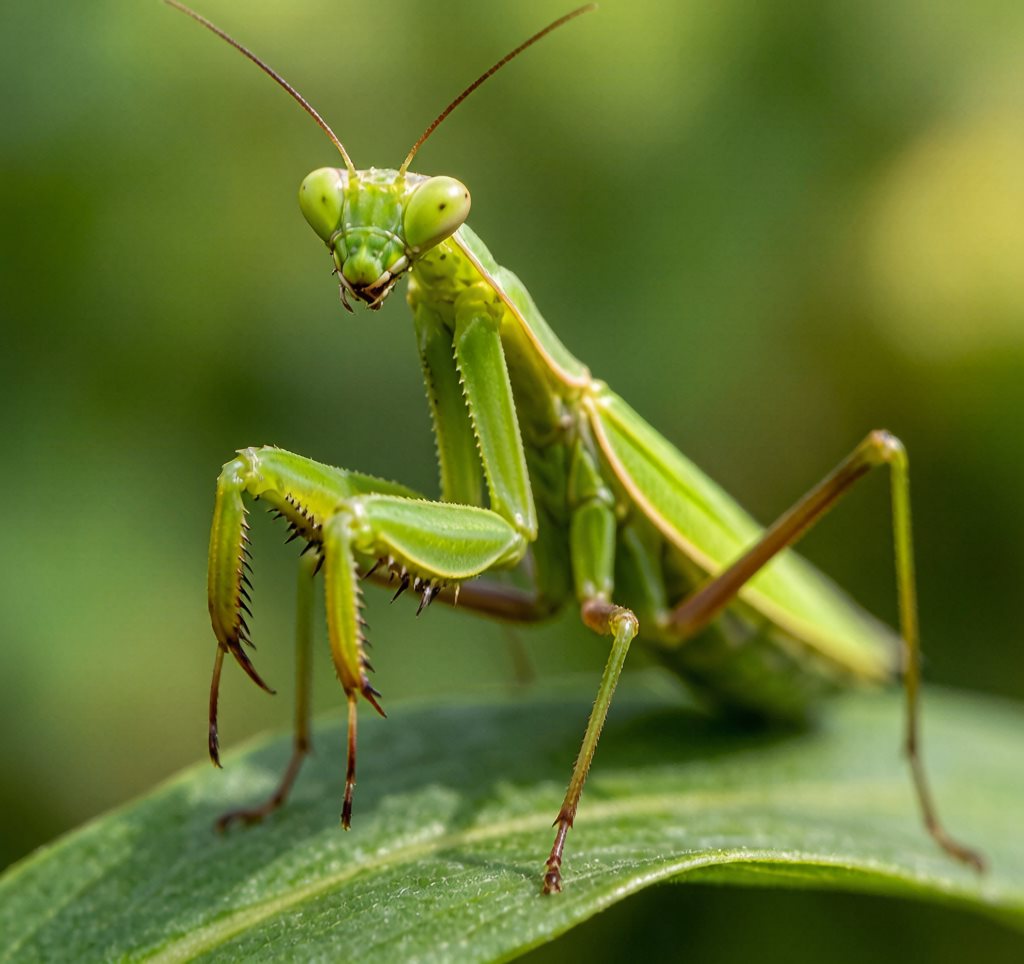
Introduction
The European Praying Mantis (Mantis religiosa) is one of the most recognizable and widely distributed insects on Earth, found natively in southern Europe and parts of Asia and Africa, and inadvertently introduced to many other regions through human activity. Its name derives from the prayer-like position of its front legs, held folded and raised as if in supplication. The European Praying Mantis is a formidable predator of insect pests, making it a welcome presence in agricultural settings and home gardens, where it plays a natural role in pest control without the need for chemical interventions. Its remarkable visual capabilities, including stereo vision in a head that can rotate nearly 180 degrees, make it one of the most visually acute invertebrates in the animal kingdom.
In North America, where the European Praying Mantis has become firmly established following its introduction in the late nineteenth century, it is often simply called the Praying Mantis. The species has become an emblem of patience, alertness, and predatory precision in human culture, appearing in art, literature, and folklore across multiple continents.
Taxonomy
The European Praying Mantis was formally described by Charles de Geer in 1773, making it one of the earliest mantid species to receive a scientific name. The species name religiosa reflects the characteristic praying posture, though some folk traditions attributed religious significance to the insect habit of raising its head, giving rise to the alternate name “soothsayer.” Within the genus Mantis, the European Praying Mantis is considered one of the core species, with Mantis serving as the type genus for the entire order Mantodea.
Phylogenetic analyses based on molecular data have confirmed the European Praying Mantis position within the subfamily Mantinae, which contains numerous other medium-sized mantid species found throughout the Old World tropics and temperate regions. The closest relatives of Mantis religiosa include other Mantis species found in Africa and Asia, suggesting that the European Praying Mantis shares a common ancestor with these species that likely lived in Africa before some populations dispersed northward into Europe and Asia. The Honey Bee and the mantis, though unrelated, have both been extensively studied for their remarkable sensory systems.
Physical Characteristics
The European Praying Mantis is a medium to large insect, with adult females reaching body lengths of up to 9 centimeters and males typically measuring 5 to 7 centimeters. The body is slender and elongated, with a distinctive triangular head that can rotate independently to provide an exceptionally wide field of view. The head carries two large compound eyes positioned on the sides and three small simple eyes, or ocelli, on the forehead, providing the mantis with highly developed binocular stereoscopic vision that allows it to judge the distance of prey with remarkable accuracy.
The front legs are the most distinctive feature: called raptorial forelegs, they are greatly elongated and modified for capturing and holding prey. Each foreleg bears a series of sharp spines along the inner surface of the tibia and femur, which interlock when the leg is folded to create an efficient trapping mechanism. When prey is within range, the mantis strikes with explosive speed, unfolding its forelegs in a fraction of a second to impale the victim on the spines. The European Praying Mantis is typically green or brown in color, matching the vegetation in which it lives, and this camouflage is critical to its success as an ambush predator.
Habitat
The European Praying Mantis inhabits warm, open environments including meadows, grasslands, shrublands, and the margins of cultivated fields and gardens across its native southern European range. Its habitat preferences center on areas with abundant vegetation structure, because these provide both the camouflage needed for successful ambush hunting and the structural support needed for egg-laying. The species thrives in warm, sunny conditions and is most active during the summer months, when temperatures are consistently in the range of 20 to 30 degrees Celsius. It avoids dense forest and heavily shaded environments, preferring the open, sunlit habitats where its visual hunting strategy is most effective.
The spread of the European Praying Mantis to new continents was facilitated by human commerce, specifically through the inadvertent transport of egg cases (oothecae) attached to imported plants and agricultural materials. The species was first recorded in North America around 1899 and has since become one of the most common mantid species across the continent, from southern Canada to Mexico. The Butterfly and the mantis share many of the same meadow and garden habitats, where both are familiar sights during the summer months.
Diet
The European Praying Mantis is an obligate carnivore that feeds almost exclusively on other insects, making it a valuable biological control agent in gardens and agricultural settings. Its prey includes crickets, grasshoppers, flies, moths, and spiders. Large adult mantises are capable of capturing prey nearly their own body size. The mantis uses its excellent vision to detect movement from a considerable distance, then adopts a sit-and-wait strategy, remaining perfectly motionless with its forelegs folded until an unsuspecting prey item comes within range. The strike is astonishingly fast, typically executed in 50 to 70 milliseconds, and is followed immediately by the mantis powerful bite to subdue and consume the victim.
Despite its reputation as an indiscriminate predator, the European Praying Mantis shows a measurable preference for certain prey types based on availability and ease of capture. Fast-moving flying insects are often preferred when abundant, while slower-moving ground-dwelling insects become the primary prey when flying insects are scarce. The mantis is opportunistic and will take almost any living animal it can overpower, including pest insects such as aphids, leafhoppers, and caterpillars. A single adult mantis can consume hundreds of insects over the course of a summer.
Reproduction
The reproductive season coincides with the warmest months, typically from late summer through early autumn. Males actively search for females, navigating through vegetation using visual cues and pheromone signals released by receptive females. The mating process is a famously precarious affair for the male, because the female is considerably larger and more powerful, and sexual cannibalism is a well-documented phenomenon in mantises. While sexual cannibalism does not occur in every mating event and is less common in natural settings than popular culture suggests, some males have evolved behaviors to minimize the risk, such as approaching the female from behind and fleeing quickly after sperm transfer is complete.
After mating, the female deposits a frothy, foam-like egg case called an ootheca, containing between 100 and 400 eggs. The ootheca is attached to a sturdy support structure such as a stem, twig, fence post, or wall, where it overwinters through the cold months, protected by its tough outer membrane from frost and predation. The eggs hatch the following spring, releasing dozens of tiny nymphs that disperse immediately into the surrounding vegetation. Each nymph is a miniature version of the adult and will molt multiple times over the course of the summer before reaching maturity.
Conservation
The European Praying Mantis is classified as a species of Least Concern by the IUCN Red List, reflecting its broad geographic range and large, stable populations across multiple continents. However, localized population declines do occur in response to specific threats, including habitat loss, pesticide use, and collection for the pet trade. In parts of its native European range, the use of broad-spectrum insecticides in agriculture has reduced mantis populations in intensively farmed areas.
In North America, where the European Praying Mantis is an introduced species, it occupies a more complicated ecological position. While it provides genuine pest control benefits, it also preys on native insects and has been implicated in negative impacts on native mantid populations, particularly smaller species that compete for similar prey. In Australia, the introduced mantis has been the subject of ecological risk assessments, with scientists monitoring its interactions with native invertebrate communities.
Fun Facts
One of the most distinctive abilities of the European Praying Mantis is its capacity to rotate its head nearly 180 degrees, an ability shared by very few other insects. This, combined with its large, forward-facing compound eyes, gives the mantis extraordinary situational awareness for an invertebrate. Another remarkable fact is that the European Praying Mantis has only a single ear, located on the underside of its body, sensitive specifically to the ultrasonic frequencies used by bats for echolocation. This allows the mantis to detect approaching bats and take evasive action, even in complete darkness.
The ootheca, or egg case, is a marvel of natural engineering. The frothy substance secreted by the female during egg-laying contains structural proteins that harden into a protective case capable of withstanding temperatures as low as minus 20 degrees Celsius and resisting parasites and fungal infections. Each ootheca can contain well over 200 eggs, making the mantis one of the most prolific insect predators on a per-clutch basis. The Wolf Spider shares the mantis habitat preferences in many regions, and both are efficient nocturnal predators of insect prey.