 By st20113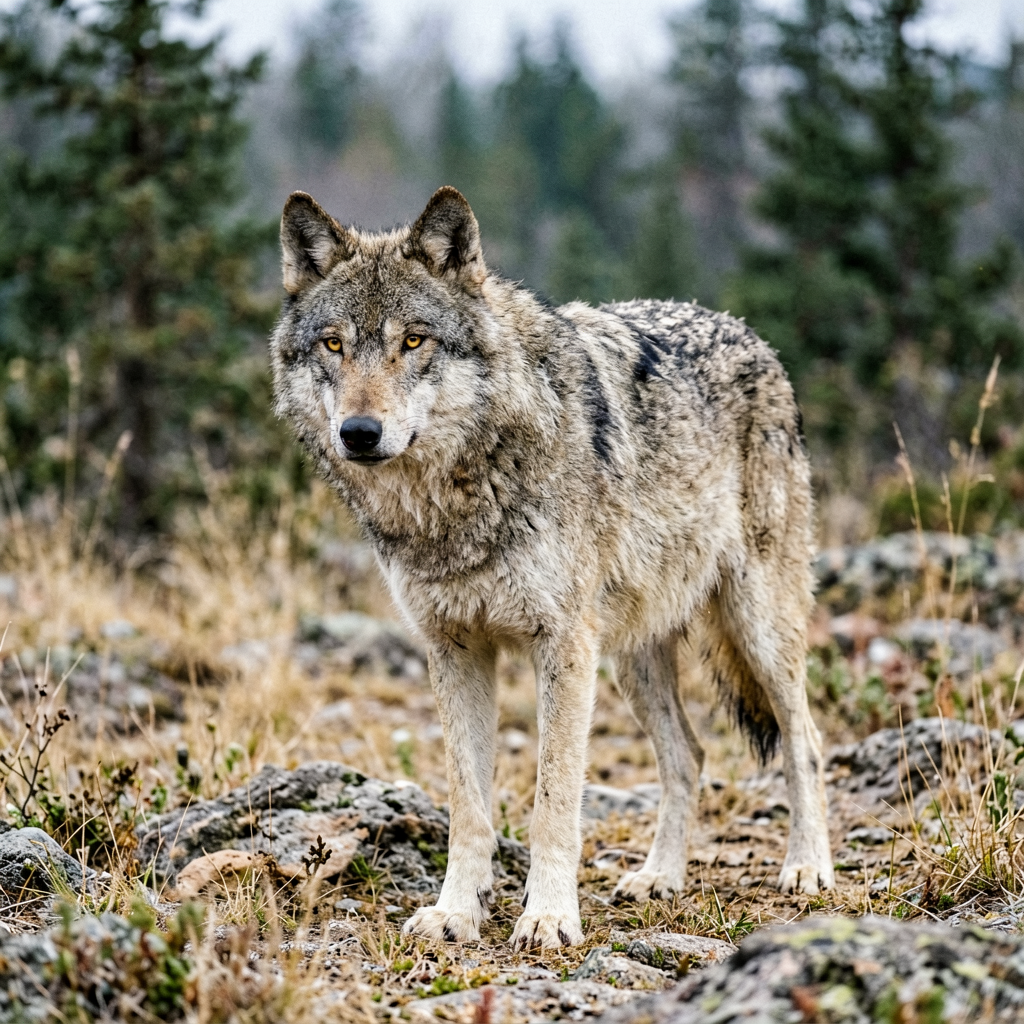
Canis lupus | Grey Wolf
Introduction
The grey wolf (Canis lupus) is a large canid and the largest extant member of the family Canidae. Native to the Americas and Eurasia, it is a highly social predator that has played a significant ecological and cultural role across the northern hemisphere for millennia. Wolves are renowned for their intelligence, complex communication, and cooperative hunting strategies that enable them to take down prey much larger than themselves.
Historically, grey wolves ranged across vast territories spanning forests, tundra, grasslands, and mountains. Their decline in many regions began with European colonization and intensified during the 19th and 20th centuries due to habitat destruction, bounty programs, and persecution by livestock farmers. Today, conservation efforts have helped stabilize and even expand some populations, though wolves remain threatened or extinct in much of their former range.
The species is the ancestor of all domestic dogs, a relationship that has shaped human civilization profoundly. Genetic studies confirm that dogs diverged from an extinct lineage of wolves thousands of years ago, making the grey wolf the closest living relative to Canis lupus familiaris.
Taxonomy
The grey wolf was first described by Carl Linnaeus in his 1758 work Systema Naturae. It belongs to the genus Canis, which also includes coyotes, golden jackals, and domestic dogs. Modern taxonomy recognizes numerous subspecies, though the number varies among authorities depending on whether morphological or genetic criteria are applied.
Molecular research has refined our understanding of wolf classification. Genetic evidence suggests that some traditionally recognized subspecies, such as the Indian wolf and the Arabian wolf, may warrant elevation to full species status. Meanwhile, the Eurasian grey wolf and the North American wolf are now often treated as a single subspecies, Canis lupus lupus, due to their close genetic relationship.
Wolves are closely related to several other canids, including the Arctic Fox, which shares parts of their northern range. Despite their differences in size and ecology, both species have adapted to survive in harsh, cold environments through specialized fur, behavioral strategies, and dietary flexibility.
Physical Description
Grey wolves are robustly built animals with a deep chest, powerful shoulders, and long legs adapted for endurance running. Adult males typically weigh between 30 and 45 kilograms, while females are somewhat smaller at 25 to 37 kilograms. Body length ranges from 1 to 1.6 meters, with a tail measuring 30 to 50 centimeters. Wolf size tends to increase with latitude, following Bergmann’s rule.
Their coat is thick and varies in color depending on geographic location and subspecies. Common colorations include grey, brown, black, white, and various combinations thereof. The black coat coloration, found in many North American populations, results from a genetic mutation that originated in dogs and was later introduced into wolf populations. Seasonal molting produces a dense winter undercoat and a lighter summer coat.
Wolves possess powerful jaws capable of generating a bite force of approximately 1,500 pounds per square inch, allowing them to crush bone. Their large, broad paws act as natural snowshoes, and their keen senses of hearing and smell are among the most developed in the carnivore order.
Habitat
Grey wolves inhabit a wide range of ecosystems, from arctic tundra and boreal forests to temperate woodlands and semi-desert regions. They prefer areas with dense cover for denning and sufficient prey availability. In North America, wolves are found primarily in Alaska, Canada, and parts of the northern United States, while Eurasian populations persist across Scandinavia, Russia, and parts of Eastern Europe.
Wolves require large territories to sustain themselves, with home ranges varying from 50 to over 2,000 square kilometers depending on prey density and terrain. They are highly adaptable and can coexist with other large predators, though competition with species such as the Brown Bear can influence their spatial distribution and hunting behavior.
Human presence remains the primary factor limiting wolf habitat expansion. Wolves avoid heavily populated areas but can persist in landscapes modified by human activity, provided that prey bases remain intact and persecution is minimal.
Diet
Grey wolves are apex predators and obligate carnivores whose diet consists primarily of large ungulates. Their main prey includes elk, moose, deer, bison, caribou, and wild boar, depending on the region. Wolves typically hunt in packs, using coordinated strategies to isolate and exhaust their prey over long distances.
Smaller prey such as beavers, hares, and rodents supplement their diet, particularly during seasons when large ungulates are scarce. Wolves are also known to scavenge carcasses and will consume berries and other plant material on occasion, though these items make up a negligible portion of their nutrition.
A single wolf can consume up to 20 kilograms of meat in one feeding, followed by periods of fasting. This feeding pattern allows them to survive when prey is scarce and to efficiently process large kills before competitors arrive.
Reproduction
Wolves are monogamous, and breeding pairs typically remain together for life. Mating occurs in late winter, and after a gestation period of approximately 63 days, the female gives birth to a litter of four to six pups in a den. Pups are born blind and helpless, relying entirely on the mother and the rest of the pack for nourishment and protection.
The entire pack participates in raising the young, with older siblings often helping to feed and guard the pups. Juveniles remain with the family group for about a year before dispersing to establish their own territories or joining other packs. Sexual maturity is reached at around two years of age.
Wolf packs are typically composed of a breeding pair and their offspring from previous years. The hierarchical structure within a pack minimizes conflict and ensures cooperative care of the next generation.
Conservation
The grey wolf is listed as Least Concern on the IUCN Red List, with an estimated global population of 300,000 individuals. However, conservation status varies significantly by region. Populations in Europe and parts of Asia remain fragmented and vulnerable, while North American numbers have rebounded substantially since protective legislation was enacted.
Key threats include habitat loss, illegal hunting, vehicle collisions, and conflict with livestock operations. Several countries have implemented wolf management programs that balance predator conservation with agricultural interests. Reintroduction efforts, most notably in Yellowstone National Park, have demonstrated the ecological benefits of restoring wolves to their former ranges.
International cooperation through agreements such as CITES and regional conservation plans continues to support wolf recovery. Public education and coexistence strategies are increasingly recognized as essential tools for reducing human-wolf conflict and ensuring long-term survival.
Fun Facts
- Wolves can howl at frequencies ranging from 150 to 780 Hz, allowing their calls to travel up to 10 kilometers across open terrain.
- A wolf pack’s hunting success rate is approximately 14 to 20 percent, significantly higher than that of solitary predators.
- Wolves were completely eradicated from Yellowstone National Park in the 1920s and were reintroduced in 1995, triggering a well-documented trophic cascade that restored ecological balance.
- The largest recorded grey wolf weighed 80 kilograms and was shot in Upper Michigan in 1939.
- Wolves have been shown to recognize and remember individual human faces, distinguishing between people who have treated them kindly and those who have not.
[…] arctos | Brown Bear Canis lupus | Grey Wolf Lepus europaeus | European Hare Dama dama | Fallow Deer Triturus cristatus | Common Newt […]
[…] Lynx lynx | Eurasian Lynx Martes martes | European Pine Marten Ursus arctos | Brown Bear Canis lupus | Grey Wolf Lepus europaeus | European Hare Dama dama | Fallow Deer Triturus cristatus | Common Newt […]
[…] hunting success rate, which far exceeds that of lions and other large predators. Unlike the Grey Wolf, which is known for its pack cooperation, the African wild dog takes social hunting to an even more […]
[…] populations of native herbivores. Despite its name, this species was more closely related to the Grey Wolf than to true wolves, representing an isolated branch of the canid family tree that evolved in […]