 By st20113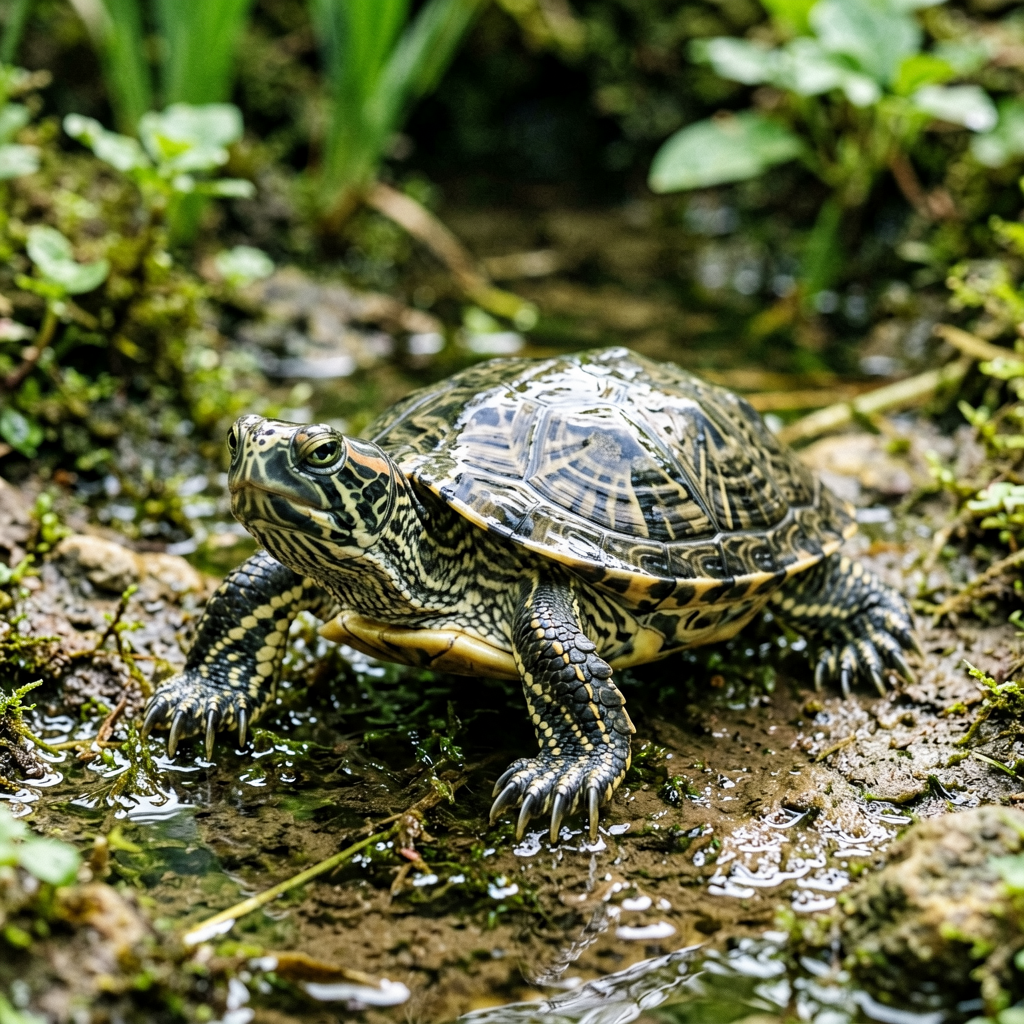
Emys orbicularis | European Pond Turtle
Introduction
The European pond turtle, scientifically known as Emys orbicularis, is a semi-aquatic reptile belonging to the family Emydidae. It is the only species of turtle native to Europe and is distributed across a broad range spanning from western Europe through much of continental Europe, extending into parts of North Africa and western Asia. This species is well adapted to life in and around freshwater environments, where it spends the majority of its time basking, foraging, and breeding.
Despite its relatively modest size compared to other turtle species, the European pond turtle holds significant ecological importance. It plays a role in controlling invertebrate populations and serves as both predator and prey within its habitat. Historically, this species was more widespread and abundant across Europe, but it has experienced substantial declines in many regions due to habitat loss, pollution, and human-related mortality.
The turtle is recognized for its distinctive dark carapace adorned with yellow or olive markings, which gives it a striking appearance. It has been a subject of interest to herpetologists and conservationists alike, particularly because of its fragmented population structure and vulnerability to environmental changes. In several countries, it is legally protected, though enforcement varies widely across its range.
Taxonomy
Emys orbicularis was first described by Carl Linnaeus in 1764 and remains the sole member of its genus. The species is divided into several subspecies, though the taxonomic classification has been the subject of ongoing debate among researchers. Some authorities recognize up to ten subspecies, while others argue for a more conservative classification based on recent genetic studies.
Molecular phylogenetic analyses have revealed significant genetic divergence among populations across the species’ range, suggesting that some subspecies may warrant elevation to full species status. Populations in the Iberian Peninsula, the Balkans, and parts of North Africa show distinct genetic markers that differentiate them from central and western European groups.
The closest living relative of Emys orbicularis is the Japanese pond turtle (Mauremys japonica), with which it shares a common ancestor. Fossil evidence indicates that the lineage of Emys dates back to the Miocene epoch, with remains found across Europe and Asia. For more information on related European wildlife, see the grey-wolf-canis-lupus.
Physical Description
The European pond turtle is a medium-sized aquatic turtle, with adult shell lengths typically ranging from 12 to 25 centimeters. Males are generally smaller and slimmer than females, which can grow considerably larger, especially in southern populations. The carapace is strongly domed and smooth, usually dark brown or black in color, with irregular yellow or olive-green markings that vary among individuals and subspecies.
The plastron is yellow to olive in color and features dark blotches along the margins of each scute. The skin of the head and limbs is dark, often marked with thin yellow stripes, particularly on the neck and legs. Juveniles tend to be more brightly colored than adults, with vivid yellow patterns that gradually fade as the turtle matures.
Adult males can be distinguished from females by their longer and thicker tails, a feature that becomes more pronounced during the breeding season. Their forelimb claws are also longer and more curved, which they use during courtship displays. The beak is relatively weak compared to other turtle species, reflecting its primarily carnivorous diet in the wild.
Habitat
The European pond turtle inhabits a variety of freshwater environments, including slow-moving rivers, streams, ponds, lakes, marshes, and seasonal pools. It prefers habitats with abundant aquatic vegetation, muddy or sandy bottoms, and accessible basking sites such as logs, rocks, or banks. These turtles are highly dependent on the presence of both aquatic and terrestrial elements within their environment.
Warmth is essential for this ectothermic species, and it requires sunny basking spots to regulate its body temperature. In northern parts of its range, the turtle is often found in sheltered, sun-exposed wetlands that warm quickly in spring. In southern regions, it can tolerate drier conditions and may inhabit temporary water bodies that persist through the summer months.
During winter, European pond turtles undergo brumation, burying themselves in the mud at the bottom of ponds and waterways where temperatures remain stable. This dormancy period can last several months in colder climates. The species also shows some association with common-toad-bufo-bufo habitats, as both species share similar wetland preferences and overlapping microhabitats.
Diet
The European pond turtle is primarily carnivorous, especially during its juvenile and subadult stages. Its diet consists mainly of aquatic invertebrates such as insects, larvae, crustaceans, mollusks, and worms. It also consumes small amphibians, fish, and occasionally frog tadpoles when available. This predatory behavior helps regulate invertebrate populations in its ecosystem.
As the turtle matures, its diet may shift slightly to include a greater proportion of plant material, though it remains predominantly meat-eating. Adults have been observed feeding on aquatic plants, algae, and detritus, particularly during periods of food scarcity. The weak beak is well suited for grasping soft-bodied prey rather than crushing hard shells.
Hunting is typically carried out in shallow water, where the turtle ambushes prey or slowly stalks it before striking. On land, it may forage near the edges of water bodies, especially after rainfall when invertebrates are more active. The turtle’s sense of smell plays a crucial role in locating food, as its eyesight is relatively poor underwater.
Reproduction
Breeding in the European pond turtle typically occurs in spring, shortly after emergence from brumation. Males become active and pursue females in the water, performing courtship rituals that include vibrating their long forelimb claws near the female’s face. Successful mating takes place in shallow water, after which the female begins searching for a suitable nesting site.
Females lay between 8 and 30 eggs in a shallow nest dug into sandy or loamy soil near the water’s edge. Nesting usually occurs in late spring or early summer, and the incubation period lasts approximately 60 to 90 days, depending on temperature. Warmer temperatures tend to produce females, while cooler conditions yield males, a phenomenon known as temperature-dependent sex determination.
Hatchlings emerge in late summer or autumn and immediately make their way to nearby water. They are fully independent from birth and face numerous predators, including birds, mammals, and larger aquatic animals. Survival rates during the first year are low, but those that reach adulthood can live for several decades in the wild.
Conservation
The European pond turtle is classified as Near Threatened on the IUCN Red List, though its conservation status varies significantly across its range. In some countries, such as France and Spain, the species is considered vulnerable or endangered due to severe population declines. Habitat destruction, wetland drainage, and urbanization have been the primary drivers of this decline.
Road mortality is a major threat, particularly during spring migration when turtles cross roads to reach breeding sites. Pollution from agricultural runoff and industrial waste further degrades the quality of remaining habitats. Illegal collection for the pet trade has also impacted wild populations in certain regions, despite legal protections in most European countries.
Conservation efforts include habitat restoration, the creation of artificial nesting sites, and public awareness campaigns. Captive breeding programs have been established in several countries to support population recovery. Cross-border cooperation is essential, as many populations are fragmented and require coordinated management strategies to ensure long-term survival.
Fun Facts
- European pond turtles can live for over 50 years in the wild, making them one of the longer-lived reptile species in Europe.
- They are capable of breathing through their cloaca, a process known as cloacal respiration, which allows them to remain submerged for extended periods during brumation.
- Juveniles are often brightly colored, which may serve as a form of camouflage among aquatic vegetation.
- Males perform a unique courtship display by rapidly vibrating their elongated claws in front of the female’s face.
- Despite being protected across much of its range, the species continues to decline in many parts of Europe due to habitat fragmentation.
[…] It is a member of the family Coenagrionidae, the narrow-winged damselflies, alongside the European Pond Turtle‘s wetland neighbours and the red and azure damsels. Its name refers to the goblet-shaped […]