 By st20113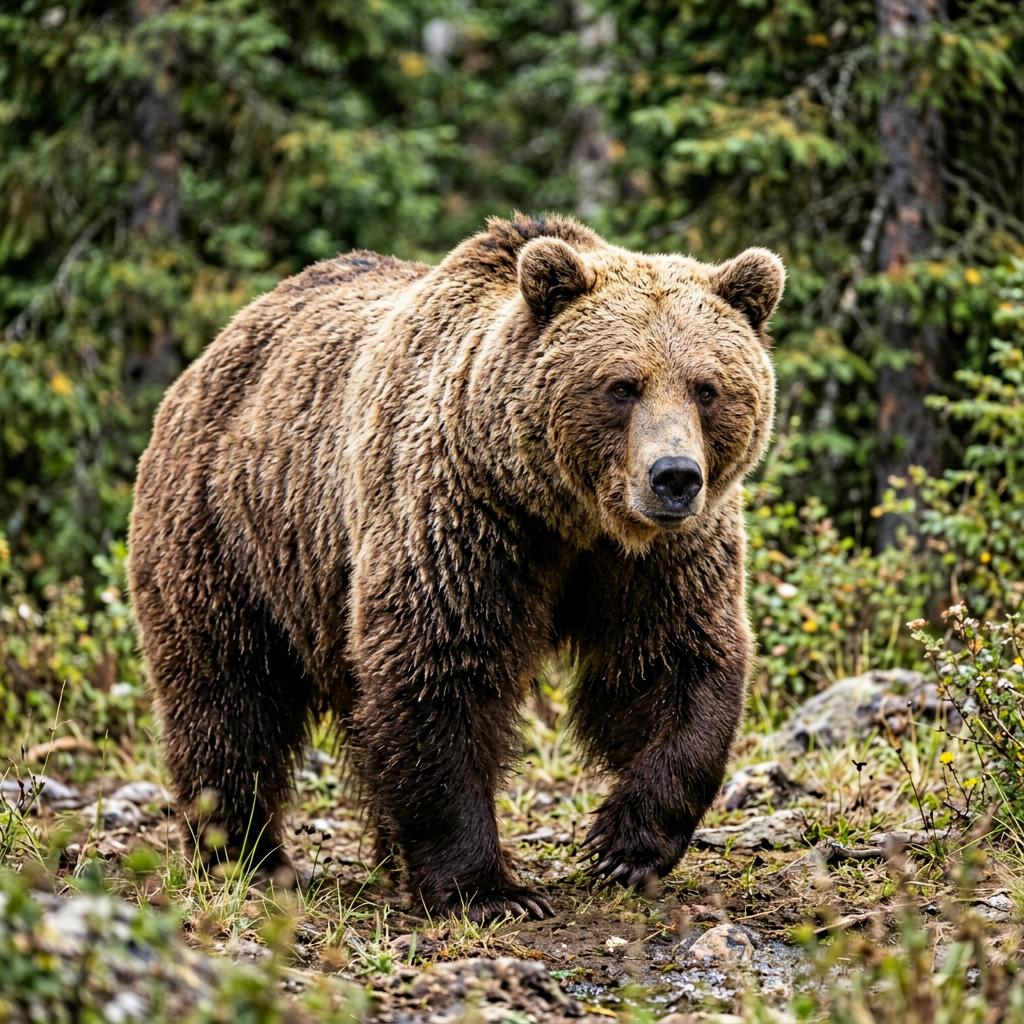
Ursus arctos | Brown Bear
Introduction
The brown bear (Ursus arctos) is one of the largest land carnivores on Earth, belonging to the family Ursidae. Found across North America, Europe, and Asia, this versatile mammal has adapted to a wide range of environments, from dense boreal forests to alpine meadows and coastal regions. Its scientific name, derived from Latin, reflects the characteristic brownish coloration of its coat, though individuals may display fur ranging from blond and cinnamon to nearly black.
Historically, brown bears roamed across much of the Northern Hemisphere, but habitat loss and hunting have significantly reduced their range. Today, substantial populations persist in Alaska, Canada, Scandinavia, and parts of Russia, including the remote wilderness of Siberia. In the contiguous United States, smaller populations survive in regions such as the Greater Yellowstone Ecosystem and the northern Rocky Mountains.
Brown bears hold significant cultural and ecological importance. Indigenous peoples across their range have long revered the species, incorporating it into mythology and spiritual traditions. Ecologically, they serve as keystone predators and seed dispersers, influencing food webs and shaping the landscapes they inhabit.
Taxonomy
The brown bear was first formally described by Carl Linnaeus in his 1758 Systema Naturae. It belongs to the genus Ursus, which also includes the polar bear, the American black bear, and the Asiatic black bear. Molecular studies have revealed that the brown bear is closely related to the extinct Ursus spelaeus, or cave bear, which once roamed across Europe during the Pleistocene epoch.
Numerous subspecies have been recognized over the years, though taxonomic classifications remain debated among scientists. Well-known subspecies include the Kodiak bear (Ursus arctos middendorffi), the grizzly bear (Ursus arctos horribilis), and the Eurasian brown bear (Ursus arctos arctos). The grey wolf (Canis lupus) shares many of the same habitats and ecological roles as a fellow apex predator across northern latitudes.
Recent genetic research has highlighted the complex evolutionary relationships within the species. Brown bears interbreed with polar bears in the wild, producing fertile hybrids known as “pizzly” or “grolar” bears, a phenomenon that has gained attention amid shifting climate patterns and overlapping ranges.
Physical Description
Brown bears are among the most imposing of all bear species. Males typically weigh between 180 and 360 kilograms, though large coastal specimens can exceed 540 kilograms. Females are considerably smaller, generally weighing between 90 and 180 kilograms. Their bodies are powerfully built, with a distinctive shoulder hump composed of muscle that provides additional strength for digging.
The coat varies widely in color and density depending on subspecies and geography. It consists of a thick underfur and longer guard hairs, providing insulation against cold climates. Brown bears possess large, non-retractable claws up to 10 centimeters in length, which they use for digging roots, loosening soil, and catching prey. Their sense of smell is exceptionally acute, estimated to be several times more sensitive than that of a common raven, allowing them to detect food from great distances.
Habitat
Brown bears occupy a remarkably diverse array of habitats. They thrive in temperate and boreal forests, mountainous terrain, tundra, and coastal areas. In North America, they are commonly found in old-growth forests and areas with abundant berry patches. In Eurasia, they inhabit everything from the taiga of Russia to the mixed forests of the Carpathian Mountains.
The availability of food resources, particularly during the critical pre-hibernation period, is the primary determinant of habitat selection. Brown bears require large home ranges, with males sometimes covering hundreds of square kilometers. They depend on undisturbed areas for denning, making habitat fragmentation a significant concern for population viability.
Diet
Brown bears are omnivorous and highly opportunistic feeders. Their diet varies seasonally and geographically, encompassing berries, grasses, roots, insects, honey, fish, and large mammals. In coastal regions of Alaska and British Columbia, brown bears rely heavily on salmon during spawning seasons, consuming thousands of fish annually to build the fat reserves necessary for hibernation.
Inland populations depend more on vegetation, including the tender shoots and bulbs of spring, followed by berries in summer and autumn. They are known to dig for ground squirrels and other small mammals and will scavenge carcasses when the opportunity arises. Their digestive system is adapted to process both plant and animal matter efficiently.
During autumn, brown bears enter a phase of hyperphagia, consuming up to 20,000 calories per day to prepare for hibernation. This period of intense feeding is critical for survival, as bears will not eat, drink, or defecate during their denning period, which can last up to seven months.
Reproduction
Brown bears have a delayed implantation reproductive strategy, meaning the fertilized egg does not immediately implant in the uterus. Mating occurs during late spring or early summer, but the embryo remains dormant until autumn, when implantation takes place. Females typically give birth to one to three cubs in January or February while denning.
Cubs are born tiny and helpless, weighing only 280 to 650 grams. They remain in the den with their mother for approximately five to seven months, emerging in spring. The mother provides care and protection for two to three years before the cubs become independent. Sexual maturity is reached at around four to five years of age for females and five to seven years for males.
Conservation
The brown bear is listed as Least Concern on the IUCN Red List, but population trends vary significantly across its range. In parts of Europe and Asia, habitat loss, poaching, and human-wildlife conflict have led to declining numbers. Conservation efforts in countries such as Spain, Italy, and Japan have focused on protecting critical habitats and reducing mortality from human activities.
In North America, the grizzly bear was listed as threatened under the U.S. Endangered Species Act, though some recovery efforts have yielded positive results. Canada maintains the largest population of brown bears globally, and protected areas such as national parks play a vital role in their conservation.
Ongoing threats include climate change, which affects salmon runs and berry production, as well as infrastructure development that fragments habitats. Continued monitoring and habitat protection are essential to ensuring the long-term survival of this iconic species.
Fun Facts
- Brown bears can run at speeds up to 56 kilometers per hour, making them faster than most humans over short distances.
- A brown bear’s bite force is estimated at over 1,200 pounds per square inch, one of the strongest among land mammals.
- During hibernation, a brown bear’s heart rate can drop from 40 to 19 beats per minute, conserving energy for months.
- Brown bears are excellent swimmers and have been known to cross wide rivers and even short stretches of open ocean.
- The largest recorded brown bear weighed over 770 kilograms and was shot in Alaska in 1960.