 By Iris
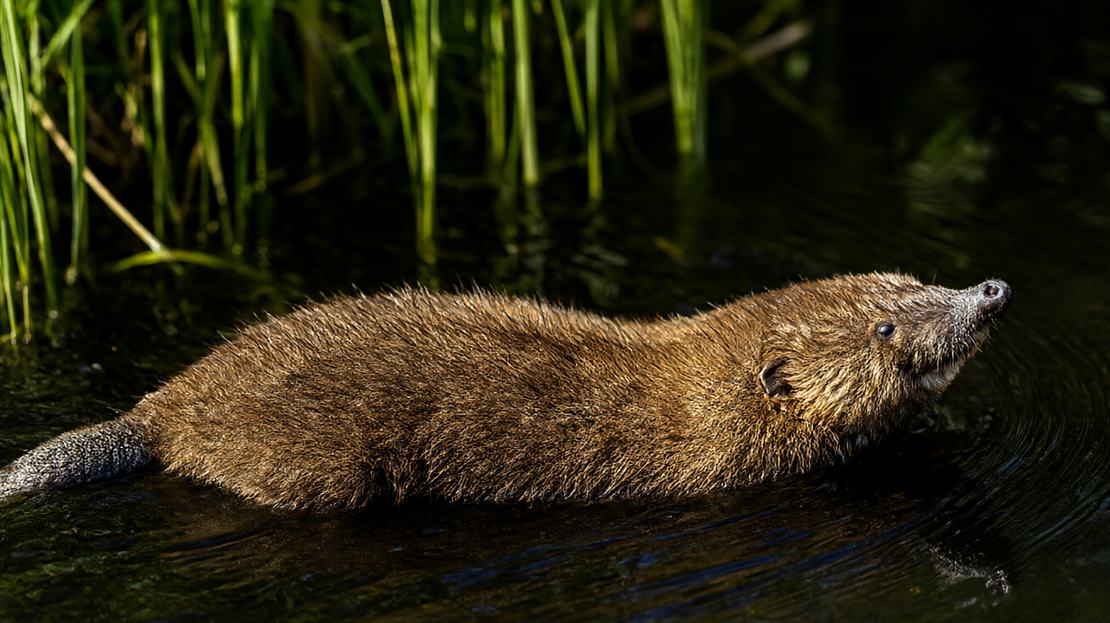
Desmana moschata | Russian Desman
Species Profile · Talpidae
Russian Desman
A small animal swims through dark water and leaves no ripple.
Critically Endangered
Length
Tail
Weight
Litter
Snout
Rating
The Russian Desman
A swimmer with no tunnel
A small animal swims through dark water and leaves no ripple. Then it vanishes under the bank. Only a trail of bubbles shows where it went.
The Russian desman is a mole that moved into rivers long ago. Its fur stays dry after an hour underwater. Nobody on the bank would guess how poorly it sees.
Since the snout reads the water, the animal hunts in total darkness. That strange nose is the whole hunting kit.
Family tree
Talpidae, a mole that went swimming
Its proper name is Desmana moschata, and it stands alone in its genus. The family is Talpidae, which puts it beside moles and shrew moles. Water shaped the body afterwards, and the fossil record shows the steps one at a time over twenty million years.
A European Mole digs through soil in the same family, though it never enters a river. Each kept the heavy digging hands, and each lost most of its sight along the way. Its nearest cousin lives in the Pyrenees, and the two animals look much alike.
Both are relics of a wider group that once spread across Europe. That split, however, runs deep.
Skin over the eyes
How to tell one
Adults run 18 to 21 cm from nose to rump. Weight falls between 400 and 520 g. A long mobile snout ends in nostrils that close underwater.
Hind feet carry webs, and stiff hairs fringe the edges for steering. Because the tail is flattened sideways and edged with coarse hair, it works like a rudder behind the swimming body. Dense chestnut fur traps air, so water never reaches the skin.
The coat holds that layer through a long dive, and the animal climbs out almost dry. Front claws stay large, though the animal rarely digs in hard ground. The eyes stay tiny.

1
2
3
Soft banks only
Where it lives
Slow rivers in the Volga, Don and Ural basins hold the whole population. Backwaters suit it best. Fast current does not. Banks of soft earth allow burrows with underwater doors.
A nest chamber sits above the water line and stays lined with grass, moss and shredded reed through the breeding season. Flooded meadows matter in spring, since the animals spread out across them then. Because each burrow carries several exits, an otter cannot trap the occupant inside. A Eurasian Beaver also works slow water, though it changes the channel far more than this small swimmer does.
Dams remove the shallow pools, and those pools are where the animal finds most of its food. Winter ice matters too.
Fish and molluscs
What it eats
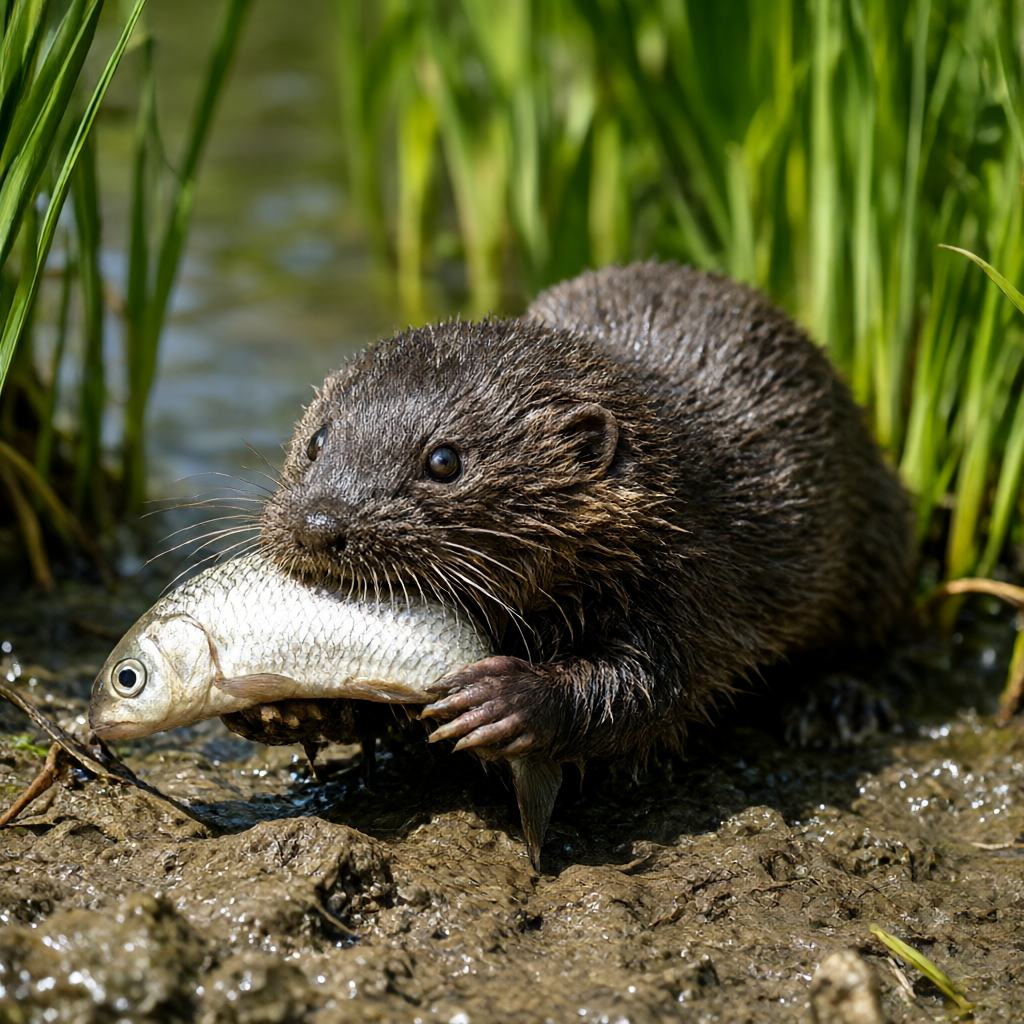
Fish make up much of the food, and small ones come first. Molluscs, leeches and water insects also fall prey. Frogs and tadpoles join the list in summer, when the shallows fill with them.
Because the snout feels for movement, the animal can hunt without any light at all. Soft prey goes down quickly, and hard shells get crushed against the flat teeth at the back of the mouth. Its appetite runs high, since a small body loses heat fast in cold water.
One dive may produce several small items, and the animal surfaces to breathe between them. Shells take longer.
Three to five, blind at birth
The breeding cycle
A female bears three to five young in the nest chamber. Births come in spring and again in summer. Newborns arrive blind and bare. Because the nest stays above the water line, the young never get wet at first.
The mother hunts alone and returns to suckle, and the trips grow longer as the pups develop. Young animals start swimming at about a month. Nothing else is well documented, since the species is hard to watch.
Nets and dams
Conservation
The Red List calls the species Critically Endangered. Numbers have fallen for a century. Nets set for fish drown animals that cannot reach the surface in time, and the catch is never recorded anywhere.
Dams and drained meadows removed much of the old habitat. Because the fur was once valuable in the hat trade, hunting cut the population long before the dams arrived. Pollution matters too, since a river carries whatever its fields and towns send down.
Protection now covers the whole range, though enforcement stays uneven. Captive breeding has produced animals for release, and a few sites still hold breeding pairs. Enforcement stays weak.
Side by side
How It Compares
| Trait | Russian Desman | European Mole |
|---|---|---|
| Family | Talpidae | Talpidae |
| Habitat | slow rivers | soft garden soil |
| Front feet | webbed, fringed | broad with five claws |
| Tail | 17-21 cm, scaled | short and bare |
| Eyes | tiny, under skin | tiny but open |
| Rating | Critically Endangered | Least Concern |
Common misreadings
What People Get Wrong
- Not a shrew, despite the snout. Family placement says mole. Talpidae holds it beside the garden moles, so the long snout works as a water tool rather than as a sign of another lineage.
- Not a fish specialist by design. Rivers supply the bulk of it. Crayfish, leeches and water insects fill the same dives, since the snout feels for movement rather than for any particular kind of prey.
- Not a swimmer in fast water. Backwaters do the real work. Strong current pushes it toward the bank, so it hunts in still pools where the feet can grip bottom and the tail steers.
Going further
Sources and Further Reading
Quick hits
Five things to remember
- The snout bends in any direction, so the animal can test a mussel before it commits to digging.
- Air trapped in the coat gives a wet desman a silver sheen as it climbs out.
- Its tail runs longer than its body, which few moles can claim.
- The species survived the last ice age in rivers that never fully froze over.
- A desman can shut both nostrils and ears, so nothing enters during a dive.