 By st20113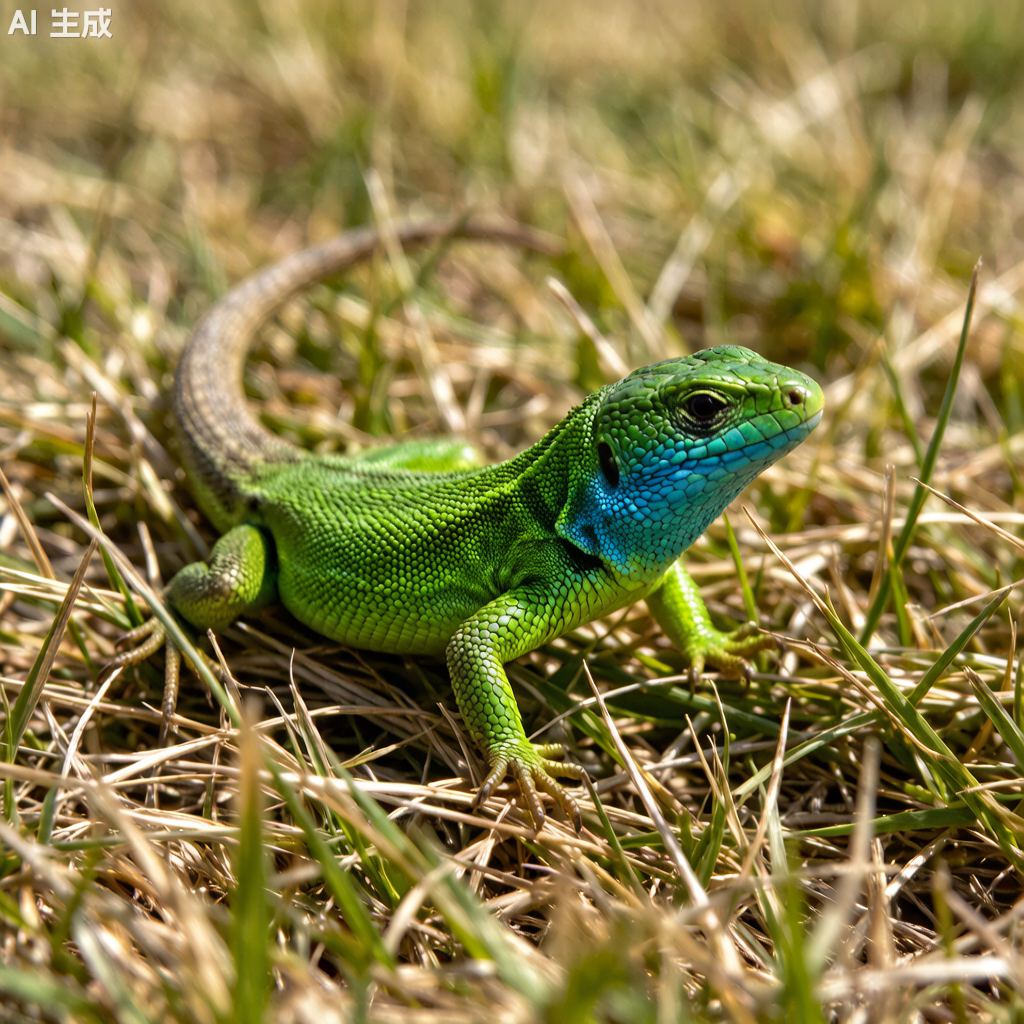
Introduction
The green lizard, scientifically Lacerta viridis, is one of the largest and most striking lizards of Europe. Males display a vivid emerald-green body with a bright blue throat, while females are usually duller olive-green. Native to southern and central Europe, it favors warm, sunny habitats where it can bask and hunt insects. More secretive than its smaller relatives, it often disappears into dense vegetation at the first sign of danger, but on a warm day it is a spectacular sight among grasses and shrubs, where it hunts insects and basks through the warm summer months before retreating to shelter.
Taxonomy
The green lizard belongs to the family Lacertidae, the true lizards, within the genus Lacerta. It is a close relative of the common lizard and the wall lizard, though it grows far larger and brighter. Several related green lizards occur around the Mediterranean, but Lacerta viridis is the classic European species, recognized by its size, color, and the blue flecks along the flanks of mature males.
Physical Characteristics
Adults reach 30 to 40 centimeters including the long tail, with the tail making up more than half the length. Males are larger and more colorful, their throats turning vivid blue especially in the breeding season. The body is slender with well-developed limbs and small granular scales. A fold of skin separates the throat from the body. The eyes have movable eyelids and round pupils, and the toes end in slender claws suited to climbing and digging.
Habitat
Green lizards prefer warm, bushy landscapes such as woodland edges, hedgerows, scrub, vineyards, and sunny riverbanks. They need dense ground cover for shelter and open sunny patches for basking. Unlike many smaller lizards, they often climb into low vegetation and occasionally sit on rocks or walls. They are sensitive to cold and retreat to burrows or leaf litter to hibernate through the winter months of colder regions.
Diet
Primarily carnivorous, the green lizard feeds on insects, spiders, and other arthropods, which it catches by quick pursuit or ambush. Larger individuals may take earthworms, snails, small lizards, and even young rodents or birds. They are active foragers, using keen eyesight to spot prey before darting forward. As generalist predators, they help control invertebrate populations in the warm habitats they occupy, though they rarely threaten healthy populations of other species.
Reproduction
Mating takes place in late spring or early summer. Females lay clutches of six to twenty eggs in warm, hidden soil, leaf litter, or rotting wood, sometimes producing two clutches in a good year. The eggs hatch after roughly six to ten weeks depending on temperature. Hatchlings are independent from birth and grow rapidly, reaching maturity in two to three years. Lifespan in the wild is typically under ten years.
Conservation
The green lizard is listed as Least Concern by the IUCN and remains widespread across its European range. However, intensive agriculture, habitat fragmentation, and the loss of sunny bushy margins threaten local populations. It is protected in many countries, and maintaining hedgerows, scrub, and undisturbed banks helps secure its future. In some regions it has also been introduced outside its native range.
Fun Facts
Male green lizards perform push-up displays and show off their blue throats to attract females and warn rivals. They can detach their tails to escape predators, regrowing a simpler replacement. Despite their bright color, they are shy and rely on camouflage among green foliage. Their strong jaws can deliver a surprising bite when handled. In spring, males fiercely defend territories against competitors with ritualized bouts. Their brilliant color actually provides camouflage among sunlit leaves. They can also shed their tails when grabbed, distracting predators while they escape into cover. Despite their size, they are cautious and vanish at the slightest vibration in the grass. Captive individuals have been known to recognize keepers who feed them regularly. In southern Europe they are a familiar sight basking on warm stone walls during the hottest part of the day.
[…] | Podarcis muralis Common Blackbird | Turdus merula European Tree Frog | Hyla arborea Green Lizard | Lacerta viridis Red Admiral | Vanessa atalanta Three-spined Stickleback | Gasterosteus aculeatus […]