 By st20113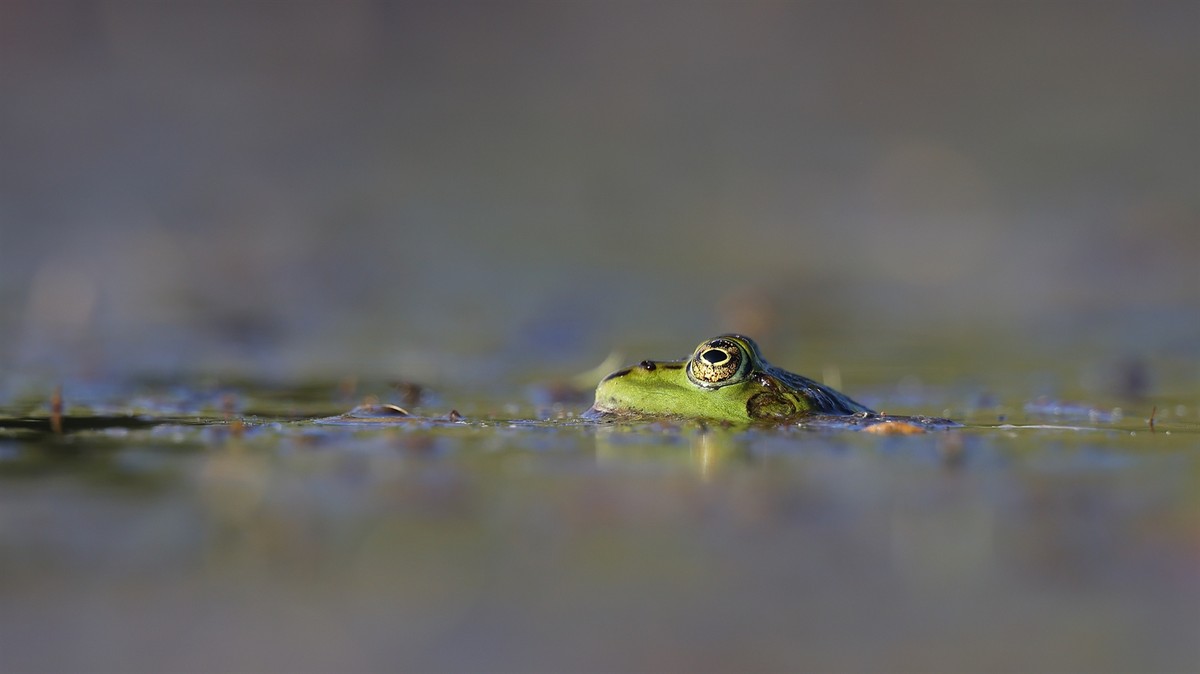
Introduction
The Edible Frog (Pelophylax esculentus) is a large common frog of European ponds and marshes, famous as the species whose legs are served as a delicacy in French cuisine. A natural hybrid between the pool frog and the marsh frog, it represents one of the most studied examples of hybridogenesis in vertebrates, where the hybrid species reproduces without interbreeding with its parental species, instead cloning its own genome each generation. Found from the British Isles across central Europe to Russia, it is one of the most frequently encountered amphibians of lowland European marshes.
Taxonomy and Evolution
The Edible Frog belongs to the family Ranidae, the true frogs, and the genus Pelophylax, the water frogs. It is a hybridogen between the Pool Frog (Pelophylax lessonae) and the Marsh Frog (Pelophylax ridibundus), first described in the 18th century. Through a process called hybridogenesis it inherits the genome of only one parent species, the pool frog, at each generation while eliminating the marsh frog genome during reproduction. This makes it a hemiclonal species: it clones its own genome but requires the presence of its parental pool frog species to trigger proper meiosis.
Physical Characteristics
Edible frogs are large frogs, typically 6 to 9 cm in body length with females larger than males. They closely resemble pool frogs in appearance with green to brown dorsal coloration overlaid with irregular dark spots and a light dorsal stripe. The belly is whitish or pale yellow. The toe pads are not expanded for climbing reflecting their wholly aquatic to semi-aquatic lifestyle. Males have enlarged vocal sacs on the throat used to produce the loud advertisement call. A key distinguishing feature from the marsh frog is a pale stripe along the back. The skin is smooth and moist and the hind legs are powerful for swimming.
Habitat and Distribution
Edible frogs inhabit ponds, lakes, canals, oxbow lakes, and slow rivers across lowland Europe, typically in water bodies with abundant submerged and emergent vegetation. They are most common in the lowlands of central Europe, particularly France, Germany, Switzerland, and Poland, and their range extends from the British Isles to the Urals. They are almost entirely aquatic, rarely straying far from water except during dispersal after heavy rain. The goldfish is frequently introduced to the same ponds where edible frogs breed, and both species compete for similar invertebrate prey and basking space.
Diet and Feeding Behavior
Edible frogs are sit-and-wait predators that wait motionless at the waters edge or on floating vegetation until suitable prey comes within striking range. Their diet is broad and opportunistic including flying insects, beetles, dragonflies, spiders, worms, slugs, and tadpoles including those of their own species. Prey is located primarily by motion and caught with a rapid tongue flick or direct jump. They are active predators both day and night during the breeding season. Tadpoles are herbivorous and detritivorous grazing algae and organic matter from pond surfaces.
Reproduction and Life Cycle
Males call from the water from April to July producing a loud distinctive call that is a blend of the pool frog and marsh frog calls, often described as a loud chuckling or ratchet-like sound. Females deposit large globular egg masses containing 1,000 to 4,000 eggs in shallow water attached to submerged vegetation. The hybridogenesis system means that when an edible frog mates with another edible frog, the offspring are exclusively edible frogs, maintaining the hybrid lineage. However when an edible frog mates with a pool frog, half the offspring are edible frogs and half are pool frogs.
Conservation Status
Listed as Least Concern but the edible frog is of considerable conservation interest because its existence depends on the maintenance of both parental species. In areas where pool frogs have been lost, edible frog populations eventually decline even if the marsh frog remains, because the hybrid requires pool frog genes to complete meiosis. In Britain the edible frog is introduced while the native pool frog was considered extinct until rediscovered in 1993. The introduction of fish such as the goldfish to ponds is a major threat to edible frog breeding success as fish eat both eggs and tadpoles.
Fun Facts
The edible frog is the origin of the phrase eating frogs legs, a culinary tradition that dates to ancient Rome where frogs were considered a delicacy. The hybridogenetic reproduction of the edible frog means it is effectively a vertebrate that reproduces without the genetic contribution of one of its ancestors, a biological phenomenon more common in plants and invertebrates. The edible frogs call is a perfect genetic blend of its two parental species calls, one producing a short bark and the other a continuous ratchet resulting in a distinctive hybrid vocalization audible up to a kilometer away.