 By st20113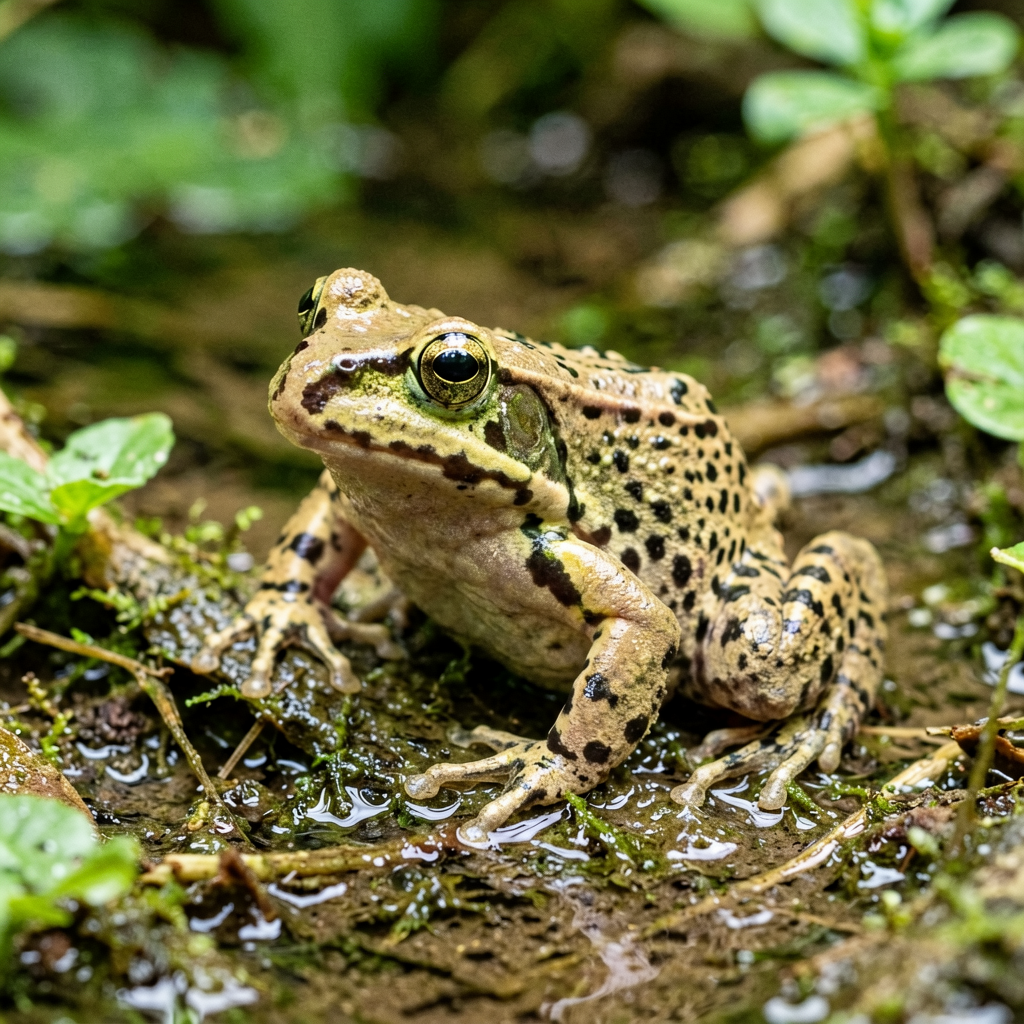
Alytes obstetricans | Common Midwife Toad
Introduction
The Common Midwife Toad (Alytes obstetricans) is a small amphibian belonging to the family Alytidae, formerly classified within the true toad family Bufonidae. This species is found across much of Western and Central Europe, ranging from the Iberian Peninsula and France through central Germany, Switzerland, and into parts of Italy and the Balkans. It is one of the most widespread toad species in Europe and is well known for its distinctive parental care behavior, which gives the animal its common name.
These toads are primarily nocturnal and prefer moist environments, though they can tolerate drier conditions better than many other amphibian species. They are often found in gardens, woodland edges, meadows, and even suburban areas where suitable breeding ponds or temporary water bodies are available. Their ability to adapt to human-modified landscapes has contributed to their relative abundance in many parts of their range.
The Common Midwife Toad is easily recognized by its compact body, granular skin, and the characteristic dark stripe running from the eye down the flank. Males are generally smaller than females and possess darkened nuptial pads on their forelimbs, which they use to grip females during amplexus. Despite their modest size, these toads play an important role in their ecosystems as both predators of invertebrates and prey for a variety of birds and mammals.
Taxonomy
The Common Midwife Toad was first described by the Swedish naturalist Carl Linnaeus in 1768. It is the type species of the genus Alytes, which contains several other midwife toad species found across southern Europe and North Africa. Molecular studies have confirmed that the genus Alytidae, to which Alytes belongs, diverged early from other true toads and is now recognized as a distinct family.
The species is closely related to other members of its genus, including the Iberian Midwife Toad (Alytes cisternasii) and the Bosnian Midwife Toad (Alytes obstetricans montandoni), which was once considered a separate species but is now often treated as a subspecies. Genetic analysis continues to refine our understanding of the relationships within this group and their evolutionary history across the Mediterranean region.
Phylogenetic research has shown that midwife toads are more closely related to certain neotropical toad families than to the common toad (Bufo bufo), highlighting the complexity of amphibian classification. This reclassification underscores the importance of molecular data in modern herpetology and has reshaped how scientists understand the evolutionary tree of anurans.
Physical Description
Adult Common Midwife Toads typically measure between 4 and 6 centimeters in length, with females growing slightly larger than males. Their bodies are stocky and robust, with short limbs and a broad, rounded snout. The skin is dry and covered with small warts and granules, giving the toad a rough texture that contrasts with the smoother skin of many frog species.
Coloration is highly variable, ranging from shades of brown, grey, and olive to reddish tones, often with a darker dorsal stripe bordered by lighter lines. The underside is usually pale and unmarked. A prominent tympanum is visible behind each eye, and the parotoid glands are relatively small compared to those of true toads. The eyes are large with horizontal pupils, an adaptation suited to their nocturnal lifestyle.
Males can be distinguished from females by their darker throat coloration during the breeding season and by the presence of black nuptial pads on the first digits of their forelimbs. These rough patches help the male maintain his grip on the female while she lays eggs. The legs are relatively short, reflecting the toad’s terrestrial habits and limited jumping ability.
Habitat
The Common Midwife Toad inhabits a wide range of environments, including deciduous and mixed forests, scrubland, agricultural fields, and suburban gardens. It favors areas with a mix of terrestrial and aquatic habitats, as it requires both land for foraging and shelter and water for breeding. The species is notably more tolerant of dry conditions than many of its amphibian relatives, allowing it to occupy habitats that would be unsuitable for more moisture-dependent species.
Breeding sites typically include temporary pools, ditches, ponds, and slow-moving streams, often in open or semi-open areas with some vegetation cover. These water bodies are usually free of fish, which are significant predators of toad eggs and tadpoles. The toad’s preference for such ephemeral waters reduces competition and predation pressure during the critical breeding period.
Like the grass frog, the Common Midwife Toad relies on a mosaic of habitats throughout the year, using terrestrial areas for feeding and overwintering and aquatic sites exclusively for reproduction. Habitat fragmentation and the drainage of temporary water bodies remain significant threats to local populations across Europe.
Diet
The Common Midwife Toad is a carnivorous predator that feeds primarily on invertebrates. Its diet consists of insects, spiders, slugs, worms, and other small arthropods encountered during its nocturnal foraging activities. The toad employs an ambush hunting strategy, remaining motionless until prey comes within striking distance, at which point it rapidly extends its tongue to capture the item.
Feeding occurs mainly on the ground, where the toad moves slowly and deliberately through leaf litter and low vegetation. Its small mouth limits the size of prey it can consume, so it targets relatively small invertebrates. The diet varies seasonally depending on prey availability, with ants and beetles being particularly common components in many regions.
By consuming large quantities of invertebrates, the Common Midwife Toad contributes to the regulation of insect populations in its habitat. It also serves as prey for a variety of predators, including birds, snakes, and mammals, making it an important link in the food web of European terrestrial ecosystems.
Reproduction
The Common Midwife Toad is renowned for the extraordinary parental care exhibited by males. Breeding typically occurs between February and May, depending on local climate conditions, and is triggered by rising temperatures and rainfall. Males call from the ground or low vegetation near water bodies, producing a distinctive whining or trilling sound to attract females.
After a female deposits a string of eggs, the male wraps the gelatinous strands around his hind legs, where they remain attached for several weeks. The male carries the eggs until they are ready to hatch, keeping them moist by visiting damp areas or shallow water. This behavior is the origin of the species’ common name and represents one of the most dedicated forms of paternal care among amphibians.
Once the eggs hatch, the male descends to water, where the free-swimming tadpoles are released. Tadpole development is relatively rapid, typically completing within six to ten weeks, allowing them to metamorphose before temporary breeding pools dry up. Juvenile toads emerge on land and disperse into nearby terrestrial habitats, where they remain for one to three years before reaching sexual maturity.
Conservation
The Common Midwife Toad is listed as Least Concern by the International Union for Conservation of Nature (IUCN), reflecting its broad distribution and generally stable population trends. However, local declines have been documented in parts of its range, particularly in areas undergoing rapid urbanization or agricultural intensification. Habitat loss and degradation remain the primary threats to the species.
Key conservation challenges include the drainage and modification of temporary breeding pools, the use of pesticides in agricultural areas, and road mortality during seasonal migrations to and from breeding sites. Climate change may also affect the species by altering precipitation patterns and increasing the frequency of droughts that can eliminate breeding habitats before tadpoles complete development.
Conservation efforts focus on protecting and restoring suitable breeding habitats, maintaining hedgerows and woodland corridors that facilitate movement between terrestrial and aquatic sites, and creating artificial breeding pools in areas where natural ones have been lost. Public awareness campaigns in countries such as France and Spain have also helped reduce unnecessary harm to these toads during the breeding season.
Fun Facts
- The male Common Midwife Toad is one of the most devoted fathers in the amphibian world, carrying egg strings wrapped around his legs for up to six weeks.
- Despite being called a toad, it is not closely related to true toads and belongs to its own distinct family, Alytidae.
- The species can live for up to 15 years in the wild, with some individuals surviving even longer in captivity.
- Its call sounds like a high-pitched whine or a repetitive “kreee-kreee” sound, easily heard on warm spring nights.
- The toad secretes a mild toxin from its skin that deters some predators, though it is not dangerous to humans.