 By st20113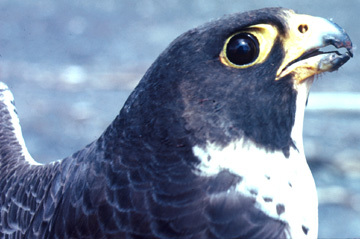
Introduction
The peregrine falcon (Falco peregrinus) is a widespread raptor found on every continent except Antarctica, renowned as the fastest animal on the planet. In dramatic hunting stoops, it can exceed speeds of 320 kilometres per hour as it dives on avian prey. Historically devastated by pesticide poisoning, the peregrine has recovered spectacularly following the ban on DDT and captive-breeding programmes. Today it nests on remote cliffs and increasingly on city skyscrapers, where ledges mimic its natural cliff habitat. Its global comeback is considered one of the great successes of modern conservation, alongside other recovered raptors such as the bald eagle.
Taxonomy
The peregrine falcon is a member of the family Falconidae, genus Falco, the true falcons. Described by Tunstall in 1771, Falco peregrinus is one of the most cosmopolitan bird species, with numerous subspecies adapted to regions from tundra to tropics. Genetic studies place falcons outside the typical diurnal raptor group, closer to parrots and songbirds than to hawks and eagles. The name “peregrine” means “wanderer,” reflecting the migratory habits of northern populations that travel thousands of kilometres between breeding and wintering grounds.
Physical Characteristics
Peregrine falcons are medium-sized raptors with a compact, powerful build, long pointed wings, and a short tail. Adults measure 34 to 58 centimetres in length with a wingspan of 74 to 120 centimetres, and females are noticeably larger than males. Their plumage is blue-grey above with a pale, barred underside and a distinctive dark “moustache” marking across the cheeks below the eye. The head is black-capped, and the hooked beak bears a tomial tooth used to sever prey’s spine. Exceptional eyesight, with a high density of retinal cones, allows the falcon to spot prey from great distances while flying at speed.
Habitat
Peregrine falcons occupy an extraordinary variety of habitats, from arctic tundra and coastal cliffs to deserts, mountains, and dense urban centres. They require open areas for hunting and elevated, sheltered ledges for nesting. Historically cliff-nesting birds, they have adapted remarkably to cities, where tall buildings and bridges provide secure nest sites and abundant pigeon prey. They are migratory in northern latitudes, wintering in milder regions, while tropical and southern populations may be resident. Their adaptability to human structures has been central to their recovery in many parts of the world.
Diet
Peregrines are specialised bird hunters, taking a wide range of avian prey from small songbirds to ducks and pigeons, occasionally bats. They hunt by powerful horizontal pursuit or, most famously, by a high-speed stoop in which the falcon folds its wings and dives vertically onto prey, striking with clenched talons to knock it from the air. The impact is often fatal. They capture prey with their feet and usually kill it with a bite to the neck. A pair may defend a large hunting territory around the nest, and urban birds frequently exploit flocks of feral pigeons and starlings as a reliable food source.
Reproduction
Peregrine falcons are monogamous and often pair for life, returning to the same nesting territory year after year. They do not build elaborate nests but scrape a shallow depression on a cliff ledge, building, or bridge. The female lays two to five eggs, which both parents incubate for about 29 to 33 days. The male provides most food during incubation and early chick rearing. Chicks fledge at roughly six to seven weeks but remain dependent on the parents for several more weeks as they learn to hunt. Sexual maturity is reached at one to three years, depending on sex and population.
Conservation
Once listed as Endangered in many countries due to DDT-induced egg-shell thinning, the peregrine falcon has recovered strongly and is now classified as Least Concern globally. The 1970s ban on DDT, coupled with intensive captive breeding and reintroduction, drove a remarkable turnaround. Urban populations have expanded as birds exploit city habitats. Ongoing concerns include secondary poisoning from rodenticides, collisions with buildings, and disturbance at nest sites. Continued monitoring and protected nesting programmes help sustain the recovery across the species’ vast range.
Fun Facts
In a hunting dive, the peregrine falcon can reach speeds over 320 kilometres per hour, making it the fastest animal on Earth. It has a bony projection in the nostril that channels airflow, allowing it to breathe at high speeds during the stoop. Peregrines can see ultraviolet light, helping them track the urine trails of prey birds. Some city-dwelling falcons have learned to use traffic and buildings to their advantage, hunting among skyscrapers at dawn. The peregrine’s scientific name, Falco peregrinus, translates roughly to “wandering falcon,” honouring its far-ranging migrations.
[…] The European Honey Buzzard (Pernis apivorus) is a medium-sized raptor that breeds across temperate Europe and winters in sub-Saharan Africa. Unusually among European birds of prey it is a specialist predator of wasp and hornet nests, adapted with dense plumage and scale-like leg scales that protect against stings. Its migratory route across the Strait of Gibraltar is one of the great raptor spectacles of the Western Palearctic, rivalling that of the peregrine falcon. […]