 By st20113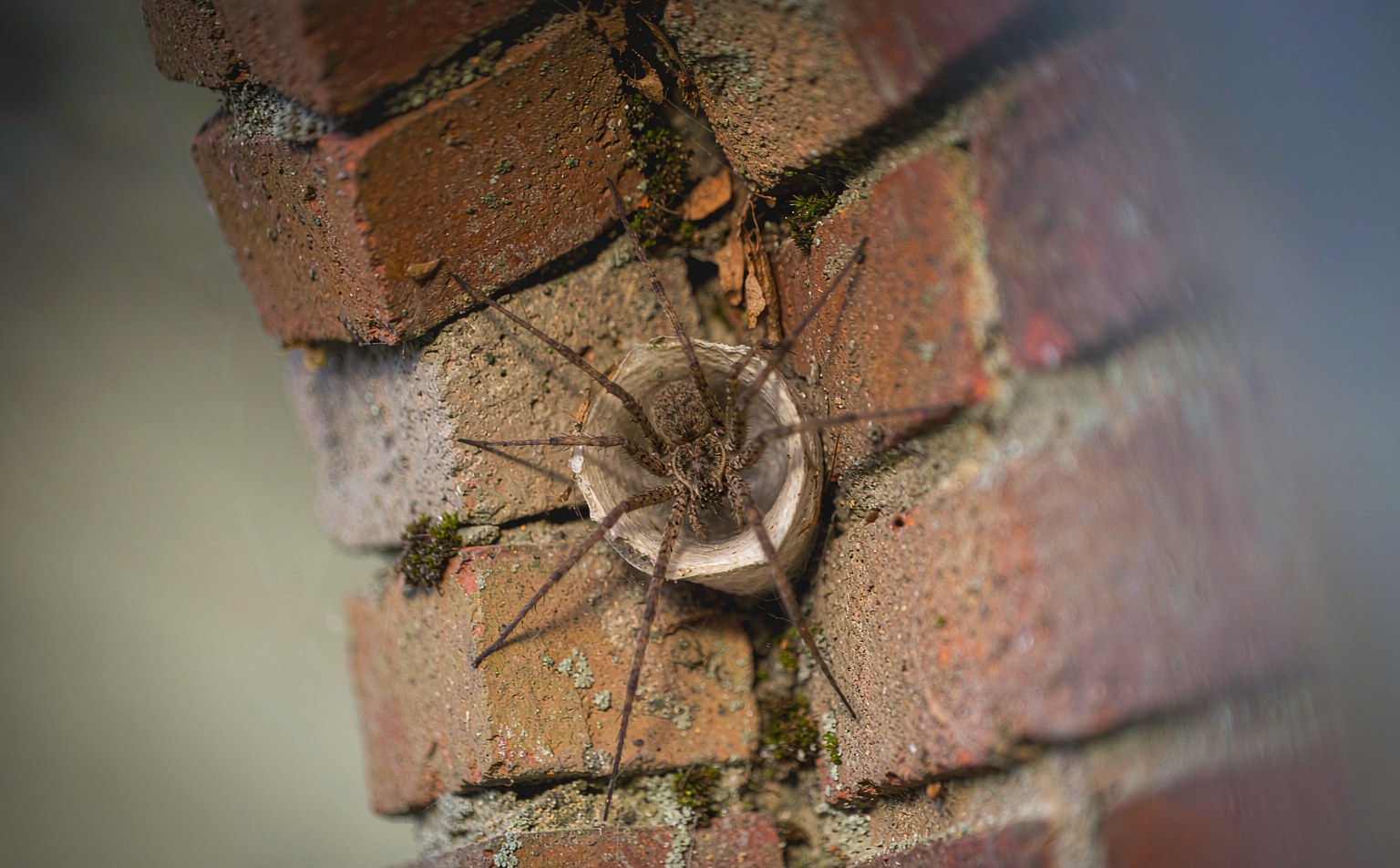
Eratigena atrica | Giant House Spider
Introduction
The Giant House Spider (Eratigena atrica) is the large, brown, fast-moving spider that bolts across the bathroom floor or lurks in the funnel of a web in a shed, garage or cellar. With a leg span that can reach seven centimetres, it is one of the biggest spiders commonly encountered in British and European buildings, and its sudden speed makes it one of the most noticed. Despite its size and its reputation, it is harmless to people.
It is a funnel-web spider of the family Agelenidae, built to sit in a silken funnel and rush out at passing prey, and it is a beneficial hunter of flies, moths and other indoor insects. The males wander in autumn, which is when most people meet them, but the species is a quiet, useful housemate that asks only for a corner to build its web.
Taxonomy
The Giant House Spider is a true spider in the order Araneae and the family Agelenidae, described by the French arachnologist Charles Athanase Walckenaer in 1802. It was long placed in the genus Tegenaria and is still met under that name in older books; the common name “house spider” is shared with several close relatives. As an arachnid it is kin to harvestmen and mites, and the common-toad-bufo-bufo-3 and other predators take spiders of this size where web and wall meet the ground.
The genus Eratigena holds the large funnel-web spiders of the northern hemisphere, and Eratigena atrica is the one most associated with houses and outbuildings. It is distinguished from the smaller, paler cellar spiders by its bulk, its brown chevron-marked body and its sheet-and-funnel web rather than an irregular tangle.
Physical Characteristics
The body is stout and hairy, brown with a pattern of darker chevrons on the rear, and the legs are long, robust and banded, built for speed rather than for spinning elaborate traps. Females are larger and stay by the web, while males are slimmer and roam. The eight eyes are arranged in two rows across the front of the head, typical of hunting spiders.
The web is a flat sheet of silk with a tubular funnel at one edge, often tucked into a corner or behind furniture, where the spider waits. Unlike orb-weavers it does not build a spiral snare; instead it feels the sheet for the vibrations of an insect that has landed, then dashes out to seize it. The spider is famously quick over short distances, which is why it seems to vanish the moment a light is switched on.
Habitat
Giant House Spiders live in and around buildings: houses, sheds, garages, cellars, wall cavities and the quiet corners of gardens, where they build their funnel webs in crevices, behind clutter and at the edge of floors and walls. They also occur in rockeries and outhouses, anywhere dry and sheltered with a supply of insects.
They are found across Britain and temperate Europe and are thoroughly synanthropic, living alongside people. Females hold a territory around a single web for years, while males leave the web after maturing and wander in search of females, which is why the autumn “invasions” of scurrying males are mostly wandering suitors rather than a new infestation.
Diet
The diet is other arthropods, above all the flies, mosquitoes, moths, woodlice and other small creatures that blunder onto the web sheet. The spider senses the strike through the silk, rushes from the funnel and overwhelms the prey with a bite from its fangs, then drags it back to eat at leisure. This makes it a practical controller of indoor insects.
Birds such as the common-blackbird-turdus-merula that hunt around buildings, along with toads and ground beetles, will take spiders, so the Giant House Spider is both a predator of household pests and prey for the animals that share the walls. Its web, quietly spun in a corner, is a small trap that keeps the indoor insect count down.
Reproduction
Mating follows a hazardous courtship: the male approaches the female at the mouth of her funnel, signalling with leg taps and a cautious dance, and if accepted he uses his modified palps to pass sperm to her. In some species the male is eaten afterwards, but many Giant House Spider males survive to wander on.
The female lays her eggs in a silken sac within or near the funnel and guards it, and the spiderlings hatch and disperse, the females soon settling to build their own webs. The whole life is spent close to the web, and a single corner can support a spider for several years.
Conservation
The Giant House Spider is common and of no conservation concern, and it is one of the most familiar spiders of human homes across its range. Its fortunes track the availability of undisturbed corners and of the insects it eats; heavy cleaning, sealing of gaps and broad insecticide use reduce it, though it is resilient.
For the householder it is better neighbour than nuisance. It costs nothing, eats flies and moths, and poses no danger to people or pets, and learning to leave the corner web in peace keeps a harmless, ancient predator quietly at work in the home.
Fun Facts
- It is one of the largest spiders commonly found inside houses in Britain, with a leg span near seven centimetres.
- It is harmless to people; its bite is at most a mild nip and it is shy of humans.
- It builds a sheet-and-funnel web and rushes out to catch prey, rather than spinning a round orb.
- The autumn sightings of sprinting males are mostly wandering suitors looking for females, not a new invasion.
- It is remarkably fast over short distances, which is why it seems to disappear the instant a light comes on.
[…] setting out how the cellar spider differs from a big house spider such as the giant house spider, Eratigena atrica. The two species share the same houses and outbuildings. The house spider is heavy and dark. It is […]