 By st20113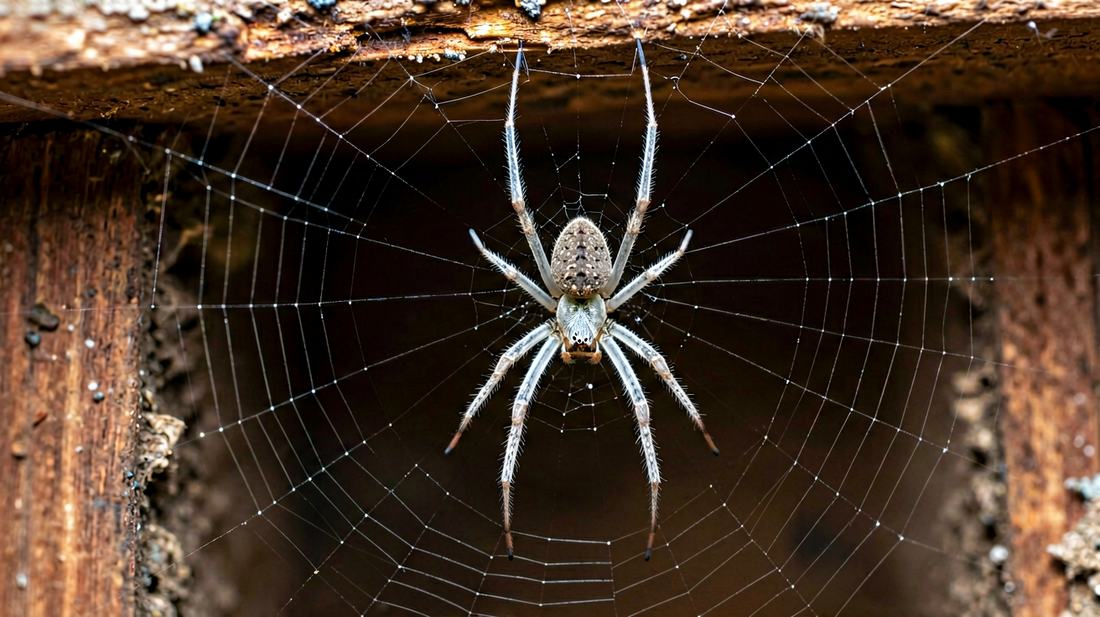
Pholcus phalangioides | Cellar Spider
Species Profile · Pholcidae
Cellar Spider
A pale, eight-legged wisp of a spider that hangs upside down in the corner of a room and lives by eating the other spiders of the house.
IUCN: Not assessed
Range
Body
Eyes
Family
Egg sac
Lifespan
The spider in the corner
Long legs, harmless bite
The cellar spider is a long-legged, pale spider. It looks delicate. It belongs to the family Pholcidae. It has become one of the most familiar animals in the houses of the temperate world. It lives in bathrooms, cellars, garages and sheds. Its look and its habits are so distinct that people who know nothing about spiders still know it on sight. The body is small and pale grey-brown. It is almost see-through. It measures between 7 and 10 millimetres. It carries 8 very long legs.
They are as thin as thread. Their span may reach 50 millimetres. So the whole animal looks far bigger than the body would suggest. It seems to be made of nothing but legs. The species spins an untidy, irregular tangle of silk. It builds in the upper corners of a room. It also builds under a shelf, behind a door, or where a ceiling meets a wall. The dark recesses of a cellar suit it too. The spider hangs in this web upside down. Its legs are spread out and its body is held close to the surface.
Anyone who looks up in a bathroom or a stairwell can see it. The cellar spider is one of the very few spiders that has taken over the insides of buildings across the world. Its success has three causes. It tolerates the dry, dark air inside a house. It can live for weeks without food. And it is a specialist at catching the other spiders that share its home. So it plays the part of a small, harmless hunter in the household. It is also a useful ally in the long argument about the spiders that people fear.
Family tree
Pholcus among the cellar spiders
The cellar spider sits in the genus Pholcus. This is a large group of about 400 species of long-legged spiders. They come from the warmer parts of the world. The spider belongs to the family Pholcidae, the cellar spiders or daddy long-legs spiders. The family holds some 1,800 species. It is spread through the tropical and the temperate regions. Its members share very long and slender legs. They have a small, rather round body. They also have 8 eyes. These sit in 2 or 3 groups on a raised turret in front of the carapace. They hang upside down in an untidy web.
They do not sit in an orb. The family is placed with the true spiders in the suborder Araneomorphae. Its nearest kin within that group are a matter of some technical argument. The pholcids have a number of features that are otherwise found in the more primitive spiders. One is the very small number of silk-spinning organs at the rear of the abdomen. Even so, the family is clearly part of the great spread of the araneomorphs. That group includes the orb weavers, the cobweb spiders, the wolf spiders and the jumping spiders. It is worth setting out how the cellar spider differs from a big house spider such as the giant house spider, Eratigena atrica. The two species share the same houses and outbuildings. The house spider is heavy and dark. It is long-legged, but its body is stout.
It runs fast. It does not build a permanent snare. It hunts on the ground. The cellar spider is light and fragile-looking. Its body is tiny. It keeps a permanent tangled web in the upper part of a room. It has a strong taste for other spiders. It will eat the house spider when it can. The genus Pholcus itself holds a number of species. They are very hard to tell apart without a microscope.
Eyes, legs and a weak bite
How to identify one
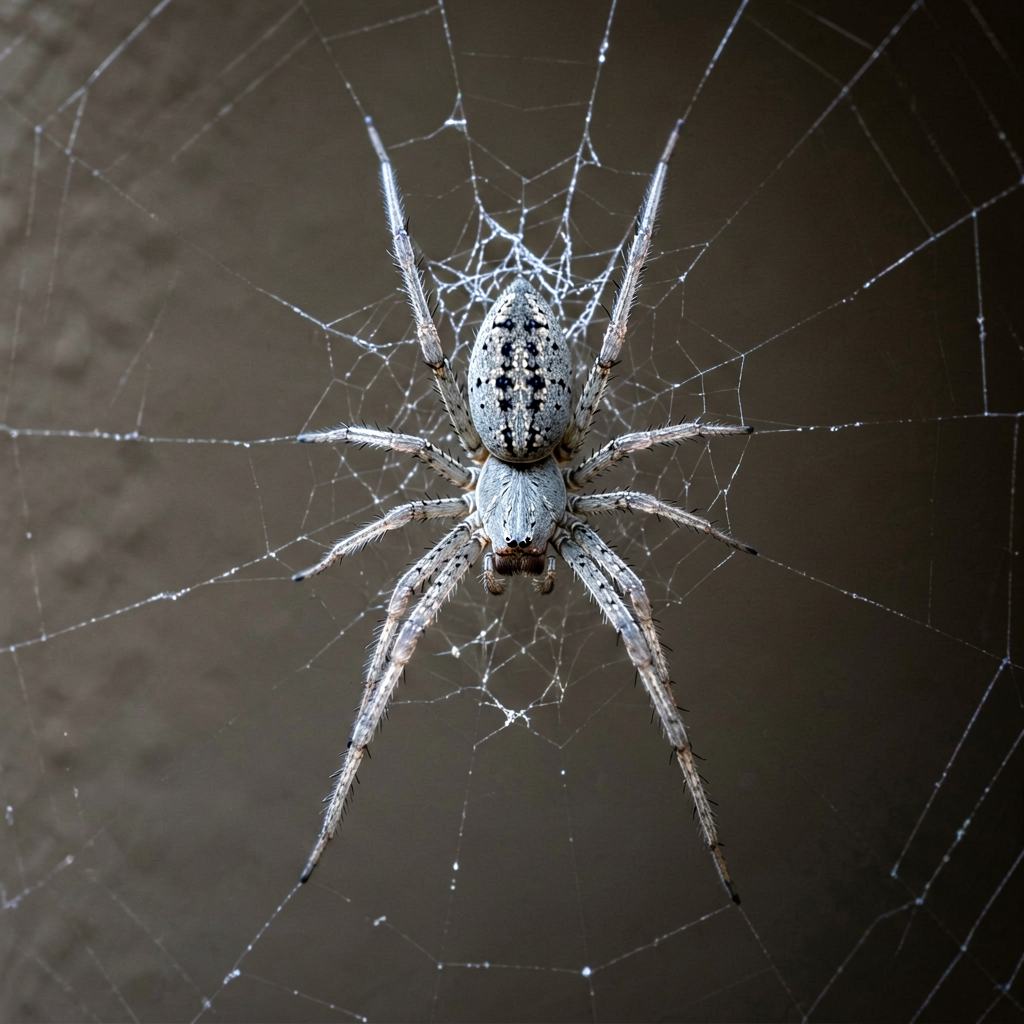
The cellar spider has a body of between 7 and 10 millimetres. The female is a little larger and rounder in the abdomen than the male. The carapace is a broad, flat, almost circular plate. It is pale grey-brown or yellowish brown. A small dark patch or triangle sits in the middle. The abdomen is long and slightly round. It is pale grey or dirty cream. It carries a faint pattern of grey spots, chevrons and bars. That pattern is never sharply defined. It varies a good deal between individuals and between populations. The eyes are the most telling feature of the head.
There are 8 of them. They are grouped into 3 sets of 2. The 2 side groups each sit on a small raised bump. The bumps are on either side of the carapace. So the spider looks as if it has 2 small turrets on its forehead. This eye pattern is one of the standard ways of naming a member of the family at a glance. The legs are extremely long and slender. The first pair is the longest and the fourth pair is the shortest. They carry many fine hairs and a few spines. They are held in a spread position when the spider rests. The chelicerae, or jaws, are small.
They are joined at the base. The bite is very weak. The fangs are short and the muscles that close them are weak. In most cases the species cannot pierce human skin at all. So its name for being harmless is fully deserved. The sexes are alike in colour and shape. The male can be told apart by the structure of the pedipalps at the front of the head. He also has a slightly narrower abdomen. The young are like the adults but paler again. They are even more delicate. The female carries the eggs and the newly hatched young about with her.
1
2
3
Cellars, bathrooms and sheds
Where it lives
The cellar spider is an animal of the insides of buildings. Its favoured places are the dark and sheltered parts of a house. It also lives in a cellar, a garage, a shed, a barn, a stable or a warehouse. It is found in the less reachable corners of churches, bridges, tunnels and mines. Stone structures of other kinds suit it too. The species needs a place that is always dark or partly dark. It must be free of strong draughts. It must also offer a surface above the floor. A tangle web can hang from it. So it is most often found in the upper corners of a room.
It also sits where the ceiling meets a wall, behind a shelf, beneath a beam, in a window recess or in a stairwell. The animal is tied to human habitation so closely that it is often called a synanthropic species. The genus Pholcus began in the warmer parts of the world. It is now settled in the buildings of most of Europe. It also lives in North America, southern Africa, Australia and New Zealand. It was carried about by the movement of goods and of people. The species is not usually found out of doors in the cool temperate regions. In Britain and in northern Europe it depends on the shelter that buildings give. In the warmer parts of its range it also lives in caves and in rock crevices. It lives in the dark parts of trees as well.
The spider copes with a wide range of temperatures. Frost kills it. It can also live a long time without food. That matters in a habitat where prey may be irregular. It stands a fairly dry atmosphere better than most spiders. Even so, it does best in the damper parts of a building. That is why it is so often seen in bathrooms, in cellars and in outhouses. The species lives only in and around buildings. It preys heavily on the other spiders of the same habitat. So it is a small but real part of the animal life of a home.
A hunter of other spiders
What it eats
The cellar spider is a hunter of small arthropods. Above all it is a hunter of other spiders. Among the species it takes are the smaller house spiders and the money spiders. It also takes the other small web-building and hunting spiders of a building. The young of the larger species go into the diet too. Its food also includes the harvestmen of the dark corners of a cellar. Woodlice, ants and small beetles are eaten. So are flies, mosquitoes and other small insects that find their way indoors. The species is not a snare-builder in the way of the orb weavers.
Its tangle web is not a sticky trap. It is a structure of irregular threads. These detect, obstruct and entangle a small animal that has blundered into it. When a suitable insect or spider touches the web, the cellar spider answers at once. It has the striking habit of shaking its own body and the web with its legs. That behaviour seems to confuse and to entangle the prey further. It also works as a defence. A larger spider or insect might otherwise turn on the resident. The prey is seized with the long legs.
The spider throws silk over the victim from a distance. Then it bites and wraps the prey before eating it. The whole operation is carried out while the spider hangs upside down. A feeding animal may be seen holding a small wrapped bundle in its jaws. The taste of the cellar spider for other spiders has been confirmed by many observations. The species can overcome a house spider that is much larger and heavier than itself. It manages this with its long legs, its thrown silk and the fast wrapping of the victim. It is also known to eat its own kind at times. The young that the female carries about are not always safe from the adults of the household.
Egg sac in her jaws
The breeding cycle
The cellar spider has a fairly long life for a spider. Its breeding biology is one of the more unusual forms of parental care in the whole order. The female carries her egg sac in her jaws. She then carries the newly hatched young about on her body for some days. The sexes are distinct. The male is smaller and slimmer than the female. Courtship begins when the male approaches the female in her web. The two then touch with the front legs. The male vibrates the web. After that the pair mate while hanging upside down. The male pedipalps transfer the sperm to the female.
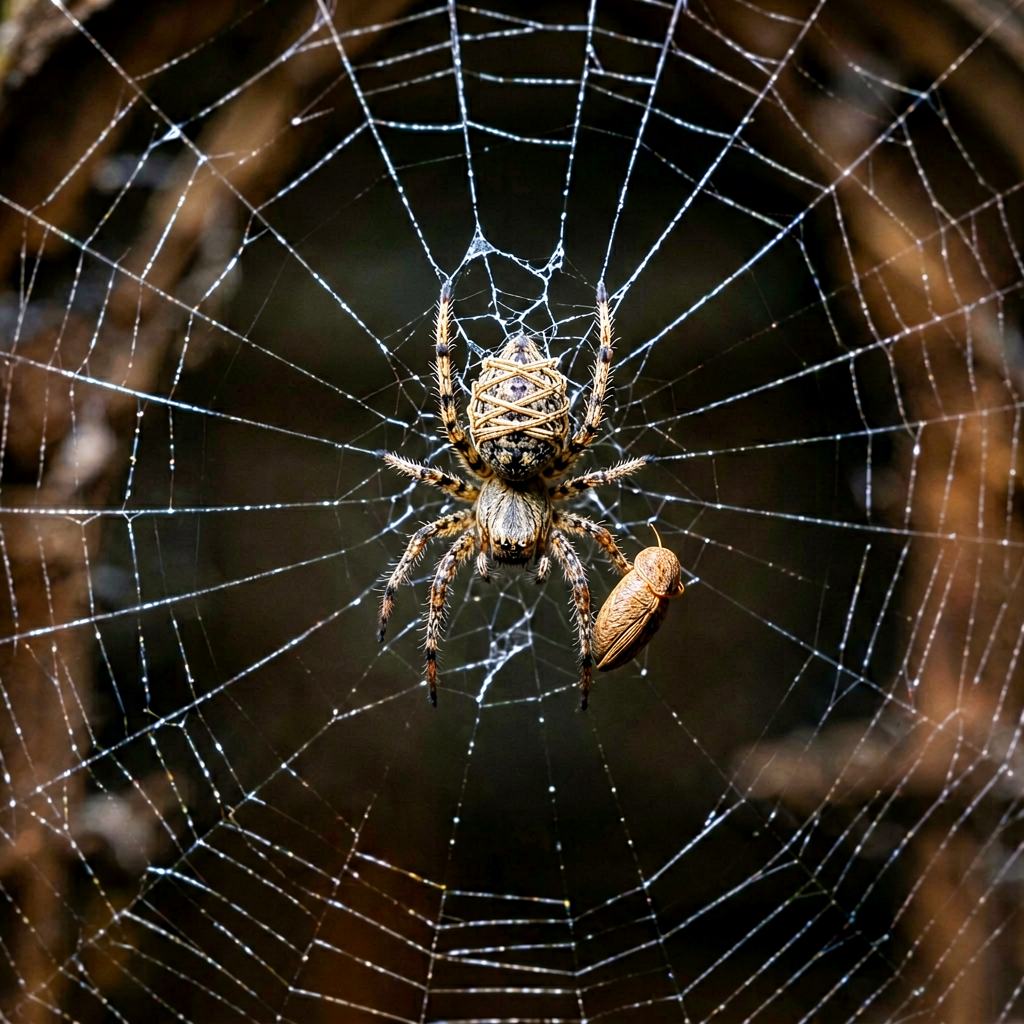
The transfer follows the pattern that is typical of the true spiders. The female makes a small round egg sac of perhaps 20 to 30 eggs. She does not fix the sac to the web. She holds it in her chelicerae and carries it about with her. So a female with an egg sac can be known at once by the pale sphere between her jaws. When the eggs hatch, the young are miniature versions of the adults. They are almost clear. They climb onto the body of the mother. They stay there for several days. Then they spread out to make their own small webs near the maternal one. The female may make several egg sacs in one season.
The species can breed at any time of the year in a heated building. So a population in a house may hold animals of every age at once. The species lives for about 1 to 3 years. That is a long life for a spider of such small body size. It is explained by the low energy demands of its slender body. It is also explained by its ability to go a long time without food. The young spread out by walking. The species rarely if ever drifts on threads of silk as the young of outdoor spiders do. That is one reason why the cellar spider spreads through a building by slow expansion. It does not arrive all at once.
The most venomous myth
Conservation
The cellar spider is not a species of concern at all. Its population is very large and its range is growing. Its link with human buildings means that it is in no danger from any change in land use. It is one of the most successful of all the animals that have attached themselves to human habitation. It is probably more numerous now than at any time in its history. The species is interesting to anybody who watches the animals of a house. It hunts the spiders that many people fear. And it is itself entirely harmless.
Its fangs are too weak to pierce human skin. Even if the venom could get in, it is of no medical importance. A myth about this spider is repeated in many parts of the world. The myth says that it is one of the most venomous of all spiders. It adds that its fangs are too short to bite. The myth has no basis in fact. The species is also worth noting for another reason. It shows how an animal may be common and familiar, and yet almost universally misunderstood.
Its habit of eating the spiders of the house makes it a natural ally of anyone who is troubled by them. The practical advice that follows from its biology is simple. There is no reason at all to remove a cellar spider from a house. The tangle of silk in the corner of a bathroom is a sign of a small hunter at work. It is not a hazard to anybody who lives there. The insects and the spiders of buildings have been studied far less than those of the garden and the field. The cellar spider is one of the few such animals that has been more or less fully described. So it serves as a convenient and harmless introduction to the animals that share the darker parts of the places in which people live.
Quick hits
Five things to remember
- The female carries the egg sac in her jaws. The young spiders then ride about on her body for several days before they spread out.
- When the web is touched, the spider whirls its own body and the web around at high speed. That seems to confuse and to entangle its prey.
- It is a specialist at catching other spiders. It can overpower a house spider that is several times heavier than itself. It does so by throwing silk over the prey from a distance.
- The myth that it is one of the most venomous spiders in the world is widespread and false. It says that the fangs are too short to bite. The bite is in fact far too weak to pierce the skin.
- It holds its body and its 8 long legs upside down in a tangle web. A leg span of 50 millimetres belongs to an animal whose body is only 7 to 10 millimetres long.