 By st20113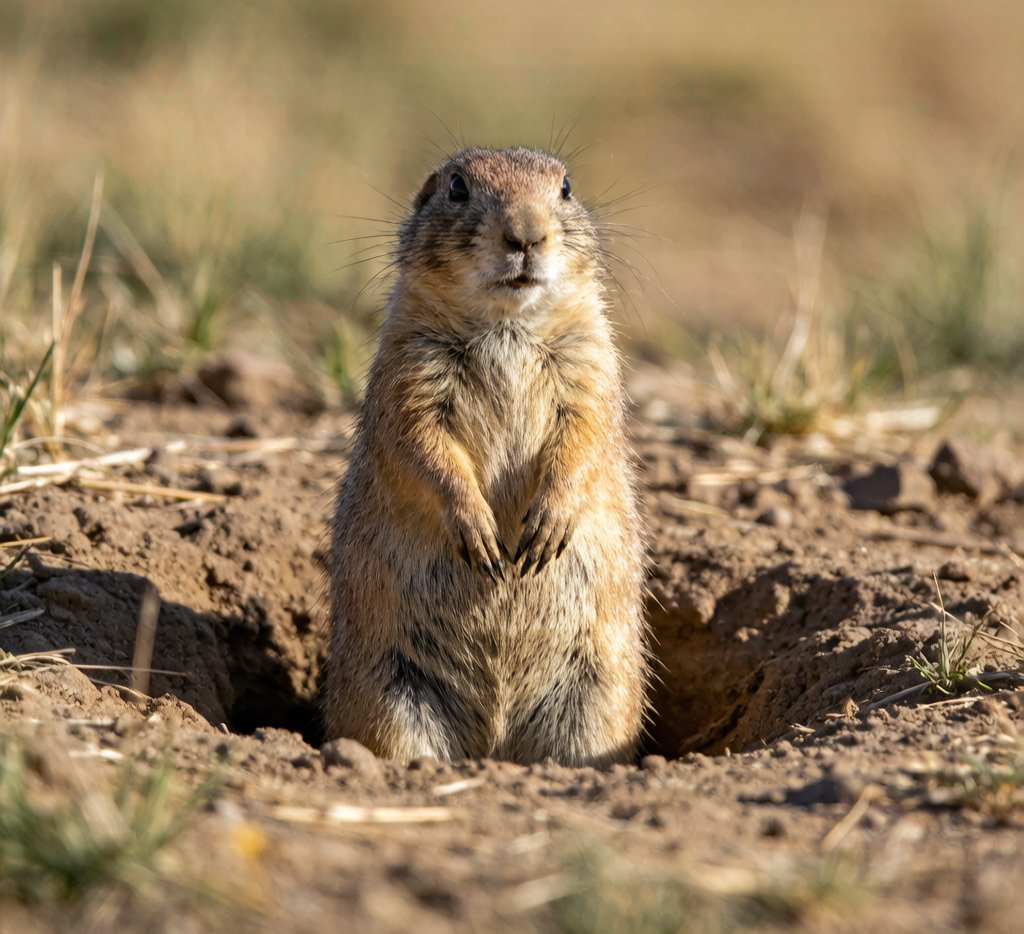
Introduction
The black-tailed prairie dog is a keystone species of the North American Great Plains, famous for its complex social colonies and the distinctive barking vocalisation that gives it its name. These rodents live in vast underground towns that can stretch for kilometres across the short-grass prairie, supporting an extraordinary community of other animals that rely on their burrows for shelter. Though their numbers have collapsed from historic levels, the black-tailed prairie dog remains one of the most ecologically important mammals in the grassland ecosystem of the American West.
Taxonomy
The black-tailed prairie dog belongs to the order Rodentia, the family Sciuridae, and the genus Cynomys. Its scientific name, Cynomys ludovicianus, was assigned by Ord in 1815. The genus Cynomys contains five living species, all native to North America. Despite its name, the prairie dog is not related to canids; its common name comes from the high-pitched warning bark it emits when danger approaches. No subspecies are currently recognised, though populations vary in size and coat tone across their range from southern Canada to northern Mexico.
Physical Characteristics
The black-tailed prairie dog is a compact, stout rodent with tan to reddish-brown upperparts and a pale underside. Adults measure 30 to 37 centimetres in body length, with an additional 7 to 10 centimetres from a short, flat, black-tipped tail. Weight fluctuates with the seasons, from roughly 0.5 to 1.5 kilograms as animals accumulate fat in late summer. The skull is broad and heavily built to support powerful jaw muscles that drive chisel-like incisors for excavating packed earth. The eyes sit high on the head, providing wide-angle vision for detecting predators while the animal remains mostly underground.
Habitat
The black-tailed prairie dog inhabits the short- and mixed-grass prairies of the Great Plains, preferring well-drained, gently sloping terrain with low vegetation that allows clear sightlines. Colony density can be extraordinary: historic towns covered thousands of square kilometres and contained millions of individuals. Today, populations are fragmented, persisting mainly in protected areas, tribal lands, and ranchlands managed with non-lethal methods. The species is strongly associated with beaver habitats in riparian zones where moisture supports the grasses that form the bulk of its diet.
Diet
The black-tailed prairie dog is a herbivore whose diet shifts seasonally. In spring and summer it consumes tender green shoots, flowers, and leaves of grasses and broad-leaved forbs. Seeds become increasingly important in late summer and autumn as the animal builds fat reserves. Occasional insects such as grasshoppers supplement protein intake, particularly for lactating females. Unlike many ground squirrels, the black-tailed prairie dog does not truly hibernate; it becomes less active during the coldest months, retreating to deeper burrow chambers where temperatures remain above freezing. Water is obtained primarily from fresh vegetation.
Reproduction
Mating occurs once per year in early spring, and females produce a single litter of one to eight pups after a gestation of approximately 34 days. Newborn pups are altricial—naked, blind, and entirely dependent—but develop rapidly. Eyes open at around two weeks, and young begin venturing above ground by three to four weeks. The family group collectively supervises and protects the pups, who learn predator recognition and foraging by observing adults. Sexual maturity is reached in the second year, and wild adults typically live three to five years.
Conservation
The black-tailed prairie dog has suffered one of the most dramatic population collapses of any North American mammal, with fewer than two percent of historic numbers surviving. Causes include widespread poisoning by ranchers, agricultural and urban habitat conversion, and sylvatic plague outbreaks that can wipe out entire colonies within weeks. Conservation measures include protecting remaining colony complexes, reintroduction programmes, and oral plague vaccines distributed in bait. The species is listed as Least Concern by the IUCN, though its highly fragmented populations require active management to prevent further decline.
Fun Facts
Black-tailed prairie dogs have one of the most sophisticated alarm call systems in the animal kingdom. Researchers have found that calls differ not only by predator type but also by the predator’s size, speed, and direction of approach. The species also appears to recognise individuals and adjusts its behaviour based on their history of cooperative interactions. Coyote and black-footed ferret are among the most important predators that depend on prairie dog colonies for their own survival. A single prairie dog town can support more than 150 vertebrate species, making it one of the richest habitats in the grassland biome.