 By st20113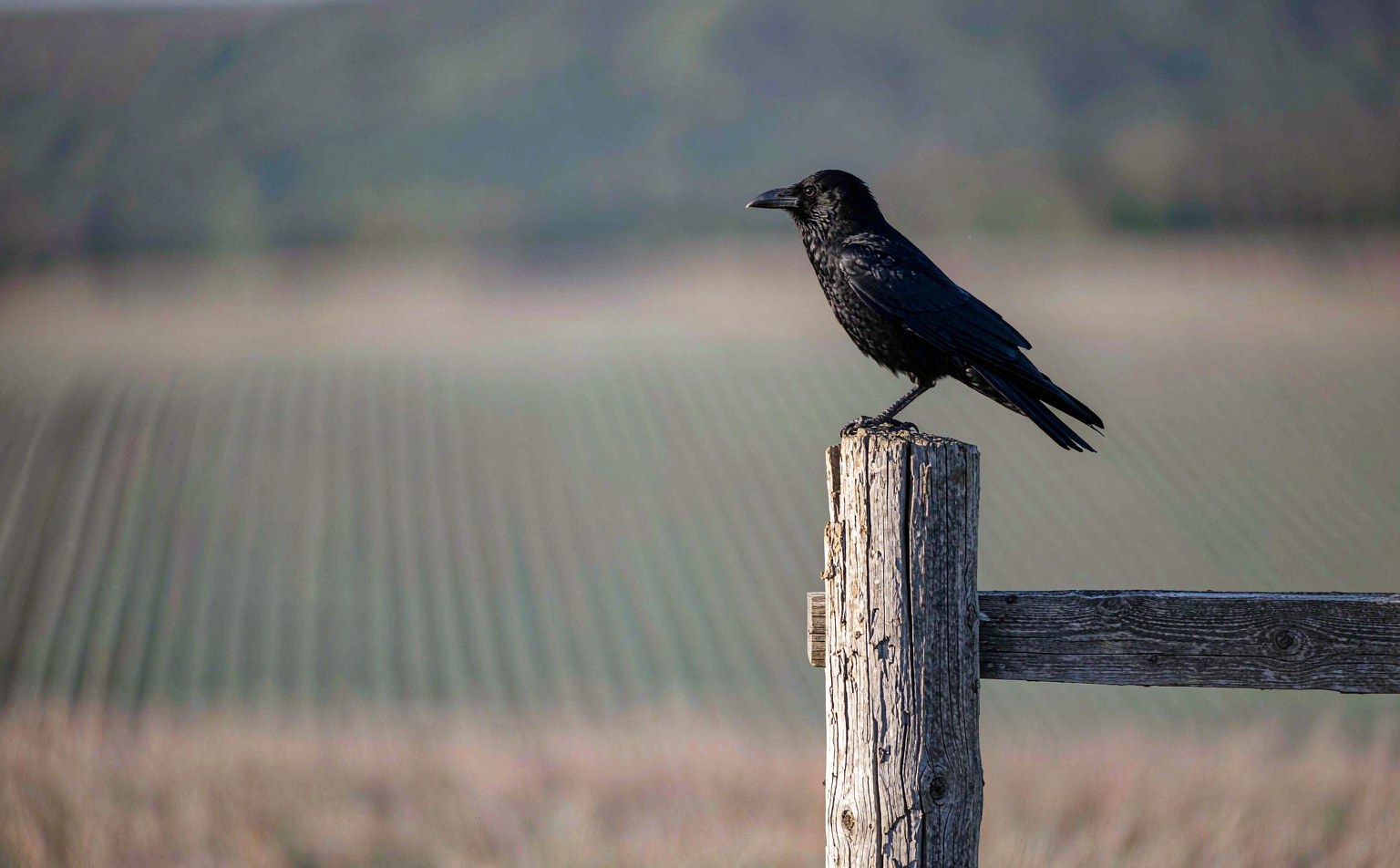
Corvus corone | Carrion Crow
Introduction
The Carrion Crow (Corvus corone) is a large, entirely black member of the crow family found across much of western and central Europe. Glossy, intelligent, and resourceful, it is a bird of open countryside, farmland, woodland edges, and towns, equally at home scavenging roadside carrion and patiently stalking voles in a ploughed field. Its hoarse, rattling “caw” is among the most familiar sounds of the rural landscape.
Often confused with the rook and the raven, the carrion crow is the all-black crow of fields and hedgerows, distinguished by its solid black plumage and squared tail. It is a close relative of the Eurasian Magpie, with which it shares the bold intelligence of the corvid family.
Taxonomy
The Carrion Crow belongs to the genus Corvus, the crows and ravens, within the family Corvidae. It was first described by the Swedish naturalist Carl Linnaeus in 1758 under the binomial Corvus corone. The genus name Corvus is simply the Latin for “crow”, and corone derives from the Greek for “crow” or “coronet”.
In much of Europe the carrion crow was long thought to form a single species with the eastern hooded crow, the two interbreeding in a narrow hybrid zone where the grey-and-black hooded form meets the all-black carrion form. Modern taxonomy treats them as separate species, with the carrion crow occupying the western, entirely black part of the range. Its nearest allies include the rook, raven, and jackdaw, all members of the same intelligent, adaptable family.
Physical Characteristics
An adult Carrion Crow measures 44 to 51 centimetres in length, with a wingspan of 84 to 100 centimetres and a weight of 400 to 650 grams. The plumage is wholly glossy black, with a slight green or purple sheen on the head and body in good light. The bill is black and stout, the legs and feet black, and the eye is dark.
The shape is robust and broad-winged, with a squared or slightly rounded tail, a heavy bill, and a strong, steady wingbeat. In flight the carrion crow is easily separated from the narrower-winged, fork-tailed magpie and from the larger, wedge-tailed raven by its size and proportions. Juveniles are duller and less glossy than adults but otherwise similar, attaining full sheen after their first moult.
Like all corvids, the carrion crow combines powerful flight with an inquisitive, problem-solving intelligence, and it uses its bill with remarkable dexterity to prise, crack, and manipulate food.
Habitat
Carrion Crows occupy a wide variety of open and semi-open habitats: farmland, pasture, woodland edges, river valleys, coastal margins, and increasingly towns and villages. They need scattered trees or cliffs for nesting and open ground for foraging, and they avoid dense, unbroken forest and high mountains.
They are among the most synanthropic of Europe’s larger birds, nesting on buildings, in parks, and along roadsides where food is plentiful. In winter, family groups and loose flocks gather at roosts, sometimes with hundreds of birds, before dispersing to feed by day. Their adaptability parallels that of the Common Buzzard, another generalist that has thrived alongside human-altered landscapes.
Diet
The Carrion Crow is a consummate omnivore and scavenger. It feeds on carrion, including roadkill and dead livestock, and on live prey such as earthworms, insects, small mammals, eggs, and the chicks of other birds. It also takes grain, fruit, nuts, and human food waste, and it is quick to exploit new and easy food sources.
Famous for its tool-using and problem-solving, the crow will drop hard-shelled nuts and molluscs onto roads or stones to break them, and it has been observed using sticks to extract food. This behavioural flexibility, shared with the sharper-eyed Peregrine Falcon‘s prey base of other birds, allows the species to flourish where many specialists fail. It forages mostly on the ground, walking deliberately and watching for movement.
Reproduction
Carrion Crows are monogamous and often pair for life, defending a territory around the nest site. The nest is a bulky bowl of sticks, mud, and wool, lined with softer material, placed high in a tree or on a ledge, pylon, or building. The female lays four to six pale blue-green eggs blotched with brown and incubates them alone for about 18 to 20 days.
Both parents feed the altricial chicks, which fledge at roughly four to five weeks and remain with the adults through the summer. Young birds may help at later nests or form loose sibling groups before dispersing. Because the species is perceived as a predator of game and songbird nests, it is sometimes controlled, yet its intelligence and high reproductive output keep populations robust across most of its range.
Conservation
The Carrion Crow is classified as a species of Least Concern by the International Union for Conservation of Nature, with a large, stable, and in places increasing population. It has benefited from agricultural expansion, road traffic that supplies carrion, and the spread of towns and villages that offer nesting sites and waste.
Local pressures include legal control where it is blamed for predation on game and livestock, and accidental poisoning, but these do not threaten the species overall. Its success is a reminder that intelligence and dietary flexibility are powerful advantages in a changing world, and it remains one of the most widespread and recognisable birds of the European countryside, sharing that status with the Common Blackbird in gardens and farmland alike.
Fun Facts
- The carrion crow is entirely black, unlike the grey-and-black hooded crow of eastern Europe with which it once formed one species.
- It will drop walnuts and shellfish onto hard ground or roads to crack them open, a sign of genuine problem-solving.
- Carrion crows often pair for life and may stay together on the same territory for many years.
- Despite the name, it eats far more than carrion, taking live prey, grain, fruit, and food waste as well.
- In winter, crows gather at large communal roosts that can hold hundreds of loudly cawing birds.