 By st20113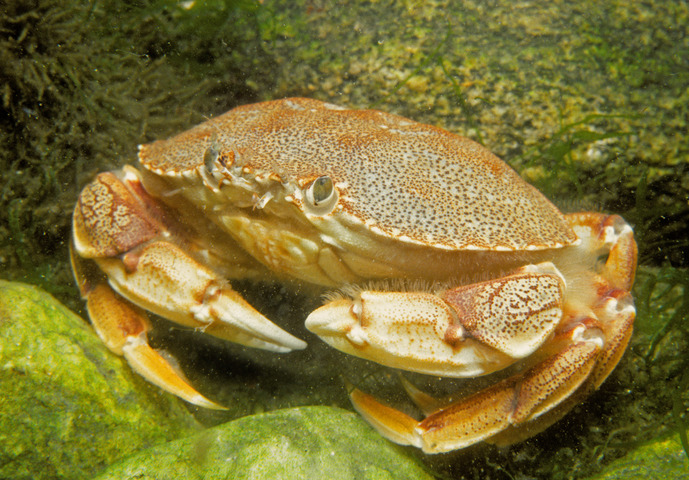
Introduction
The Atlantic rock crab (Cancer irroratus) is a sturdy crab found along the northwestern Atlantic coast, from Newfoundland down to the Carolinas. A member of the family Cancridae, it is a familiar sight among rocky reefs and an important link in the coastal food web. Commercially it is caught alongside other crab species and valued for its sweet, firm meat, while ecologically it helps recycle nutrients across the seabed where it lives.
Taxonomy
The species belongs to the genus Cancer, a group of broad-clawed crabs sometimes called rock crabs or edible crabs. Its scientific name, Cancer irroratus, was given by the American zoologist Thomas Say in 1817. The genus contains several related North Atlantic and Pacific species that share the same rounded, spined shell. The Atlantic rock crab is closely related to the larger Jonah crab of the same waters, and the two are sometimes confused by fishers and beachcombers alike.
Physical Characteristics
The carapace of an adult Atlantic rock crab is typically 10 to 13 centimetres wide, though larger individuals occur. The shell is reddish brown with small spots and bears seven rounded teeth on each side in front of the eyes. The claws are broad and strong, with a granular, ridged surface used for crushing prey. Like all crabs, it has ten legs, the front pair modified into pincers, and it can regenerate a lost limb over successive moults as it grows toward its adult size.
Habitat
Atlantic rock crabs live on rocky and gravelly bottoms from the shoreline down to about 600 metres, though they are commonest in shallow water. They favour areas with crevices and boulders that offer shelter from waves and predators. They are often found near jetties, breakwaters, and kelp beds, where food is plentiful and currents bring drifting prey. The species tolerates a wide range of temperatures across its northern range and can survive in both exposed and sheltered coastal sites. In winter it may burrow into soft sediment to escape storms and cold, emerging again when conditions improve.
Diet
This crab is an opportunistic omnivore. It feeds on molluscs such as clams and mussels, armed worms, small crustaceans, and decaying organic matter, and it will also graze on algae. Using its powerful claws, it cracks open shells to reach the soft tissue inside. As both predator and scavenger, the Atlantic rock crab helps recycle nutrients on the seabed and is itself a favoured meal for larger predators that hunt among the rocks where it hides.
Reproduction
Mating takes place after the female has moulted and her shell is still soft. Males guard the freshly moulted female until her exoskeleton hardens. The female then carries the fertilised eggs attached to specialised appendages under her abdomen, often tens of thousands at a time, for several months until they hatch into tiny planktonic larvae. The larvae drift in the water column before settling and growing through several stages into miniature crabs on the bottom.
Conservation
The Atlantic rock crab is not considered threatened and supports a modest but steady fishery. Populations appear stable across most of the range, aided by its broad distribution and high reproductive output. As with many crustaceans, management focuses on minimum size limits and protecting egg-bearing females to sustain the stock for future harvest, ensuring the species remains common in coastal waters for generations. Bycatch in bottom trawls is the main incidental source of mortality for the species.
Fun Facts
If a leg or claw is lost to a predator or accident, the Atlantic rock crab can regrow a replacement at the next moult, a process called autotomy and regeneration. It is a key prey species for large fish such as cod and for sharks including the great white shark, and it shares the coastal ecosystem with smaller creatures such as the seahorse. Despite its name, it spends its life on the seabed rather than climbing rocks, using its colour to blend with the substrate.
[…] colour with lighter spotting, turning red only when cooked. It is a close relative of the Atlantic rock crab, both being decapod crustaceans of the continental […]