 By st20113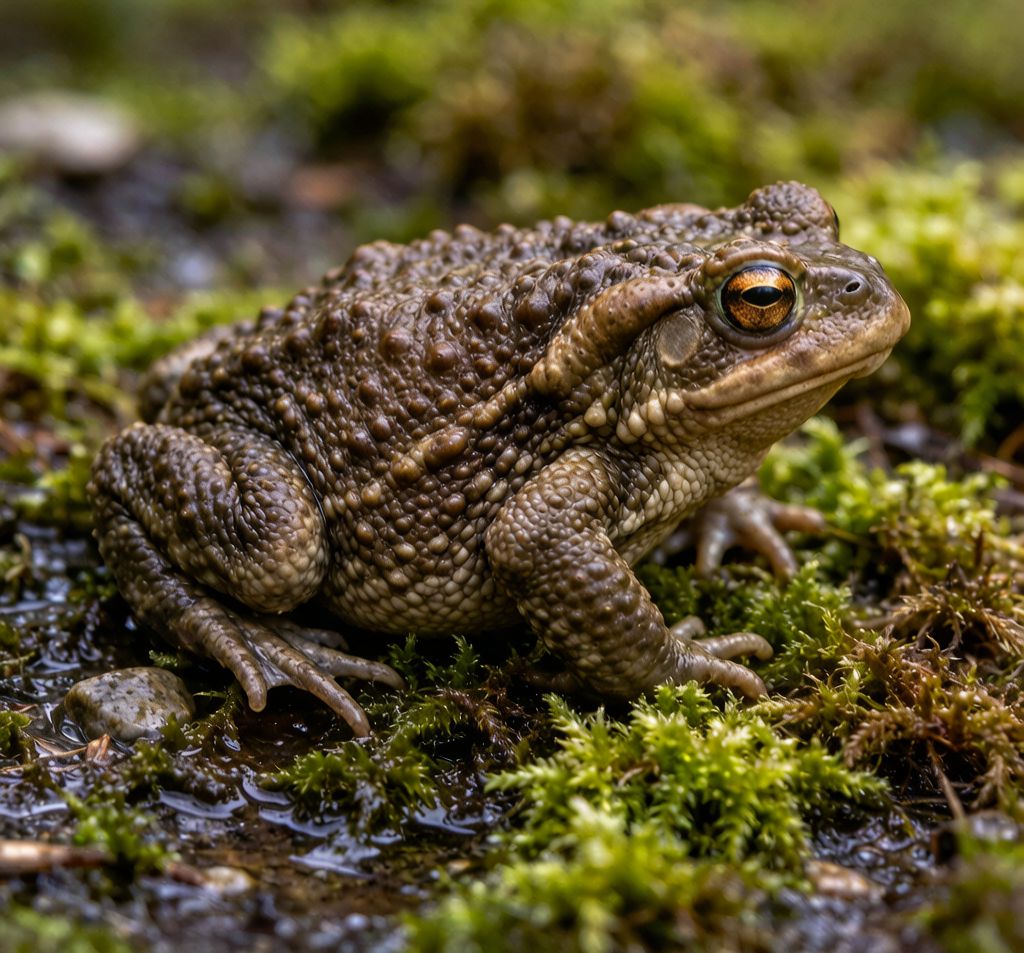
The common toad, also known as the European toad, is a large, robust amphibian found across virtually all of Europe except for Ireland, most islands, and the extreme north. It occupies forests, grasslands, wetlands, and urban gardens, and is one of the most familiar amphibians of the European countryside. Unlike the smooth newt, the common toad is almost exclusively terrestrial outside the breeding season, spending most of its life on land. Common toads can live to extraordinary ages for their body size, with captive individuals recorded at more than 40 years old.
Taxonomy
The common toad (Bufo bufo) belongs to the family Bufonidae, order Anura. The genus Bufo is one of the most species-rich amphibian genera globally, with approximately 150 species across all continents except Antarctica and Australia. The common toad is closely related to the spiny toad (Bufo spinosus) of the Mediterranean region, with which it hybridises in southern Europe. Three subspecies have been described: B. b. bufo across most of Europe, B. b. gredosicola in central Spain, and B. b. formosus in Korea and Japan, though recent genetic studies suggest the latter two may represent distinct species. The species was formally described by Carl Linnaeus in 1758.
Physical Characteristics
The common toad is the largest toad in Europe, with adult females reaching 10-15 cm in snout-to-vent length and males typically smaller at 8-10 cm. Its skin is dry, warty, and covered with prominent parotoid glands behind the eyes, which secrete bufotoxins as a defence against predators. Dorsal colouration ranges from olive-brown to grey, reddish-brown, or dark khaki. The eyes have horizontal rectangular pupils with golden irises. The hind limbs are relatively short, limiting the toad to walking or hopping rather than jumping. Males develop nuptial pads on the first two fingers during the breeding season.
Habitat
The common toad is a habitat generalist that occupies deciduous and coniferous forests, scrubland, meadows, farmland, hedgerows, and urban parks and gardens, typically within 2-5 km of a suitable breeding pond. During the active season from February to October, individuals maintain a home range of up to several hundred square metres, emerging at dusk to forage and returning to the same diurnal shelter site each day. In winter, toads hibernate in frost-free refuges such as rodent burrows, compost heaps, cellars, and piles of stones. Breeding occurs in ponds, lakes, slow streams, and even large puddles.
Diet
The common toad is a sit-and-wait predator, consuming virtually any animal prey small enough to be swallowed whole. Earthworms, slugs, beetles, caterpillars, spiders, ants, woodlice, and centipedes constitute the bulk of the diet. Larger toads can tackle prey approaching their own head size, including small mice, slow worms, and even small frogs. Prey is located by movement and captured with a rapid flick of the sticky tongue. Adults are toxic to most predators, though grass snakes, hedgehogs, and some birds show some resistance to the toxins. Cannibalism on tadpoles has been documented in crowded breeding ponds.
Reproduction
Adults migrate to breeding ponds in early spring, often returning to the same pond where they were born. Males arrive first and establish calling stations in shallow water, producing a low, guttural croak. Amplexus is axillary, with the male grasping the female from behind. Females lay two strings of 1,500-8,000 eggs each, wrapped around submerged vegetation. Eggs develop into tadpoles within two to four weeks and metamorphose into tiny toadlets after 8-12 weeks. Toadlets emerge from the pond en masse, creating spectacular toad migration events that can result in hundreds of road casualties. Sexual maturity is reached at three to five years. Maximum recorded lifespan is approximately 12 years in the wild.
Conservation
The common toad is listed as a species of Least Concern by the IUCN, with an estimated European population in the tens of millions and stable overall trends. However, localised declines have been documented in parts of western and northern Europe, driven by pond drainage, agricultural intensification, road mortality, and disease. The chytrid fungus Batrachochytrium dendrobatidis has been detected in common toad populations in Spain and elsewhere, though its impact has been less severe than on some other European amphibians. Wildlife tunnels under roads have been shown to reduce mortality significantly when combined with barrier fencing.
Fun Facts
Common toads are creatures of extraordinary site fidelity, returning to the same breeding pond and individual territory for decades. The warty appearance of their skin gave rise to the widespread folk belief that handling a toad would cause warts, which is entirely unfounded. The species is known to survive complete freezing of the body for several hours during winter, with ice crystals forming in the body cavity but vital organs remaining undamaged. When attacked, toads can inflate their lungs and adopt a defensive posture that makes them difficult for predators to swallow.