 By st20113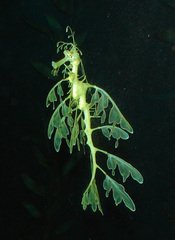
Introduction
The leafy seadragon, scientifically named Phycodurus eques, is a remarkable marine fish belonging to the family Syngnathidae. Endemic to the southern and western coastal waters of Australia, this species is renowned for its exceptional camouflage. Its body is covered with elaborate leaf-like appendages that flutter in the current, giving the impression of floating seaweed. The leafy seadragon serves as the official marine emblem of South Australia. Although it cannot grip objects with its tail like a seahorse, its disguise makes it nearly invisible among kelp and seagrass beds.
Taxonomy
Phycodurus eques was first formally described by George Shaw in 1798. The genus name derives from the Greek phykos, meaning seaweed, and dorus, meaning spear, alluding to its leafy projections. Within Syngnathidae, the leafy seadragon is more closely related to the weedy seadragon than to the colorful clownfish, which occupies an entirely different branch of reef fishes. Genetic research indicates that seadragons separated from pipefish approximately twelve million years ago. The species is currently considered monotypic, with no recognized subspecies. Ongoing studies continue to refine the evolutionary relationships among these delicate relatives of the seahorse.
Physical Characteristics
Adult leafy seadragons typically reach lengths of thirty-five to forty-five centimeters, making them among the largest members of their family. Their bodies are slender and elongated, camouflaged by numerous leaf-shaped dermal appendages that extend from the head, trunk, and tail. These filaments are not used for propulsion but instead mimic drifting algae. Coloration ranges from yellow-green to brown, often with purple or yellow spots that enhance concealment. A long tubular snout allows the animal to suck in tiny prey with remarkable precision. The eyes are small yet capable of independent movement, aiding in the detection of both predators and food.
Habitat
Leafy seadragons inhabit temperate coastal waters, favoring rocky reefs, seagrass meadows, and clumps of kelp where cover is abundant. They are generally found at depths between five and fifty meters, though sightings occasionally occur in deeper water. Like the structure provided by coral on tropical reefs, the kelp canopy offers seadragons essential shelter and hunting grounds. They are weak swimmers and tend to remain within a relatively small home range, drifting with the current rather than undertaking long migrations across open ocean.
Diet
The leafy seadragon is a carnivorous ambush feeder that consumes small crustaceans almost exclusively. Its preferred prey includes mysid shrimp, amphipods, and tiny copepods that swarm among the algae. Using its pipe-like snout, the seadragon generates suction to draw prey into its mouth with a rapid, almost invisible motion. Because it lacks a stomach, food passes quickly through the digestive system, requiring the animal to feed frequently throughout the day. Their sluggish movement is compensated by patience, as they hover motionless among seaweed until unsuspecting prey drift within striking distance.
Reproduction
Reproduction in leafy seadragons follows the typical syngnathid pattern of male pregnancy. During the breeding season, which spans late spring to early summer, a female deposits up to two hundred and fifty bright pink eggs onto the soft brood patch of a male. The male fertilizes and carries the eggs for roughly six to eight weeks until they hatch. Newly emerged juveniles are independent from birth and receive no parental care. Compared with the open-ocean migrations of the leatherback sea turtle, seadragon young remain local and vulnerable.
Conservation
The leafy seadragon is currently listed as Least Concern by the IUCN, yet its populations face mounting pressure from habitat degradation and collection for the aquarium trade. Pollution, coastal development, and warming seas threaten the kelp and seagrass systems these animals depend upon. In Australia, the species receives legal protection, and collection from the wild is strictly regulated. Climate change poses a long-term risk by altering the temperate reefs that sustain them. Continued monitoring and marine protected areas remain essential to ensure stable populations into the future.
Fun Facts
The leafy seadragon is one of the few fish that cannot use its tail to grasp objects, unlike its seahorse cousins. Each individual displays a unique pattern of leafy appendages, much like a fingerprint, allowing researchers to identify specific animals in the wild. Despite its fearsome dragon name, the species is completely harmless to humans and lacks any venom or defensive spines. Its swimming style is so slow and gentle that it appears to float rather than swim. Interestingly, the green sea turtle sometimes shares the same temperate habitats, though the two species rarely interact. The sea otter occupies similar nearshore ecosystems on the opposite side of the globe.