 By st20113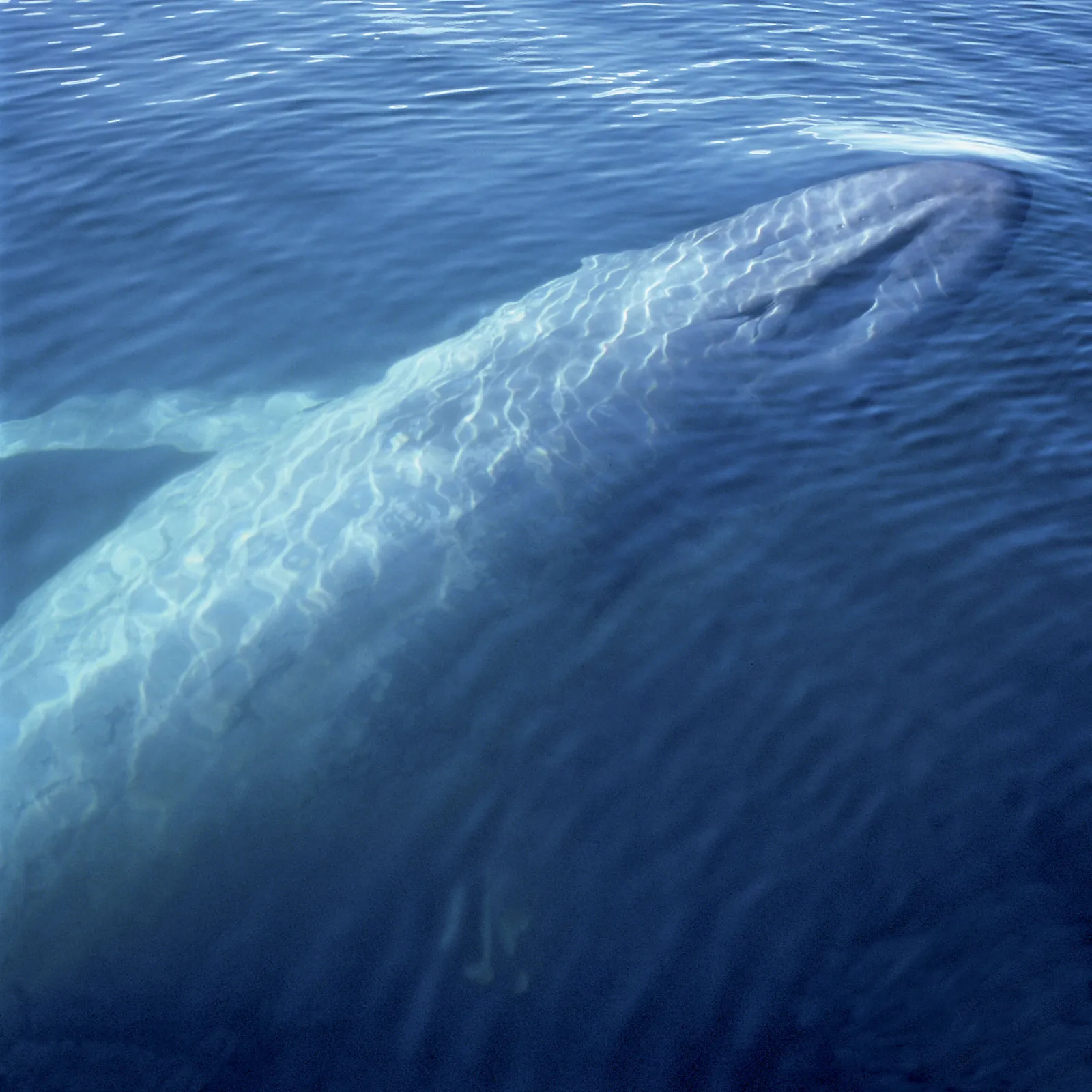
The Blue Whale (Balaenoptera musculus) is not just the largest animal ever known to have existed on Earth — it is one of the most magnificent and improbable organisms in the history of life. Reaching lengths of up to 33 meters (110 feet) and weights of up to 199 tonnes (220 tons), the Blue Whale surpasses even the largest dinosaurs in size and mass, and its heart alone — approximately the size of a small car — is the largest heart of any known animal, beating at just 8–20 times per minute and pumping approximately 8,000 litres of blood through its body. Found in all oceans of the world, from the icy waters of the Antarctic to the tropical Pacific, the Blue Whale is a testament to the evolutionary potential of marine mammals — its great size is enabled by the buoyancy of water, which supports its mass and eliminates the gravitational constraints that limit body size on land. Despite its enormous size, the Blue Whale feeds almost exclusively on tiny krill — shrimp-like crustaceans just a few centimeters long — filtering enormous quantities of seawater through its baleen plates each day to extract sufficient nutrition to sustain its gigantic body.
Anatomy and Physiology
The Blue Whale’s body is a marvel of evolutionary engineering adapted for life in the open ocean. Its streamlined, elongated shape — blue-grey with lighter grey-white spots and mottling — minimizes drag as it moves through the water, enabling the whale to cruise at 8 km/h (5 mph) and reach burst speeds of over 30 km/h (20 mph) when pursued or hunting. The whale’s huge mouth can expand to take in a volume of water and krill equal to its own body weight — a remarkable feat of biomechanical engineering. When feeding, the Blue Whale accelerates toward a dense patch of krill, opens its mouth to an angle of approximately 90 degrees, engulfs a enormous mouthful of water and prey, and then forces the water back out through its baleen plates — comb-like structures of keratin that act as a filter, trapping the krill inside while the water exits. This technique, called lunge feeding, is one of the most energetically expensive hunting strategies in the animal kingdom, requiring the whale to consume enough energy from each feeding dive to offset the enormous costs of the dive itself.
The Blue Whale’s ecosystem role as a filter-feeder on krill connects it to the fundamental base of the marine ecosystem: the photosynthetic organisms of the ocean that form the base of the marine food web. The krill that Blue Whales consume feed primarily on phytoplankton — microscopic marine algae that, like the sunflowers and trees of the terrestrial world, perform photosynthesis using sunlight and CO2. This means that the Blue Whale — the largest animal on Earth — ultimately depends on microscopic marine algae for its food, connected through a two-step food chain: phytoplankton → krill → Blue Whale. This marine photosynthesis also produces approximately 50% of Earth’s atmospheric oxygen, making the organisms at the base of the marine food web — and the Blue Whale that connects to them through the food web — part of the global oxygen cycle that sustains all aerobic life.
Vocalizations and Communication
Blue Whales produce the loudest sounds of any animal on Earth — vocalizations that can reach 188 decibels and travel thousands of kilometers through the deep ocean. These low-frequency moans, pulses, and groans, produced by the massive larynx and reinforced by the whale’s enormous body, serve multiple functions including long-distance communication, navigation through echolocation, and potentially coordination of feeding behavior in widely dispersed individuals. Blue Whales produce these sounds throughout the year, but the most complex and loudest vocalizations occur during the breeding season, when males may use them to attract females or compete with other males. The Blue Whale’s songs are among the most studied acoustic phenomena in marine biology, and their change over time — as ocean noise pollution from shipping increases — provides important insights into how human activity is affecting marine ecosystems.
Conservation and Recovery
The Blue Whale is classified as Endangered by the IUCN, with an estimated global population of 10,000–25,000 individuals — a dramatic reduction from an estimated historical population of 200,000–300,000 before industrial whaling. The Blue Whale was hunted to the brink of extinction by the mid-20th century, with over 360,000 individuals killed globally between 1900 and 1966, when it was finally given full protection by the International Whaling Commission (IWC). Since then, Blue Whale populations have recovered slowly — the Antarctic population, the largest in the world, is estimated to number approximately 2,300 individuals, only 1–2% of its pre-whaling size. The primary contemporary threats include ship strikes (Blue Whales are frequently killed in collisions with large container ships), entanglement in fishing gear, ocean noise pollution that disrupts communication and foraging, and climate change, which affects krill abundance by altering ocean temperatures and Water Cycle patterns in the polar feeding grounds that Blue Whales depend on during the summer feeding season.
ground. They are particularly abundant in habitats with abundant insect prey. Unlike the aquatic blue whale, wolf spiders are entirely terrestrial. Their silk production is primarily used for constructing
[…] migrating with the seasons along coastlines and into river estuaries. Unlike the enormous blue whale that filters tiny krill, the beluga is an active predator of fish and […]
[…] cockatoos play a significant role as seed dispersers in their native ecosystems. Like the blue whale, which uses low-frequency sounds to communicate across ocean basins, the cockatoo’s loud […]
[…] and seed dispersal. As the largest bat on Earth, it is a giant of the night sky, just as the blue whale is a giant of the […]
[…] wide open. The family holds the largest animals that have ever lived. A famous relative is the Blue Whale, the biggest animal on […]