 By st20113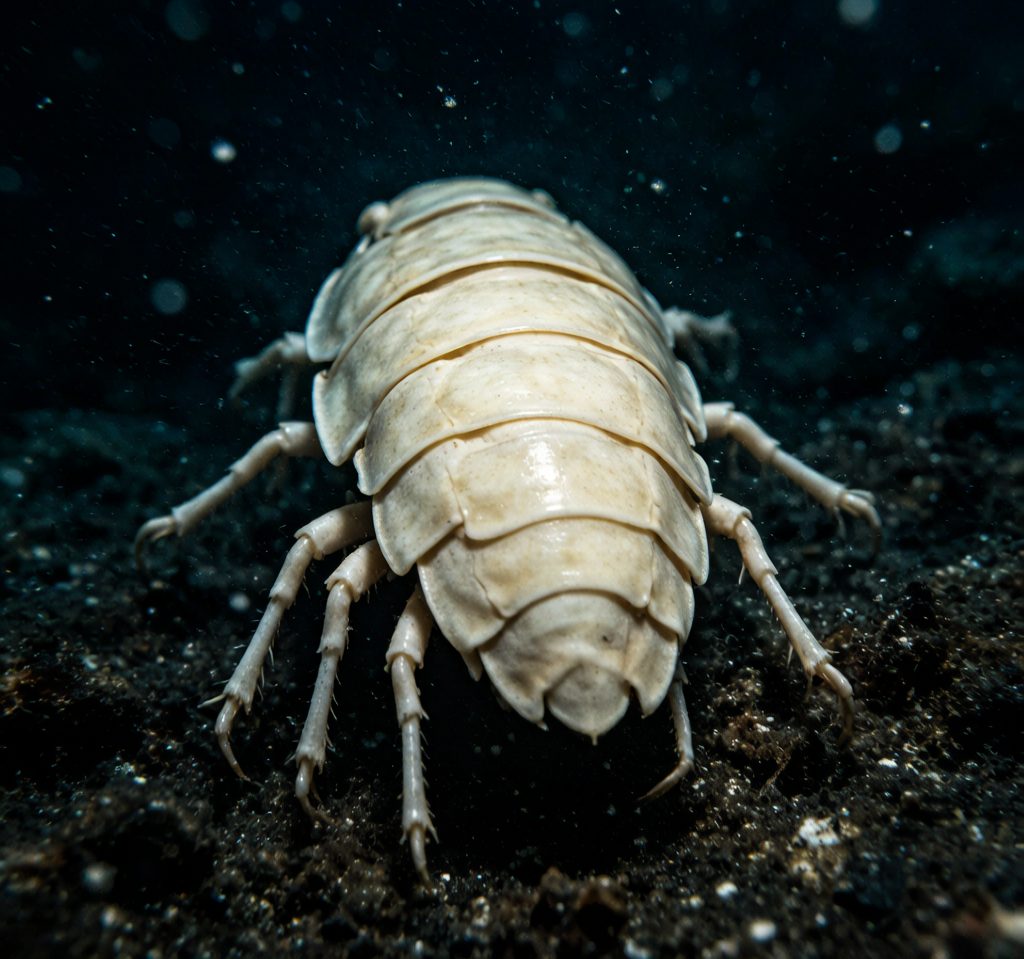
Introduction
The giant isopod, scientifically named Bathynomus giganteus, is a deep-sea crustacean belonging to the order Isopoda. First discovered in the Gulf of Mexico in 1879, it is among the largest members of its group, with adults reaching lengths of over thirty centimeters. These elusive animals inhabit the cold, dark depths of the Atlantic Ocean, typically between five hundred and fifty and two thousand one hundred meters. Giant isopods are scavengers, feeding on the remains of creatures that sink from the surface waters. Their alien appearance and enormous size have made them icons of deep-sea biology and frequent subjects of public fascination around the world.
Taxonomy
Bathynomus giganteus was described by the French zoologist Alphonse Milne-Edwards in 1879. The genus name combines the Greek bathys, meaning deep, and nomus, meaning district or pasture. Within Isopoda, giant isopods are relatives of the familiar woodlice found in gardens, though separated by immense evolutionary distance and habitat. Unlike the reef-dwelling clownfish, which thrives in sunlit shallows, the giant isopod is adapted to perpetual darkness. Several related Bathynomus species exist across the Indo-Pacific and Atlantic, but B. giganteus remains the best known. Molecular evidence suggests the genus radiated relatively recently in geological terms.
Physical Characteristics
Giant isopods possess a segmented, armored exoskeleton divided into a head, thorax, and abdomen, protected by overlapping calcareous plates. Their most striking feature is a pair of large compound eyes and two pairs of antennae used to detect food in the dark. Seven pairs of legs, called pereopods, enable slow crawling across the seabed, while specialized appendages called pleopods assist in respiration. A flat, oval body allows the animal to wedge into crevices. Like the protective mineral skeleton built by coral, the isopod’s armor provides defense against predators. Adults can weigh more than one and a half kilograms, a size achieved through deep-sea gigantism.
Habitat
Giant isopods occupy the bathyal zone of the ocean, favoring soft sediment plains and the continental slope where organic debris accumulates. They are most common at depths of seven hundred to two thousand meters, where temperatures hover near four degrees Celsius. The absence of light means these animals rely on chemoreception rather than vision to locate meals. Much as the leatherback sea turtle traverses vast ocean basins, giant isopods roam extensive stretches of seabed in search of carrion, though their pace is far slower and their range more restricted.
Diet
As opportunistic scavengers, giant isopods consume the falling remains of whales, fish, squid, and other marine organisms. They use strong mandibles to tear flesh from carcasses and can survive astonishing periods without food, with recorded fasts exceeding five years in captivity. This ability reflects the unpredictable nature of food supply in the deep sea. When a large carcass arrives, multiple individuals gather and feed communally. Their sluggish metabolism and low-energy lifestyle are key adaptations to an environment where meals are rare and widely spaced between events.
Reproduction
Reproductive details of the giant isopod remain poorly studied because of the difficulty of observing them in the wild. Females brood eggs in a ventral pouch called a marsupium until they hatch as miniature adults, bypassing a free-swimming larval stage. This direct development is typical of deep-sea isopods and increases offspring survival in a harsh environment. Males likely use modified appendages to transfer sperm to females during mating. The slow growth and late maturity of these crustaceans mean populations recover slowly from any disturbance they encounter.
Conservation
The giant isopod has not been formally assessed by the IUCN, but it faces little immediate threat from fishing because of its great depth. However, deep-sea trawling can inadvertently capture individuals, and the species’ slow reproductive rate makes any population decline difficult to reverse. Scientific interest has grown as a potential indicator of deep-sea ecosystem health. Unlike nearshore species such as the sea otter, giant isopods are spared most direct human impact, yet they remain vulnerable to the cumulative effects of ocean change.
Fun Facts
The giant isopod can survive more than five years without eating, a record among known animals. Its close relatives, the common pill bugs, are among the few crustaceans that live entirely on land. Specimens have been observed curling into a protective ball when disturbed, resembling a giant woodlouse. The largest recorded individuals measured over forty-six centimeters in length. Although they appear fearsome, giant isopods are harmless scavengers that clean the ocean floor. The green sea turtle occupies a completely different ecological niche, yet both depend on the health of the marine environment.