 By st20113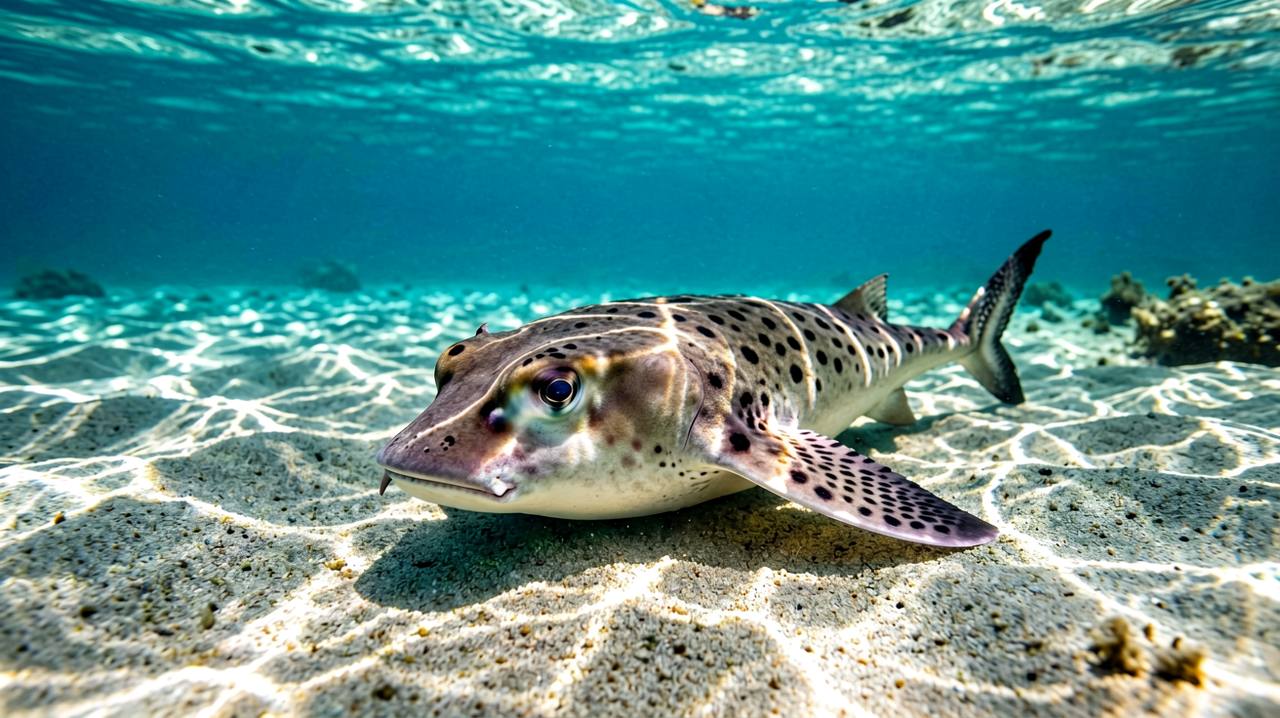
Scyliorhinus canicula | Small-spotted Catshark
Species Profile · Scyliorhinidae
Small-spotted Catshark
A harmless, spotted shark that sleeps on the seabed by day and lays eggs you can pick up on the beach.
IUCN: Least Concern
Range
Size
Depth
Eggs
Status
A shark with spots
The shark asleep on the sand
The small-spotted catshark is a slim, spotted shark of the eastern Atlantic. It grows to about one metre, but most adults stay under 80 centimetres. Fishermen in Britain often call it the lesser spotted dogfish. It is harmless to people. It lives on sandy and gravelly seabeds. Its range runs from Norway down to West Africa.
It also lives right through the Mediterranean Sea. It is one of the most common sharks in European coastal waters. Divers see it resting in groups on the seabed by day. Its pale skin is covered in hundreds of small dark spots. That pattern gives the species its name. Unlike many sharks, it does not give birth to live young.
Instead, the female lays leathery egg cases. These empty cases wash up on beaches. Beachcombers know them as mermaid’s purses. This small shark is also a favourite animal in marine laboratories. Its egg case is clear enough to watch an embryo grow.
Family tree
One of the catsharks
The small-spotted catshark sits in the genus Scyliorhinus. It belongs to the family Scyliorhinidae, the catsharks. Catsharks form one of the largest shark families. Most of its members are small and live near the seabed. The species is placed among the ground sharks. That group includes many familiar species.
One distant relative is the much larger Great White Shark. Both are cartilaginous fishes. Their skeletons are made of soft cartilage, not bone. But the two live very different lives. The great white is a huge open-water hunter. The catshark is a small bottom-dweller.
Scientists have studied the catshark for over a century. Its embryos were once a standard subject in biology classes. Its immune system is still used in research today. Two similar species share its range. One is the nursehound, which is larger and has bigger spots. The other is the blackmouth catshark, which lives in deeper water.
A slim, rough body
Built for the seabed
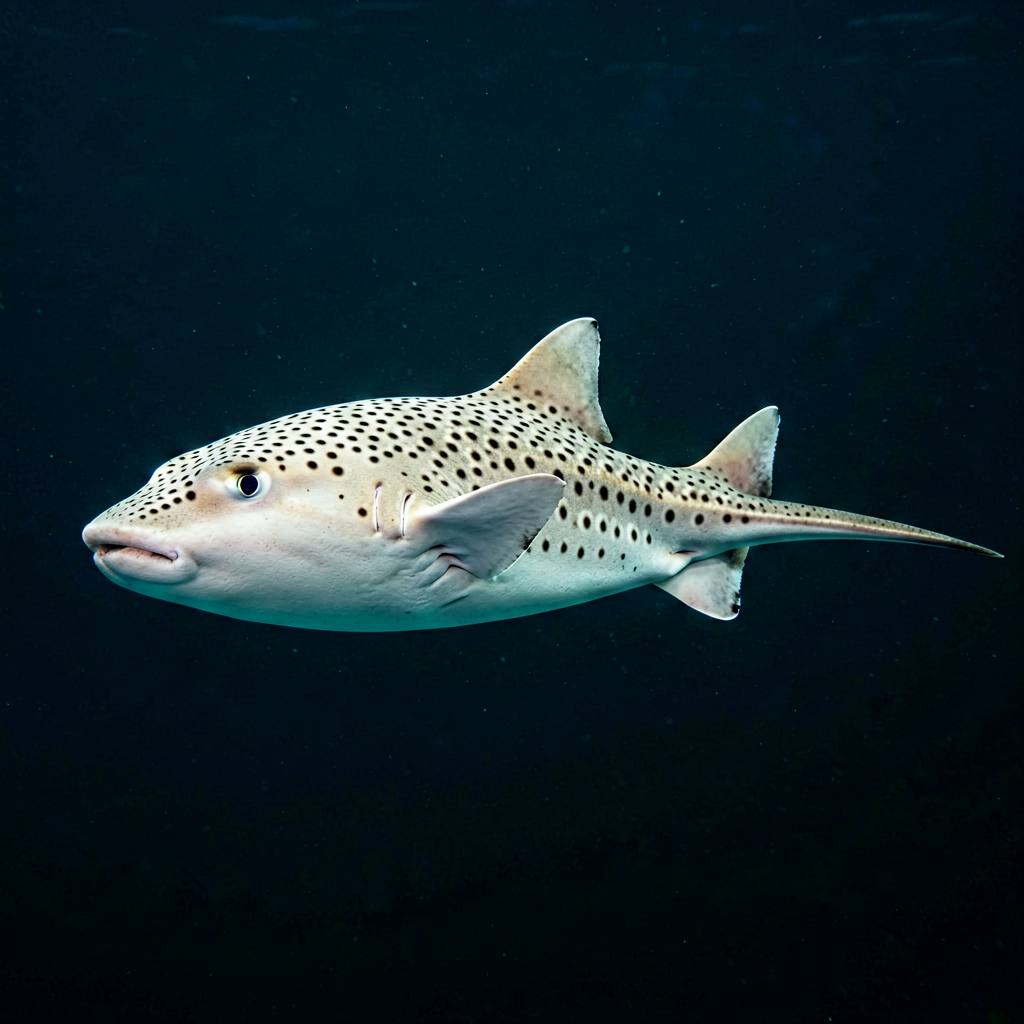
The small-spotted catshark has a long, slender body. Its snout is short and rounded. Its head is flattened on top. Two small dorsal fins sit far back on the body. The tail fin is long and low. Its skin feels rough, like sandpaper.
It is covered in tiny tooth-like scales called denticles. The back is pale brown or grey. Hundreds of small dark spots cover it. The belly is cream or white. Each nostril carries a flap of skin that reaches the mouth. Grooves around the mouth help it sense prey.
Its eyes are narrow and sit high on the head. Small spiracles behind the eyes pull water over the gills. Males grow slightly longer than females. Adults usually measure 60 to 80 centimetres. A very large one may just reach one metre. Like other sharks, it replaces worn teeth throughout its life.
1
2
3
Cool coastal seas
Sand, gravel, and shallow water
This shark lives in cool, shallow coastal seas. It ranges from Norway and the British Isles south to Senegal. It is common around the whole Mediterranean. It also occurs near the Canary Islands and Madeira. It prefers sandy, muddy, or gravelly bottoms.
It is most often found between 20 and 120 metres deep. It can live in water as shallow as a few metres. A few records come from over 400 metres. Young sharks stay in shallower water than adults. Seagrass beds and rocky reefs nearby offer cover.
The species tolerates a wide range of temperatures. It does best in cool water below about 15 degrees Celsius. It is not a fast swimmer and does not travel far. Each shark tends to stay in one area. That makes local populations easy to study.
What it eats
Hunting after dark
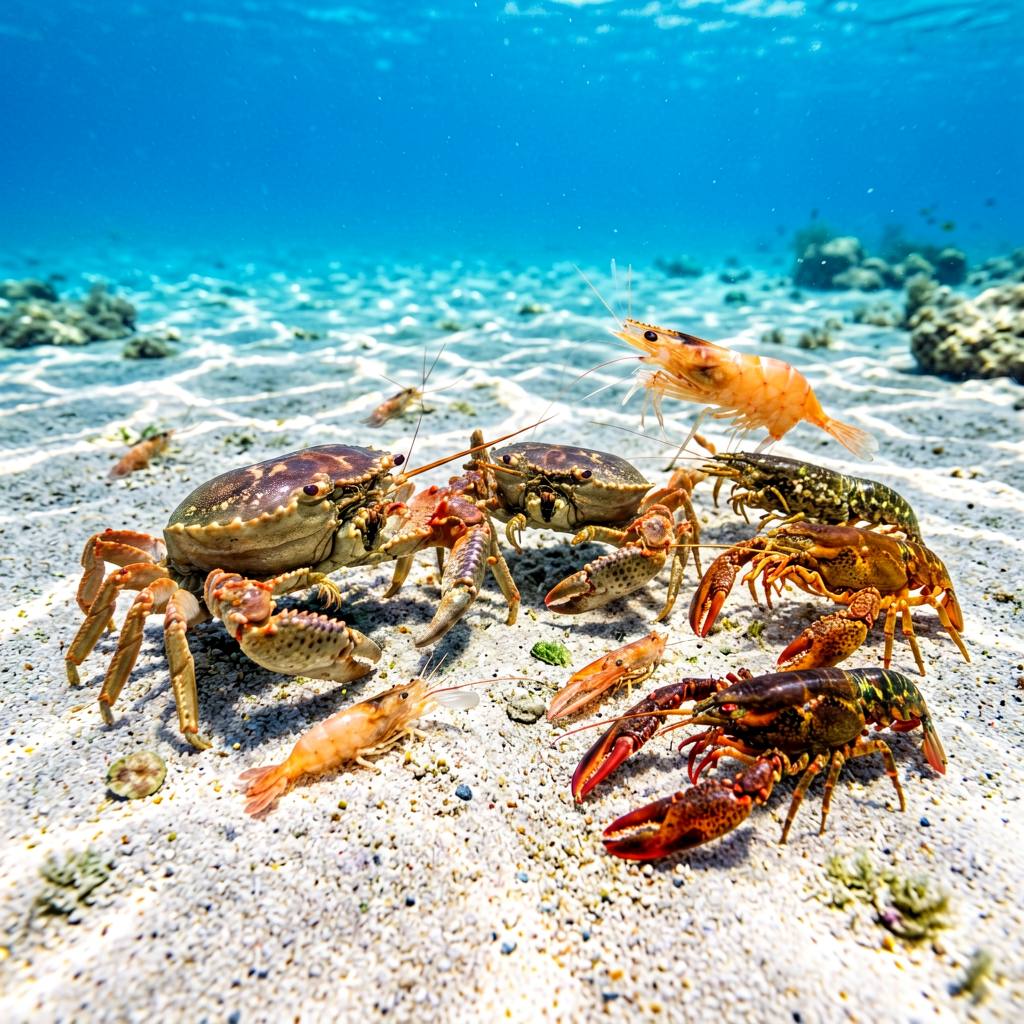
The small-spotted catshark is a night hunter. By day it rests on the seabed. At dusk it starts to search for food. Its main prey are small animals on or near the bottom. Crabs, shrimps, and small lobsters are favourites. It also eats squid, octopus, and cuttlefish. Worms and small bottom fish round out the diet. It takes shellfish and sea snails too. Its teeth are small and pointed. They are built for gripping, not for slicing.
It often crushes hard-shelled prey. Its mouth sits on the underside of its head. That shape suits feeding on the seabed. It hunts mostly by smell and by touch. Special sense organs detect the tiny electric fields of hidden prey. That lets it find animals buried in sand. It swallows small prey whole. Larger prey is torn apart with quick shakes of the head. It can go several days without feeding. Its teeth form a flat pavement in the mouth.
That surface is ideal for crushing shells. Small crabs are often swallowed almost whole. Harder prey is broken up before it goes down. The shark never chews in the way a mammal does. It simply grips and shakes until the shell gives way. The species is docile and easy to handle. In some aquariums it is even used in touch pools. Visitors can feel its rough skin for themselves.
Egg cases
Mermaid’s purses on the beach
This shark is oviparous, which means it lays eggs. The female grows a pair of eggs inside her body. Each one is wrapped in a tough, horny case. The case is rectangular, with long curly tendrils at every corner. The tendrils catch on seaweed or rocks. That anchors the egg in place. Cases are about six centimetres long.
The female lays two at a time. She may lay many pairs over one breeding season. The season usually runs from late autumn into summer. Each embryo grows inside its case for several months. Development can take five to eleven months. Warmer water speeds it up. A young shark hatches at about ten centimetres long.
It looks like a tiny copy of the adult. Females become mature at around 60 centimetres. Males mature a little smaller. Females can store sperm for later use. Empty egg cases often wash ashore after a storm.
Caught by accident
Bycatch and bottom trawls
The small-spotted catshark is rated Least Concern by the IUCN. It is one of the commonest sharks in European waters. That does not mean it is free from harm. Trawl and beam-trawl nets catch it by accident. Most of these fish are thrown back, often already dead. Some are kept and sold as food.
In Britain they were once widely eaten as rock salmon. Demand has fallen, but the catch continues. Bottom trawling also damages the seabed it depends on. Its eggs need seaweed and rock to attach to. Loss of those habitats can reduce breeding success. Coastal pollution is another pressure.
The species grows slowly and matures late. That makes it slow to recover from heavy losses. There are no special protections for it in most countries. Researchers watch its numbers as a sign of seabed health. Because it stays in one place, it is a useful marker species.
Quick hits
Five things to remember
- Beachcombers know its empty egg cases as mermaid’s purses.
- Its skin feels like sandpaper because it is covered in tiny tooth-like scales.
- It can sense the weak electric fields of prey buried in the sand.
- A female may store sperm and use it to fertilise eggs much later.
- It is one of the most studied sharks in the world, thanks to its clear egg case.
[…] not bone. Its line is one of the great puzzles of shark study. It is the close relative of the Small-spotted Catshark (Scyliorhinus canicula). That small shark is common on the sea bed of the north-east Atlantic. It shares the same body […]