 By st20113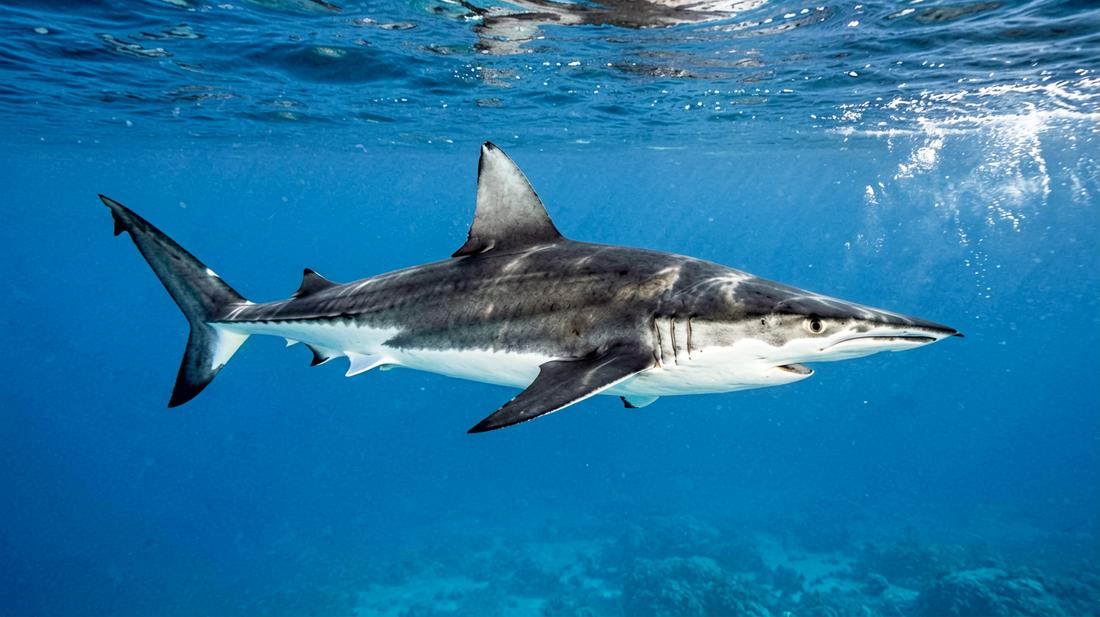
Lamna nasus | Porbeagle
Species Profile · Lamnidae
Porbeagle
A stocky, warm-bodied shark of cold seas, with a white-tipped dorsal fin and a taste for mackerel.
IUCN: Vulnerable
Range
Size
Weight
Life
Status
A shark of cold seas
The porbeagle
The porbeagle is a stocky shark. It lives in cold water. It has a pointed snout. It likes to eat mackerel. It swims in the cold North Atlantic. It also swims far to the south.
It often stays near the surface. It is one of few sharks that warm their own bodies. This warm body helps it chase fast schooling fish. Its back is dark grey. Its belly is white. The back tip of its first dorsal fin has a small white patch.
It grows slowly. It lives for decades. It gives birth to a few large pups at a time. These habits make it easy to overfish. Several stocks have suffered badly.
Family tree
Kin of the great white
The porbeagle belongs to the mackerel shark family. This family is Lamnidae. It is in the order Lamniformes. Its famous kin include the Great White Shark. They also include the shortfin mako and longfin mako. All of them have a spindle-shaped body.
All have a pointed snout. Their teeth seize slippery fish. The genus Lamna has only two living species. One is the porbeagle of the north. The other is the salmon shark of the North Pacific. The two look much alike.
Early naturalists argued about whether they were one species. The name Lamna comes from a Greek word. It means a fish of prey. Carl Linnaeus described the porbeagle in 1758. Genetic studies place it near the base of the lamnid branch. This suggests its cold-water ways are ancient.
Warm inside
A body that beats the cold
An adult porbeagle is usually 2 to 2.5 metres long. It weighs 135 to 200 kilograms. The largest on record was about 3.7 metres. It weighed 230 kilograms. Females grow larger than males. The body is thick and torpedo-shaped. It is built to cruise, not to sprint. A long conical snout sits ahead of large dark eyes. These eyes help in dim water. Five gill slits open on each side of the head.
The first dorsal fin is tall and triangular. Its free back tip is white. This white tip sets the porbeagle apart from nearly every other shark. A small second dorsal fin sits above a matching anal fin. The tail stock has a strong keel on each side. Below it lies a smaller secondary keel. The tail fin is crescent-shaped. It has a long upper lobe. The teeth are narrow and smooth-edged. Each tooth has a tiny cusplet beside it.
They work like hooks, not knives. The skin is covered in small tooth-like scales. These scales cut the water. They also blunt the teeth of attackers. Its heating system is most remarkable. Networks of blood vessels trap the heat from swimming muscles. These vessels are called retia mirabilia. As a result, the core can be 8 to 10 degrees Celsius above the sea.
1
2
3
Where it lives
Cold water, both hemispheres
The porbeagle lives in cool and cold seas. It lives on both sides of the North Atlantic. Its range runs from Newfoundland and New England. It goes across to Iceland, Norway and the British Isles. In the south it circles the subantarctic. It reaches South Africa, southern Australia, New Zealand and Chile. It prefers water of about 1 to 18 degrees Celsius. In the north-east Atlantic the range runs from Iceland and northern Norway.
It goes south to the Bay of Biscay. The species has almost vanished from the Mediterranean. It was once taken there often. It is rarely found in the tropics. Most records are from the surface to 200 metres. But it has been caught as deep as 700 metres. Northern porbeagles travel with the seasons. Fish tagged off New England moved north to Canada in summer.
They returned south for winter. A few crossed the whole Atlantic. Porbeagles gather at set pupping grounds. Young sharks stay in cooler, shallower nursery areas. They join the adults offshore later. The species spans two halves of the globe. Scientists treat northern and southern stocks as separate units.
What it eats
Hunting shoals of mackerel
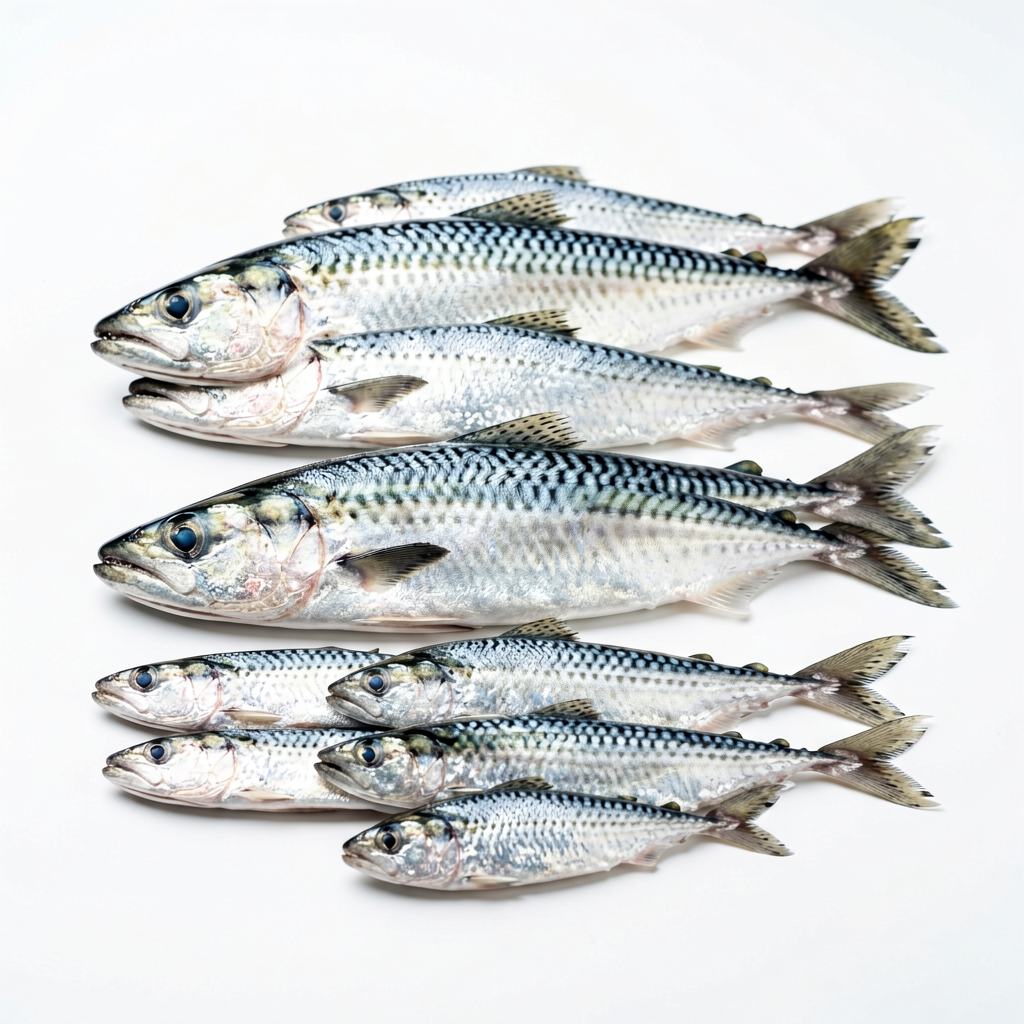
Fish make up almost the whole diet. In the North Atlantic it hunts mackerel. It also hunts herring, sardines and pilchards. It takes saithe, whiting and hake. In deeper water it eats flatfish. It takes cod, haddock, sand lance and small skates. Squid and other cephalopods fill the gaps. Large sharks swallow prey a third of their own length.
The teeth seize rather than slice. The shark swallows most prey whole. Or it swallows them in a few pieces. Porbeagles often hunt in loose groups. They drive a shoal into a tight ball. Then they charge through it. During these bouts they may roll and spin. The sight looks chaotic to a diver.
They are drawn to hooked fish. They are drawn to the catch of longline and gillnet boats. This is one reason they are caught by accident so often. The warm body helps here too. A heated eye and brain keep the shark alert. Cold water would leave a cold-blooded fish sluggish.
Few and slow
Four pups at a time
Female porbeagles breed at about 12 or 13 years old. Males mature earlier, at 8 to 11 years. Mating takes place in late summer and autumn. The young grow inside the mother for eight or nine months. The porbeagle is one of the sharks that practises oophagy. Early embryos live on yolk. Once the yolk is gone they eat unfertilised eggs. The mother keeps releasing these eggs into the uterus.
This gives each pup a large food supply. It gives the pup a big start in life. Litters are small. They are usually four pups. They are never more than five. Newborn sharks are 58 to 75 centimetres long. They are fully formed and able to hunt. Females may breed every year.
Or they may breed every second year. The whole cycle is slow. A porbeagle can live 30 to 40 years. Some age estimates go higher. The species replaces its numbers very slowly. A fishery can strip a stock before anyone notices.
Overfished and slow to recover
Why the porbeagle is in trouble
The porbeagle is listed as Vulnerable worldwide. Several stocks are in worse shape. The Northeast Atlantic stock is Critically Endangered. The Northwest Atlantic stock is Endangered. The Mediterranean stock is Critically Endangered. Its meat, fins and liver oil are valuable. They made it a target for decades.
This was true in Norwegian and other European fisheries. It is still taken as bycatch. This happens on longlines and in gillnets. It grows slowly and bears few young. Recovery takes decades. Management has tightened. The European Union has banned landing porbeagles from its waters.
International bodies set very low catch limits. Some set zero limits for the North Atlantic. Enforcement remains uneven. Porbeagle fins still appear in trade. Scientists want full retention bans. They want better bycatch reports. They want protected nursery areas.
Quick hits
Five things to remember
- The porbeagle is warm-blooded. Its muscles run 8 to 10 degrees Celsius warmer than the sea.
- A white patch sits on the free back tip of the first dorsal fin. It is the simplest way to tell one apart.
- Unborn pups feed on unfertilised eggs inside the mother before birth.
- After a pregnancy of eight to nine months, a female usually has just four pups.
- Tagged porbeagles have crossed the whole North Atlantic. That is a trip of several thousand kilometres.