 By st20113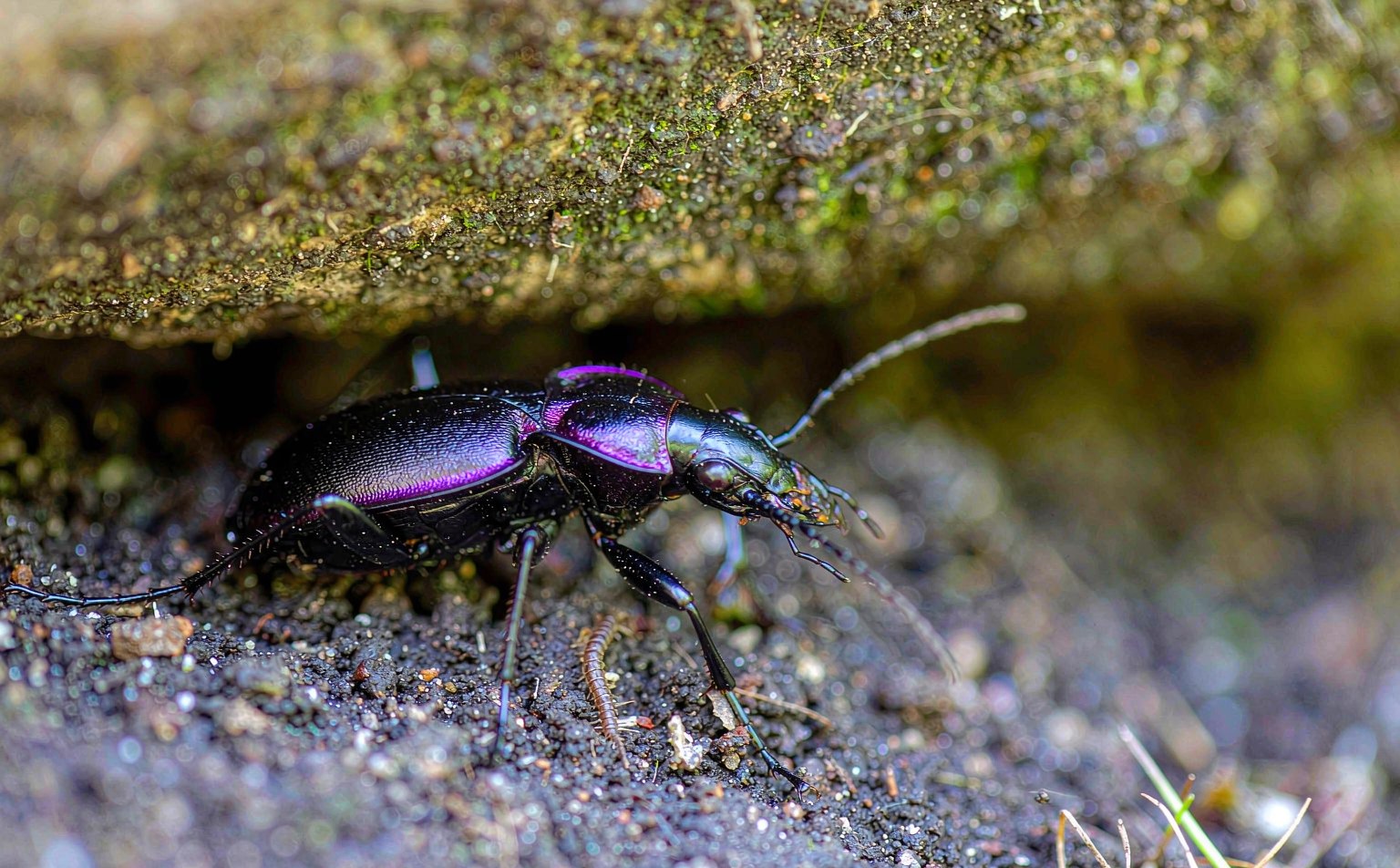
Carabus violaceus | Violet Ground Beetle
Introduction
The Violet Ground Beetle (Carabus violaceus) is a large, glossy black beetle with a striking violet or purple sheen on its edges, a familiar ground-dweller of gardens, woodlands, parks and hedgerows across Europe. Reaching about 2 to 2.8 centimetres, it is a fast, nocturnal hunter that prowls the soil surface after dark in search of slugs, worms and other small prey. Despite its size it is shy and rarely seen by day, hiding under stones and logs, but it is one of the most useful beetles a gardener can have, quietly keeping pest numbers down.
Taxonomy
Carabus violaceus belongs to the family Carabidae, the ground beetles, a huge group of mostly predatory, running beetles, and is a member of the genus Carabus of large, often metallic hunters. It is told from its relatives by the deep black body with vivid violet margins and by its finely ridged elytra. It shares the soil surface with the Green Tiger Beetle in sunny spots, though the violet ground beetle is a night hunter of shaded ground rather than a sun-loving sprinter.
Physical Characteristics
Adults are robust beetles 2 to 2.8 centimetres long, with a rounded, domed body and a smooth, very glossy black surface that shows a strong violet or purplish iridescence along the edges of the thorax and wing cases. The head is narrow with long, thread-like antennae and strong mandibles for seizing prey. The elytra are finely grooved lengthwise and, unlike many beetles, are fused and cannot be opened for flight, so this species runs rather than flies. The legs are long and powerful, built for chasing prey on the ground. New adults are glossy and dark, gaining full sheen as they harden.
Habitat
Violet ground beetles live in damp, shaded ground rich in cover: woodland leaf litter, gardens, hedgerows, parks, meadows and the margins of fields. They need loose soil, stones, logs and mulch under which to hide by day, and they prefer cool, moist microhabitats to hot, open ground. They meet the Seven-spot Ladybird and the European Hornet in the same gardens and wood edges, part of a broad community of beneficial invertebrates that share the soil and the foliage.
Diet
Adults and larvae are both predatory, feeding on slugs, snails, earthworms, caterpillars and a range of other small invertebrates caught on the ground at night. They are valued in gardens and crops because they eat pests such as slug eggs and young slugs that damage seedlings. They hunt by pursuit and ambush, using their mandibles to crush prey, and they also take carrion and fallen insects when live food is scarce. By suppressing pests they provide free, chemical-free control that benefits plants and growers alike.
Reproduction
Mating takes place in spring and early summer. The female lays her eggs singly in the soil or under cover, and the larvae that hatch are active, elongated predators with strong jaws that hunt in the leaf litter. The larvae pass through several growth stages before pupating in a chamber in the earth, and the new adults emerge later in the season. The beetles overwinter as adults under logs, stones or in the soil, becoming active again with the warmth of spring. There is no care of the young beyond the choice of a safe egg site.
Conservation
The violet ground beetle is common and widespread and is not of conservation concern, but it depends on the damp, untidy ground that modern tidiness often removes. It suffers from heavy pesticide use, from the clearing of logs and leaf litter, and from compacted, bare soil. It benefits from leaving mulch, stones and log piles, from reducing insecticide in gardens and fields, and from keeping hedgerow and woodland margins intact. Because it is such an effective, free pest controller, encouraging it is good sense as well as good conservation.
Fun Facts
- Its black body flashes a violet sheen along the edges.
- Its wing cases are fused, so it runs instead of flying.
- It is a nocturnal hunter that hides under logs by day.
- It eats slugs and snail eggs, helping protect seedlings.
- It overwinters as an adult in the soil or under cover.
[…] day. It is useful to compare this beetle with a ground beetle such as the violet ground beetle, Carabus violaceus. The two are the great hunters of the gardens and the fields of […]