 By st20113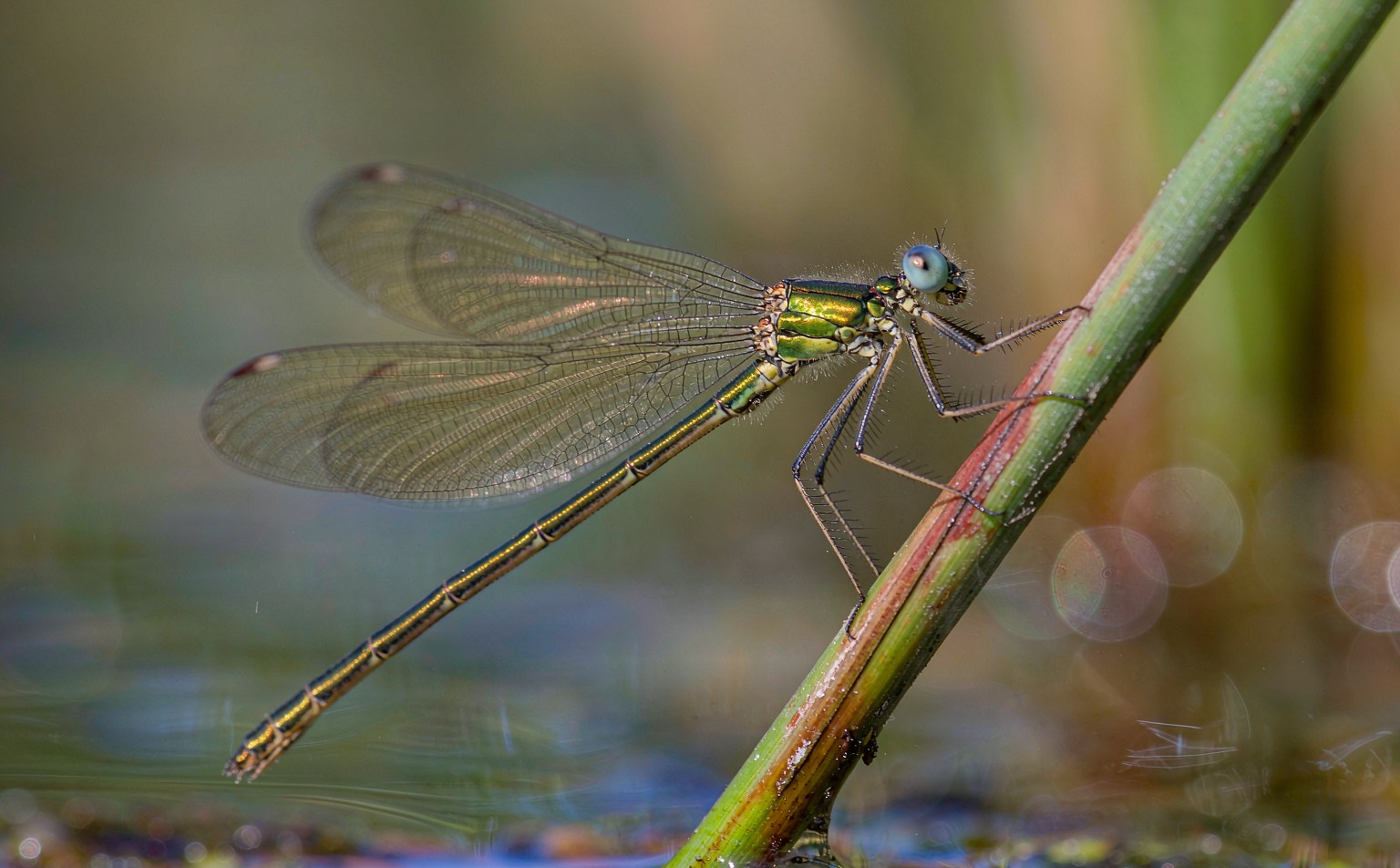
Lestes sponsa | Emerald Damselfly
Introduction
The Emerald Damselfly (Lestes sponsa) is a slender, metallic-green damselfly of well-vegetated ponds, lakes and slow streams, set apart from most of its relatives by a habit of perching with its wings held slightly spread, like a miniature dragonfly. Reaching about 3.5 to 4 centimetres, it is a late-summer species that lingers into autumn when many other damselflies have finished. Its bronze-green body and pale powder-blue eyes make it one of the prettiest of the group, and its spread-winged resting pose is a quick way to name it in the field.
Taxonomy
Lestes sponsa belongs to the family Lestidae, the spreadwings, a small group whose members rest with the wings partly open rather than together. It is one of several emerald damselflies in its genus and is told from them by the blue-tinged eyes and the pattern of the thorax. It shares waters with the broader dragonfly fauna, including the Southern Hawker, though it stays low among the stems while the larger dragons patrol the open water.
Physical Characteristics
Adults are medium-sized damselflies with a body length near 3.5 to 4 centimetres. The body is a striking metallic bronze-green above, sometimes with a bluish bloom on the thorax, and the eyes are pale blue in life. The wings are clear with a narrow, dark pterostigma (wing spot) and are held partly spread at rest, unlike the closed wings of most damselflies. Males have a blue-grey “shoulder” patch on the thorax and blue markings on the abdomen; females are similar but greener, with a larger, more saw-edged ovipositor for cutting into stems. The legs are long and slender, adapted for gripping stems.
Habitat
Emerald damselflies favour still or slow, well-vegetated fresh water: ponds, lakeshores, peat bogs, canals and the margins of gentle rivers with abundant reeds and rushes. They like open, sunny water with tall emergent plants on which to perch and lay eggs, and they are often common in acidic or peaty pools that suit fewer competitors. They meet the European Pond Turtle and the Common Frog at the same weedy margins, sharing the healthy pond edge with a wide freshwater community.
Diet
Adults hunt small flying insects—midges, gnats, aphids and tiny flies—caught in short sallies from a waterside perch or in slow flight among the vegetation. They are useful predators of nuisance insects around ponds. The larvae are aquatic predators of water fleas, mosquito larvae and other small invertebrates, lurking among pond weeds and leaf litter. Both stages help keep the water’s invertebrate life in balance, linking the underwater nursery to the air above within the pond ecosystem.
Reproduction
Mating follows the typical damselfly tandem, the pair forming a heart-shaped wheel before flying to waterside plants. Unusually, the female lays her eggs alone or with the male still attached, slicing them into the tissue of living or dying stems just above or at the waterline with her saw-edged ovipositor. The larvae drop into the water and live among vegetation for several weeks to months before climbing a stem to moult into the adult. There is no care after egg-laying, and the adults live only a few weeks through late summer and autumn.
Conservation
The emerald damselfly is common and rated Least Concern across much of its range, and its taste for varied, even peaty waters gives it a wide foothold. It still suffers, like all pond species, where wetlands are drained, ponds are filled, or marginal vegetation is cut and removed. It benefits from leaving reed beds and waterside plants intact, from protecting bog and fen habitats, and from reducing pesticide runoff. Because it uses both ordinary ponds and special peatland pools, conserving it helps a broad slice of freshwater life.
Fun Facts
- It rests with its wings partly spread, unlike most damselflies.
- The body is a metallic bronze-green that catches the light.
- The female cuts eggs into stems with a tiny saw-edged ovipositor.
- It is a late species, flying into autumn after many others have gone.
- Its pale blue eyes are a handy field mark in life.
[…] insect shares the suborder Zygoptera with the Emerald Damselfly. That insect rests with its wings held apart. Our insect folds its wings along the body. That habit […]