 By st20113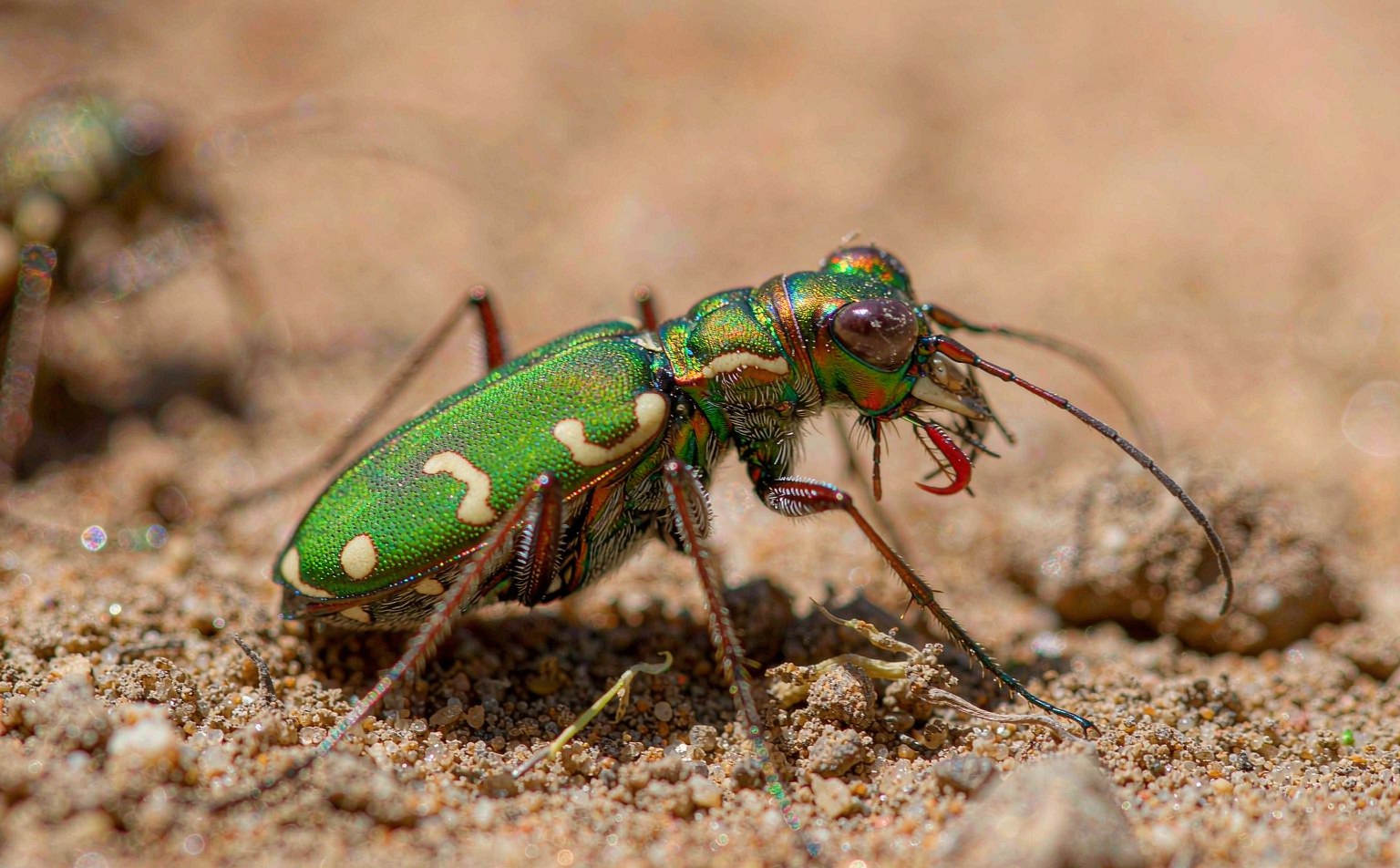
Cicindela campestris | Green Tiger Beetle
Introduction
The Green Tiger Beetle (Cicindela campestris) is one of Europe’s most colourful and conspicuous ground beetles, a metallic green hunter that patrols sunny paths, heaths and sandy tracks in spring and summer. Despite its jewel-like colour, it is a ferocious predator, running down and seizing tiny insects with long, sickle-shaped jaws. Fast on its feet and quick to fly when disturbed, it is a delight for walkers who notice the flash of green darting ahead of them along a woodland ride. It is a classic indicator of open, sun-warmed, lightly vegetated ground.
Taxonomy
Cicindela campestris belongs to the family Cicindelidae, the tiger beetles, often treated as a subfamily of the ground beetles (Carabidae). It is one of the common tiger beetles of European heaths, grasslands and forest edges. Among beetles it is sometimes compared with the flower-feeding Stag Beetle for its size and appeal, and with the Seven-spot Ladybird as a familiar garden insect, though its lifestyle is wholly predatory. Several subspecies and colour forms are recognised across its range, varying in the amount of green, bronze and cream spotting on the wing cases. It is the type species of the genus Cicindela in the European fauna.
Physical Characteristics
Adults are 12 to 16 millimetres long, with a slender, long-legged body and a head wider than the thorax. The upper surface is brilliant metallic green, often with a bronze or golden tint, marked by wavy cream-white spots and bands on the elytra. The large bulging eyes sit forward on the head, and the mandibles are long, curved and toothed—built for grasping prey, not chewing leaves. The legs are long and racing-thin, and the antennae are thread-like. The larva is a pale, hump-backed grub that lives in a vertical burrow and grabs passing prey with a fearsome pair of upward-pointing jaws, a miniature version of the adult’s hunting style.
Habitat
Green tiger beetles need bare, sun-baked ground: sandy heaths, dry grassland, quarry edges, railway cuttings, river shingle and open woodland rides. They require warmth to hunt actively and exposed soil or sand in which the larvae can dig their vertical burrows. They avoid shady, closed forest and damp, vegetated turf, so they are often seen on the very paths people walk. Their need for open ground means they suffer when scrub invades heaths or when sites are built over, but they can thrive on the disturbed, sunny margins that human activity creates if these are not paved or sprayed.
Diet
Both life stages are predators. Adults chase and seize small insects, spiders and other arthropods, wielding their jaws to crush and slice prey, and they are fast enough to catch flies and springtails on the run. The larvae wait at the mouth of their burrows and snatch any small creature that strays within reach, then drag it down to eat. By controlling invertebrates they help balance the ground-dwelling arthropod community. In turn they are eaten by birds and by larger predators, placing them in the sunny, fast-moving base of the food chain.
Reproduction
Mating occurs in late spring and early summer on the bare ground the beetles favour. Females lay eggs singly in small holes in the soil, and the hatched larvae immediately dig a vertical burrow that they deepen as they grow, sometimes to 30 centimetres or more. The larva spends one to two years in this pit, moulting and hunting from its rim, before sealing the top and pupating within. The adult emerges and digs out to begin the aerial, hunting phase. There is no parental care; the larva’s burrow is its whole defended world.
Conservation
The green tiger beetle is widespread and rated Least Concern, but it is locally scarce where its open habitats have been lost to scrub, development or intensive management. It depends on a supply of bare, sunny ground, so it gains from sympathetic heath and grassland care that prevents total vegetation cover. It is not a protected species in most regions, yet it is valued as a flagship for warm, flower- and insect-rich open ground. Light, occasional disturbance that keeps patches of soil bare—without chemicals—suits it well.
Fun Facts
- It can run so fast it loses sight of prey, briefly stopping to re-aim.
- The larva seals its burrow and waits like a trap-door assassin for prey.
- Its jaws are curved like a tiger’s, hence the name.
- It often flies in short, dashing bursts just ahead of a walking person.
- The metallic green is shot with bronze that shifts in bright sun.