 By st20113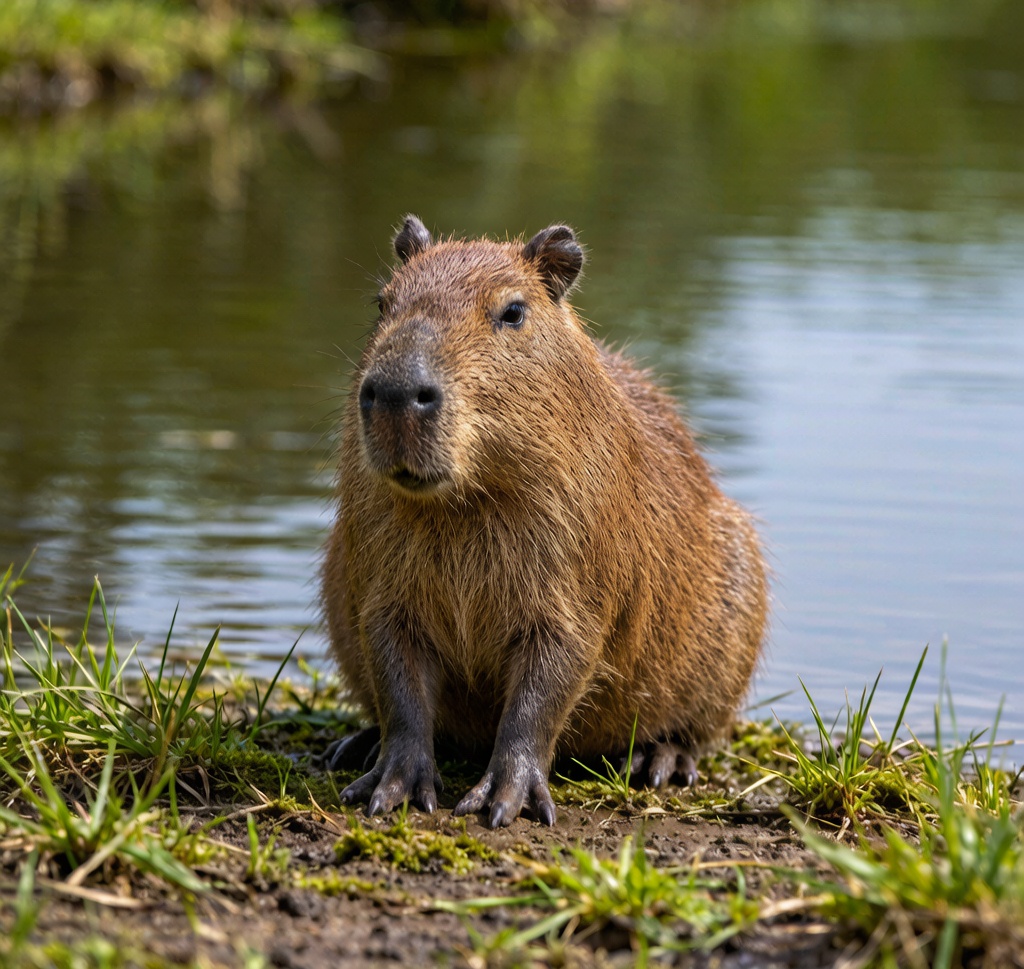
The capybara (Hydrochoerus hydrochaeris) is the world’s largest living rodent, native to South America. Adults typically weigh 35 to 65 kilograms (77 to 143 pounds) and stand about 50 to 60 centimeters (20 to 24 inches) tall at the shoulder. Despite their massive size, capybaras are closely related to guinea pigs and porcupines.
Capybaras are highly adapted for semi-aquatic life. Their eyes, ears, and nostrils are positioned high on the head, allowing them to see, hear, and breathe while almost entirely submerged. They have partially webbed feet and can remain underwater for up to five minutes to escape predators. Capybaras are found throughout South America east of the Andes, inhabiting swamps, marshes, riverbanks, and the edges of ponds and lakes.
These social animals live in groups of 10 to 20 individuals, though groups of up to 100 have been observed during the dry season. The group typically includes a dominant male, several females, subordinate males, and their young. Capybaras communicate through a variety of vocalizations, including barks, clicks, and whistles.
As herbivores, capybaras feed primarily on grasses and aquatic plants, consuming 2.7 to 3.6 kilograms (6 to 8 pounds) of vegetation per day. Like ruminants, they practice cecotrophy – ingesting special nutrient-rich fecal pellets to help digest tough plant fiber.
The capybara plays an important ecological role in its habitat. By grazing on aquatic vegetation, it helps maintain the health of wetland ecosystems and creates open water areas that benefit other species. Capybaras are a key prey species for large predators, including jaguars and caimans.
Though not currently endangered, capybaras face threats from habitat loss, deforestation, and illegal hunting. In some regions, they are farmed for their meat and leather. The species has proven remarkably adaptable, thriving in human-modified landscapes and even in urban areas near water sources.