 By st20113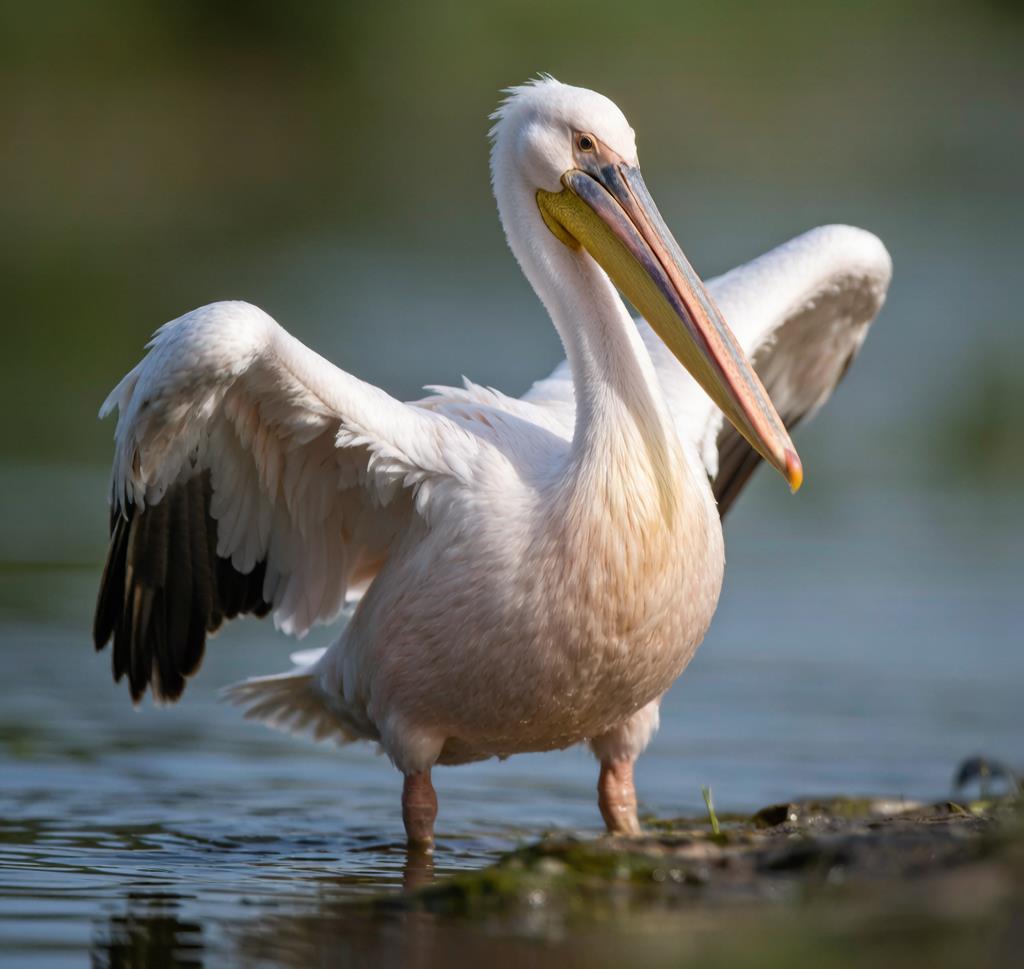
The great white pelican (Pelecanus onocrotalus), also known as the eastern white pelican or rosy pelican, is one of the largest and most impressive flying birds in the world. With a wingspan of 2.3 to 3.6 meters (7.5 to 12 feet), it is surpassed in size only by the Dalmatian pelican and the wandering albatross. It is found across a vast range from southeastern Europe through the Middle East and Central Asia to the Indian subcontinent and sub-Saharan Africa.
Adult great white pelicans are predominantly white with a pale pink tinge on the wings, a long, heavy yellow-to-orange bill with a distensible throat pouch, and stout pink legs with webbed feet. The bare facial skin around the eye forms a characteristic patch, and during breeding season, adults develop a short yellowish crest on the nape.
Great white pelicans are highly gregarious, feeding, breeding, and migrating in large flocks. They are primarily freshwater birds, inhabiting shallow lakes, marshes, deltas, estuaries, and coastal lagoons. Breeding colonies can include thousands of pairs, with nests built on the ground from sticks and vegetation.
The great white pelican’s most remarkable feeding behavior involves cooperative fishing. Groups of 6 to 8 birds form a line or semicircle to herd fish into shallow water, beating their wings on the surface to create a barrier. Once fish are concentrated, the birds dip their heads synchronously to scoop them up in their enormous throat pouches, which can hold up to 13 liters (3.4 gallons) of water and fish.
Diet consists almost exclusively of fish, primarily cyprinids and cichlids, with an adult consuming 0.9 to 1.4 kilograms (2 to 3 pounds) of fish per day. Unlike brown pelicans, great white pelicans do not dive for food – they feed from the surface, swimming and dipping their heads underwater while keeping their bodies above the surface.
The great white pelican is classified as Least Concern by the IUCN, though some populations are declining due to habitat loss, pollution, and human disturbance at breeding sites.
[…] Great White Pelican | Pelecanus onocrotalus Sea Otter | Enhydra lutris Viola sororia | Common Blue Violet Papilio machaon | Old World Swallowtail Octopus vulgaris | Common Octopus Helianthus annuus | Common Sunflower Amanita muscaria | Fly Agaric Pan troglodytes | Common Chimpanzee Sequoia sempervirens | Coast Redwood Canis lupus | Gray Wolf 25 Jul 2026, Sat […]
per minute at the surface to as low as 20 beats per minute during a dive. The polar bear and the great white pelican are among the most frequently studied marine relatives often compared for behavioral
[…] plumage details. Frigatebirds are related to boobies, cormorants, and large waterbirds such as the great white pelican within the order Suliformes, though their lightweight skeleton and endless soaring set them apart […]
[…] muscles and wide mouths for catching insects in flight. While it is not closely related to the great white pelican, both are dependent on abundant animal food and open hunting grounds, showing how different birds […]
[…] species such as rudd and bream, producing confusing intermediate forms. It is unrelated to the great white pelican, though such waterbirds may prey on small roach in shallow lakes. Genetic studies help distinguish […]
[…] Mallards occupy almost any freshwater body, from tiny village ponds to large lakes, slow rivers, marshes, and flooded fields. They also exploit human-made habitats such as ornamental park lakes, urban canals, and agricultural ditches. Unlike some waterfowl that demand pristine wilderness, Mallards tolerate moderate disturbance and pollution, which explains their abundance near people. In winter they may gather in huge flocks on ice-free estuaries and coastal lagoons alongside other waterbirds such as the Great White Pelican. […]
[…] within the genus Gasterosteus. It is a relative of larger predatory fish such as those taken by the great white pelican, though it itself is tiny prey rather than a hunter of birds. Several closely related stickleback […]
[…] of many other European coarse fishes and shares its lakes with large fish-eating birds such as the great white pelican and the osprey, both of which may take bream from the surface or shallows when the opportunity […]
[…] and hunt cooperatively at times, they can overwhelm schools of minnows. Large birds such as the Great White Pelican and the Osprey count perch among their regular catches where the two share a lake. Anglers prize it […]