 By st20113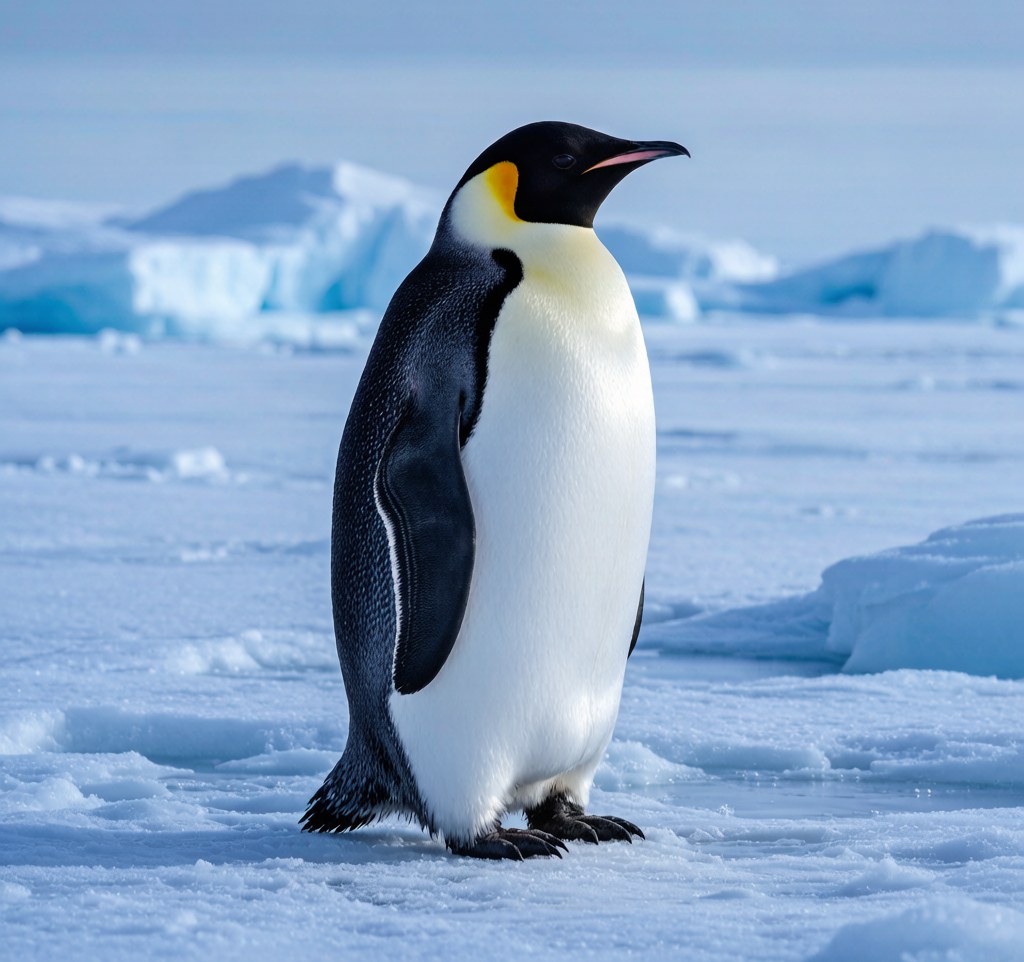
Introduction
The Emperor Penguin (Aptenodytes forsteri) is the tallest and heaviest penguin species, a flightless bird endemic to Antarctica that has evolved extraordinary adaptations to one of the most extreme environments on Earth. As the only bird that breeds during the brutal Antarctic winter, it represents one of the most compelling examples of parental dedication in the animal kingdom. Its striking golden neck patches against black and white plumage make it instantly recognizable, while its social breeding behavior — with thousands of males huddling against −50°C winds — ranks among the most dramatic spectacles in nature.
Taxonomy
The Emperor Penguin belongs to the family Spheniscidae and the genus Aptenodytes, whose closest relative is the King Penguin (Aptenodytes patagonicus). Fossil records indicate the Aptenodytes lineage diverged from other penguin groups approximately 40 million years ago, long before Antarctic ice sheets reached their current extent. Emperor Penguins are classified as a monotypic species with no recognized subspecies, representing a unique evolutionary trajectory within the penguin family.
Physical Characteristics
Adult Emperor Penguins stand 110 to 130 centimeters tall and weigh between 22 and 45 kilograms, with males typically heavier during breeding. Their counter-shaded plumage — deep black dorsally, white ventrally — provides effective camouflage against dark ocean depths when viewed from above and bright sky from below. Beneath dense feathers, a subcutaneous fat layer up to three centimeters thick insulates against temperatures regularly below −30°C. The golden ear patches fade to bright orange along the upper chest, especially vivid in mature males. Streamlined bodies with flipper-like wings enable swimming speeds exceeding 6 kilometers per hour, while sharp-clawed feet grip slippery ice during the breeding season.
Habitat
Emperor Penguins are exclusively dependent on the stable sea ice surrounding Antarctica, the only penguin species breeding almost entirely on this frozen substrate. Colonies form on multi-year sea ice persisting throughout winter, with the largest at Cape Crozier hosting more than 25,000 breeding pairs. Outside the breeding season, they are highly pelagic, foraging in the cold, nutrient-rich waters of the Southern Ocean. The Snowy Owl of the Arctic faces analogous climate threats on the opposite pole, illustrating the global scale of conservation challenges for cold-adapted species.
Diet
The Emperor Penguin diet is dominated by Antarctic silverfish (Pleuragramma antarcticum), which may account for over 90 percent of intake in some regions. Crustaceans including krill and amphipods, along with squid, supplement the diet when fish are scarce. These birds are accomplished divers, reaching depths exceeding 500 meters and remaining submerged for up to 22 minutes. Most foraging occurs over the continental shelf, with trips lasting one to two weeks during chick-rearing.
Reproduction
The breeding cycle begins in the Antarctic autumn, with egg laying in May or June when temperatures can reach −50°C with winds exceeding 200 kilometers per hour. After the female transfers the single egg to the male’s incubatory pouch, she walks up to 120 kilometers to the ocean for approximately two months, fasting entirely during this period. Males balance eggs atop their feet in massive huddling aggregations, continuously rotating positions to share warmth. Upon the female’s return, she regurgitates accumulated fish to feed the newly hatched chick, and both parents alternate foraging trips to sustain the growing young through the summer.
Conservation
The Emperor Penguin is classified as Near Threatened on the IUCN Red List, with population declines projected over coming decades due to climate-driven sea ice loss. Modeling studies indicate that at least three colonies may become functionally extinct by 2100 under current warming trajectories. Commercial fisheries competing for the same prey species further reduce food availability, while marine pollution poses localized risks. Conservation efforts include the Convention for the Conservation of Antarctic Marine Living Resources, which regulates Southern Ocean fisheries, alongside international monitoring programs that track colony populations.
Fun Facts
Emperor Penguins produce individually unique calls allowing parents and chicks to recognize each other amid the deafening noise of colonies containing tens of thousands of birds. Their characteristic waddle is an extraordinarily energy-efficient mode of locomotion across ice. The Bald Eagle (Haliaeetus leucocephalus) of North America shares with the Emperor Penguin the distinction of being a large bird whose breeding success is tied to environmental conditions and prey availability.
[…] not been separated by the structure of the body. The African penguin is the close relative of the Emperor Penguin (Aptenodytes forsteri). The 2 birds share the family and the flightless wing. They share the dense and the waterproof […]