 By st20113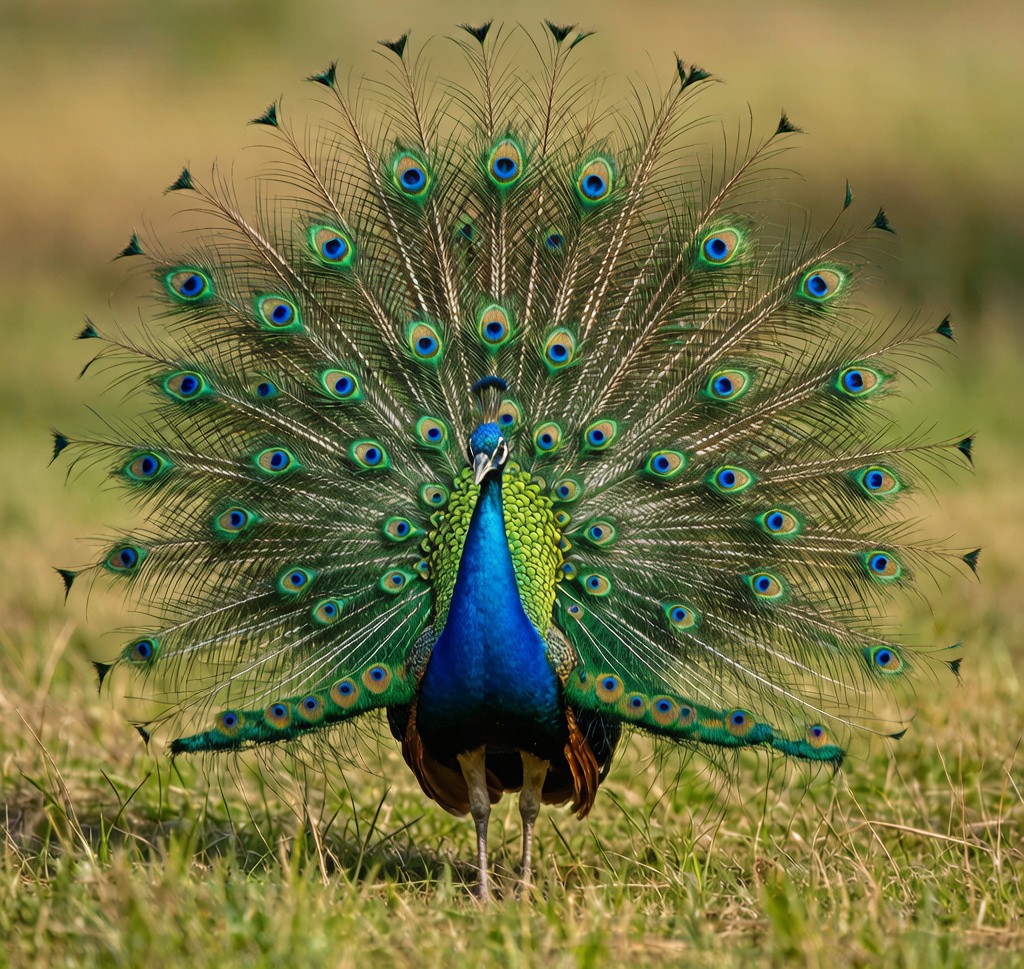
The peacock refers to the large, spectacularly plumaged birds of the genus Pavo, most commonly the Indian peafowl (Pavo cristatus), which is the national bird of India. The term “peacock” technically applies only to the male; females are called peahens, and the group is collectively referred to as peafowl. Males are renowned for their iridescent train of feathers, which they display in elaborate courtship performances.
The Indian peafowl is native to the Indian subcontinent, where it inhabits a variety of habitats including deciduous forests, scrublands, and cultivated areas near human settlements. Feral populations have established themselves in numerous countries around the world, including the United States, Australia, and New Zealand.
A male peacock’s train consists of roughly 150 to 200 elongated upper tail coverts, each tipped with an iridescent eye-spot (ocellus) of blue, green, and gold. The train makes up about 60 percent of the bird’s total length, which can reach 2.2 meters (7.3 feet). During courtship displays, the male erects and fans the train into a magnificent semicircular arc, shaking the feathers to create a rattling sound that attracts females.
Despite the elaborate train, peafowl are capable fliers and use their wings to escape predators, roost in trees at night, and move between feeding areas. Peahens are considerably more subdued in appearance, with cryptic olive-green and brown plumage that provides effective camouflage while nesting.
Peafowl are omnivorous, feeding on seeds, grains, fruits, insects, worms, small reptiles, and small mammals. They forage on the ground in groups and roost in trees. Their diet can include agricultural crops, which brings them into conflict with farmers in some regions.
The Indian peafowl is listed as Least Concern by the IUCN, with a population estimated at over 100,000 individuals. Peafowl play minor roles in seed dispersal and pest control, contributing to ecosystem functioning in their native range.