 By st20113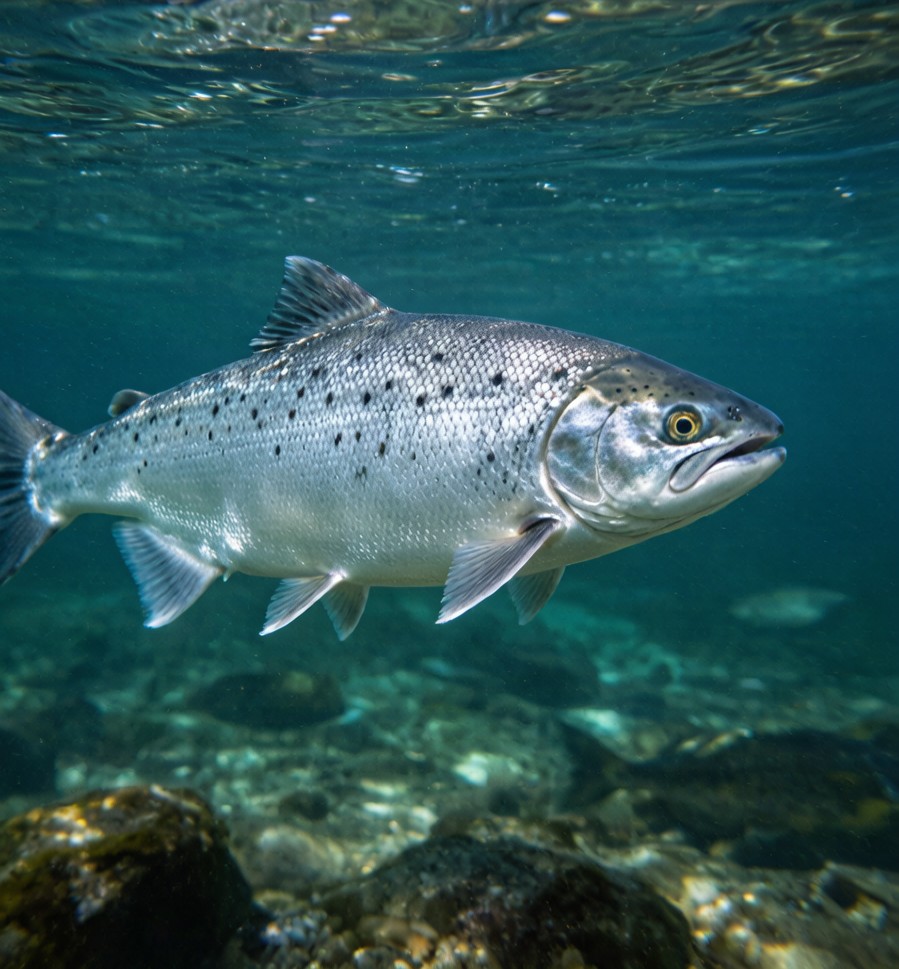
Introduction
The Atlantic salmon (Salmo salar) is an iconic migratory fish of the North Atlantic, celebrated for its epic lifecycle in which it hatches in freshwater rivers, migrates to the open ocean to feed and grow, and returns years later to spawn in the exact stream of its birth. Prized by anglers and crucial to both ecology and culture, it supports major wild fisheries and aquaculture industries. Once abundant from New England to Europe, many wild populations have declined due to dams, pollution, and overfishing, though conservation and restoration efforts offer hope across its range, alongside other apex predators such as the great white shark.
Taxonomy
The Atlantic salmon belongs to the family Salmonidae, which includes trouts, chars, whitefish, and graylings, within the order Salmoniformes. The species Salmo salar was described by Linnaeus in 1758. It is the only salmon species native to the Atlantic, distinct from the several Pacific salmon species of the genus Oncorhynchus. Closely related to brown trout, it can hybridise with that species where they co-occur. Salmonids are among the most economically and culturally important fish families in the Northern Hemisphere, with a long history of study and management.
Physical Characteristics
Atlantic salmon are streamlined, silvery fish with a fusiform body built for sustained swimming. Freshwater parr are mottled with dark vertical bars, while adults migrating to sea turn bright silver with a streamlined profile and a slightly forked tail. They typically measure 60 to 110 centimetres and weigh 3 to 15 kilograms, with exceptional individuals larger. Spawning adults develop reddish spots and a hooked lower jaw in males. They possess an adipose fin, small scales, and a keen lateral line that detects vibration and pressure changes in the water.
Habitat
Atlantic salmon use two distinct habitats across their life. Juveniles rear in cool, well-oxygenated rivers and streams with gravel bottoms, where they shelter among rocks and vegetation. After one to several years they smoltify, adapting physiologically to salt water, and migrate to the North Atlantic feeding grounds. Adults range widely at sea before returning to their natal rivers to spawn. They require free passage upstream, clean gravel for eggs, and connected freshwater and marine environments. Dams and barriers that block migration are among the greatest threats to wild populations.
Diet
Feeding changes dramatically with life stage. River-dwelling fry and parr consume aquatic insects, larvae, and small invertebrates. Upon reaching the ocean, salmon switch to a rich diet of schooling fish such as herring, capelin, and sand lance, along with squid and crustaceans, fueling rapid growth. Remarkably, adults cease feeding almost entirely during the spawning migration, relying on stored fat reserves. They may lose significant body condition by the time they reach the spawning grounds. Juvenile diet in rivers is critical to survival and eventual smolt size.
Reproduction
Atlantic salmon are anadromous, returning to freshwater to spawn, typically after one to several years at sea. Adults ascend rivers in spring or autumn, navigating to gravelly shallows where females excavate nests, or redds, and deposit eggs fertilised by attending males. A female may lay several thousand eggs across multiple redds. The eggs incubate through winter, hatching as alevins that absorb a yolk sac before emerging as fry. Unlike Pacific salmon, Atlantic salmon may survive spawning and repeat the migration in subsequent years, though many do not. The precise homing to natal streams is guided by olfactory memory.
Conservation
Status varies by region: some wild Atlantic salmon populations are secure, while others are Endangered due to habitat loss, dams, aquaculture escapes, parasites, and climate change. Major conservation efforts include fish ladders and dam removal, habitat restoration, catch limits, and hatchery supplementation. Sea lice and disease from intensive salmon farming pose risks to wild fish. International cooperation across North Atlantic countries supports research and management. Sustainably farmed and wild-caught certified salmon help balance demand with the protection of wild populations.
Fun Facts
Atlantic salmon can leap up to 3 to 4 metres high to clear waterfalls and dams during their upstream spawning migration. They navigate back to their exact birth stream using an acute sense of smell, recognising the unique chemical signature of their natal river. Unlike Pacific salmon, which die after spawning, Atlantic salmon can survive and return to the ocean to spawn again in later years. During the ocean phase they can grow from a few grams to several kilograms in a single year. The annual “salmon run” is one of nature’s great spectacles, drawing predators and people alike to rivers each season.
[…] crayfish, making it a species of high conservation concern throughout its range alongside the atlantic salmon and other freshwater […]
[…] dive loggers show feeding dives are most frequent during daylight hours. The relationship with atlantic salmon is complex: while seals do prey on salmon the overall impact on populations is considered moderate […]
[…] for the species’ success across its European range, similar to adaptations seen in the Atlantic Salmon and other co-existing […]