 By st20113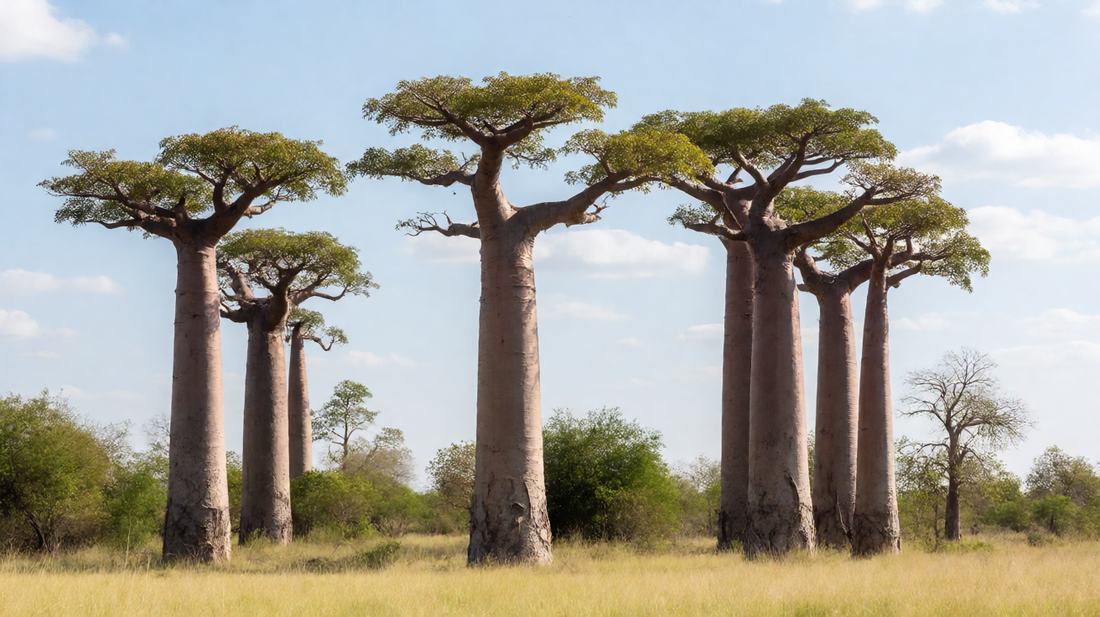
Adansonia grandidieri | Grandidier’s Baobab
Species Profile · Malvaceae
Grandidier’s Baobab
A giant tree of western Madagascar whose huge smooth trunk holds water through a long dry season and can live for more than a thousand years.
A giant tree with a pillar like trunk that stores water in the dry west
Height
Trunk
Bark
Age
Genus
Flowers
Grandidier’s Baobab
A giant tree of dry western Madagascar
Grandidier’s Baobab is a giant tree of western Madagascar. It is 1 of the best known trees in the world. Its huge smooth trunk looks like a pillar of stone. A small crown of leaves sits on top.
Local people call it the mother of the forest. The species grows in a few dry districts only. It is now at risk from the loss of its home.
Family tree
Malvales, Malvaceae
Grandidier’s Baobab belongs to the phylum Tracheophyta. Its class is the Magnoliopsida, the flowering plants. Its order is the Malvales. Its family is the Malvaceae, the mallows.
Our tree shares the genus with the Baobab of mainland Africa. That tree grows in dry savannah. Its trunk is shorter and much thicker. Our tree is taller with a slimmer trunk.
The genus holds 9 species in all. It was named after the French explorer Alfred Grandidier.
30 m and a trunk 3 m across
How to tell one
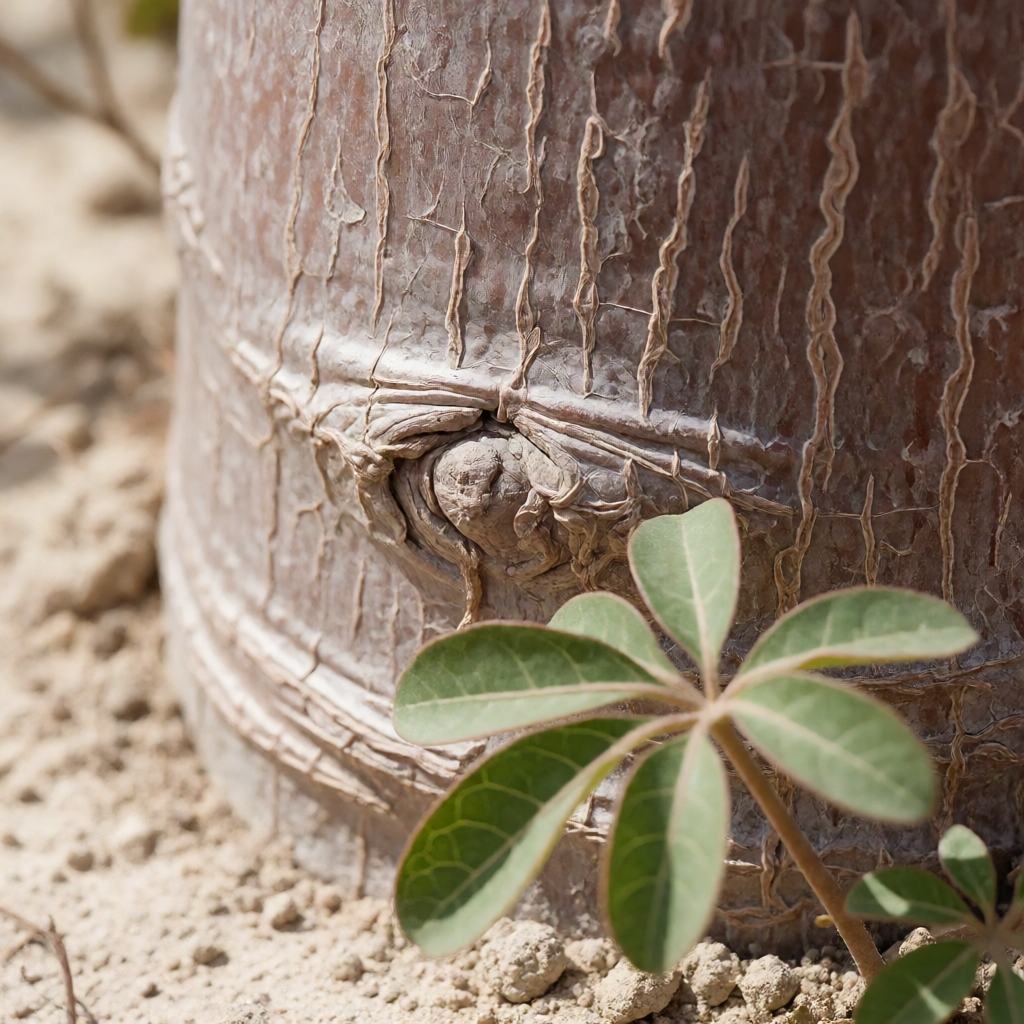
The tree reaches about 25 to 30 m in height. The trunk grows up to 3 m across. The bark is smooth and reddish grey. It carries fine vertical lines and shallow folds.
The wood inside is soft and full of water. The tree sheds all its leaves in the dry season. New leaves appear with the first rain. Each leaf is divided into several leaflets.
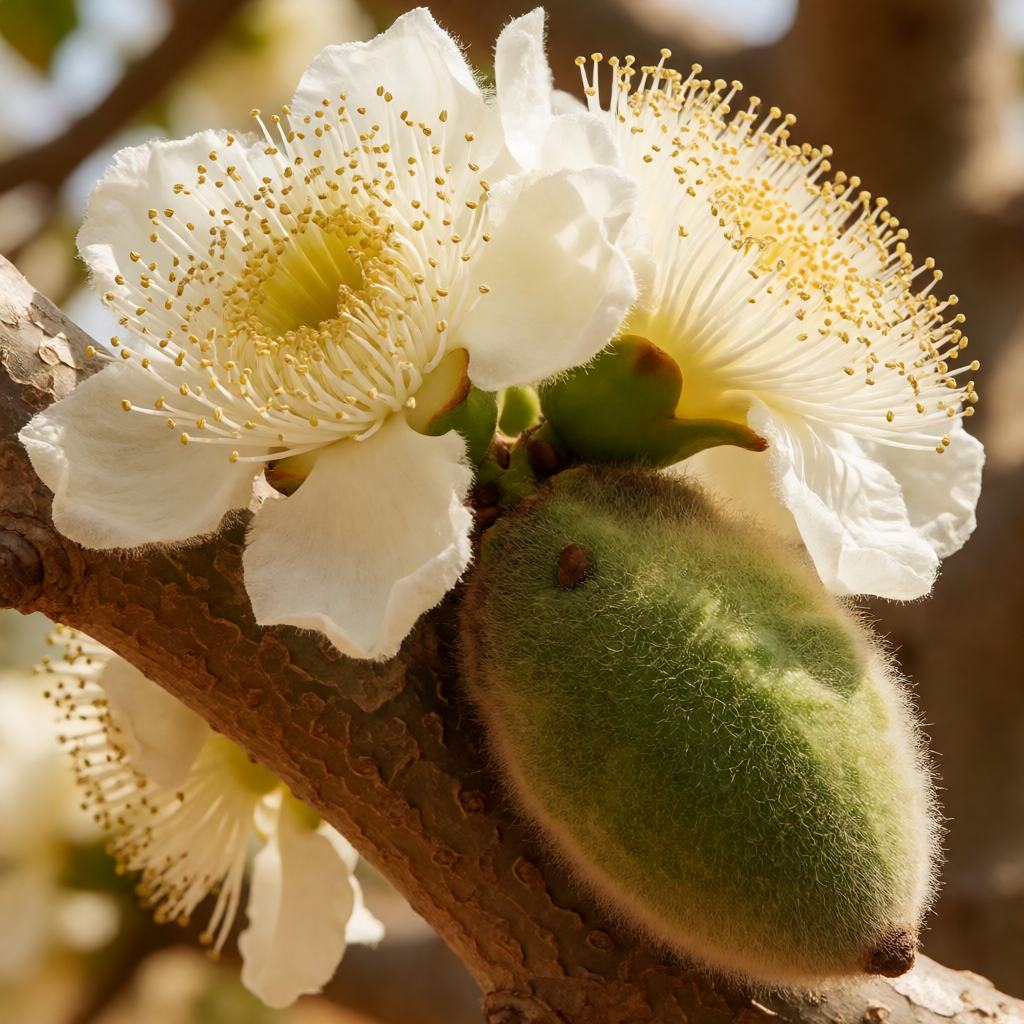
The white flowers open at dusk. The fruit is large and covered in fine brown hairs.
1
2
3
Dry limestone plains and river beds
Where it lives
The species needs a long dry season and a short wet one. It grows on dry limestone plains in the west. It also grows along dry river beds. It prefers ground with good drainage.
It stores water in its trunk to survive the dry months. The young trees need shade and shelter. Old trees stand alone in cleared land. Farmland and charcoal cutting remove the young.
Fires kill the seedlings before they can grow. Few young trees now reach adult size.
Sunlight, water and soil minerals
What it eats
The tree makes its own food from sunlight. It takes water and minerals from the soil. Its leaves build sugar inside the green tissue. It stores that sugar and water in its trunk.
The tree takes in gas through small pores in the leaves. Those pores close in the heat of the day. That habit saves a great deal of water. The tree can survive many months without rain.
It draws on the store inside its trunk. It grows very slowly as a result.
Bats, moths and a long fruit
The breeding cycle
The white flowers open after sunset. They give off a strong sweet scent. Bats come to drink the nectar. They carry pollen from tree to tree.
Moths also visit the flowers at night. The fruit takes several months to ripen. Each fruit holds many hard seeds. Those seeds sit in a dry powdery pulp.
Lemurs and other animals eat the fruit. They drop the seeds far from the parent tree. The seeds need rain to start growing.
Endangered by farmland and charcoal
Conservation
Grandidier’s Baobab is listed as Endangered by the IUCN. Its numbers have fallen sharply in recent years. Farmland has replaced much of its dry forest.
Charcoal burning takes many old trees. Cattle eat the young shoots. The species grows very slowly, so it recovers with difficulty.
Some of the great trees are over 1,000 years old. A famous avenue of these trees draws many visitors. Tourism now gives local people a reason to protect them.
Quick hits
Five things to remember
- Its trunk stores water and can hold many tonnes of it.
- The famous Avenue of the Baobabs is lined with this species.
- Bats pollinate its flowers in the dark.
- Some living trees are more than 1,000 years old.
- It is found in the wild in Madagascar only.