 By st20113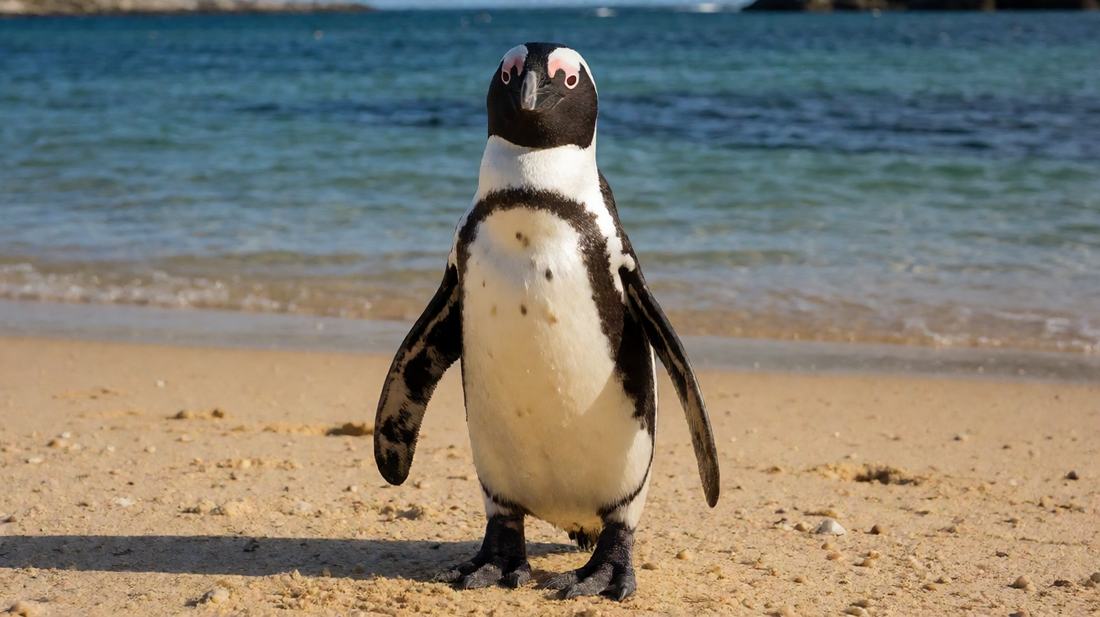
Spheniscus demersus | African Penguin
Species Profile · Spheniscidae
African Penguin
The only penguin that breeds on the African continent, and one of the fastest-declining seabirds on earth — down from millions to fewer than ten thousand breeding pairs.
IUCN: Critically Endangered
Range
Height
Dive
Nest
Incubation
The penguin that brays
A bird of the cold African sea
The African penguin is the only penguin that breeds on the coast of the continent of Africa. It lives in the cold and the upwelling water of the south-west of that continent. Its whole world is confined to the coasts of Namibia and of South Africa. It also uses the small islands that lie off those coasts. The species is one of the most familiar of all the seabirds. It is also one of the most easily recognised. The plumage is black and white. A bold band of black cuts across the breast. The band is shaped like a horseshoe. A stripe of white curves around the black of the face. Very many people know the bird by its voice.
They know it by its look as well. The call of the species is a harsh and a braying sound. It is remarkably like the sound of a donkey. The older and commoner English name records that resemblance directly. That name is the jackass penguin. The species is a bird of the cool and the nutrient-rich sea. It feeds on the small shoaling fish of the surface layer. Its breeding cycle is tied to the abundance of the sardine. It is tied to the anchovy of the Benguela current as well. The bird is therefore one of the most sensitive of all the seabirds. It reacts to the changes in the ocean.
It reacts to the pressure of the fishing industry. The African penguin was once an extremely numerous bird. The total population of the early years of the last century was huge. It has been estimated in the millions of individuals. The bird has since fallen by a very large share of that number. The decline has continued. It has even accelerated in the last 20 years. The species is now one of the most threatened penguins of the world. It is one of the clearest examples of the collapse of a seabird population. The collapse has come under the pressure of the human use of the sea.
Family tree
Spheniscus, the banded penguins
The African penguin was described by Linnaeus in 1758. The modern treatment places it in the genus Spheniscus. Those are the banded penguins. The family is the Spheniscidae. That is the group of the penguins. The family contains about 18 species. The genus Spheniscus contains 4 species. It is the most northerly of the genera of the family. The other 3 members are the Humboldt penguin. That bird lives on the coast of Peru and of Chile. The Magellanic penguin lives in the south of South America. The Galapagos penguin lives on the equatorial islands of the Pacific. The 4 birds are very much alike in their size. They are alike in their plumage as well.
They all carry a black and a white plumage. The plumage has the banded pattern of the breast. They all have the bare and the pink skin above the eye. The 4 are therefore a classic example of closely related species. Those species have been separated by the geography. They have been separated by the temperature of the water. They have not been separated by the structure of the body. The African penguin is the close relative of the Emperor Penguin (Aptenodytes forsteri). The 2 birds share the family and the flightless wing. They share the dense and the waterproof plumage. They share the same general plan of the swimming body. They differ in almost everything else. The emperor penguin is the largest of the family. It breeds on the sea ice of the Antarctic.
It breeds in the darkness of the polar winter. It carries its single egg on the feet. The African penguin is one of the smaller members of the family. It breeds in the open burrow and in the shade of the boulder. It does so on the warm and the temperate coast. That coast lies in the south of the continent. The family is confined to the southern hemisphere. The fossil record of the group goes back to the Palaeocene. The penguins are therefore an ancient group. The arrangement of the species within the family has been revised. The revision has been made a number of times. It rests on the molecular evidence. No subspecies of the African penguin is recognised.
Black band, pink eye
How to identify one
An adult African penguin is between 60 and 70 centimetres in height. Its mass is between about 2 and 4 kilograms. The male is a distinctly larger and heavier bird. The female is smaller than the male. The difference is visible in the size of the bill. It is visible in the bulk of the body as well. The bill of the male is thicker. It is the more robust of the 2. The plumage of the adult is a sharp pattern of black and white. The contrast is a high one. The back and the upper surface of the wings are a deep glossy black. The underparts of the body are a clean white. The breast carries a single band of the black. The band is a very conspicuous one. It runs in a horseshoe shape from the shoulder down the flank.
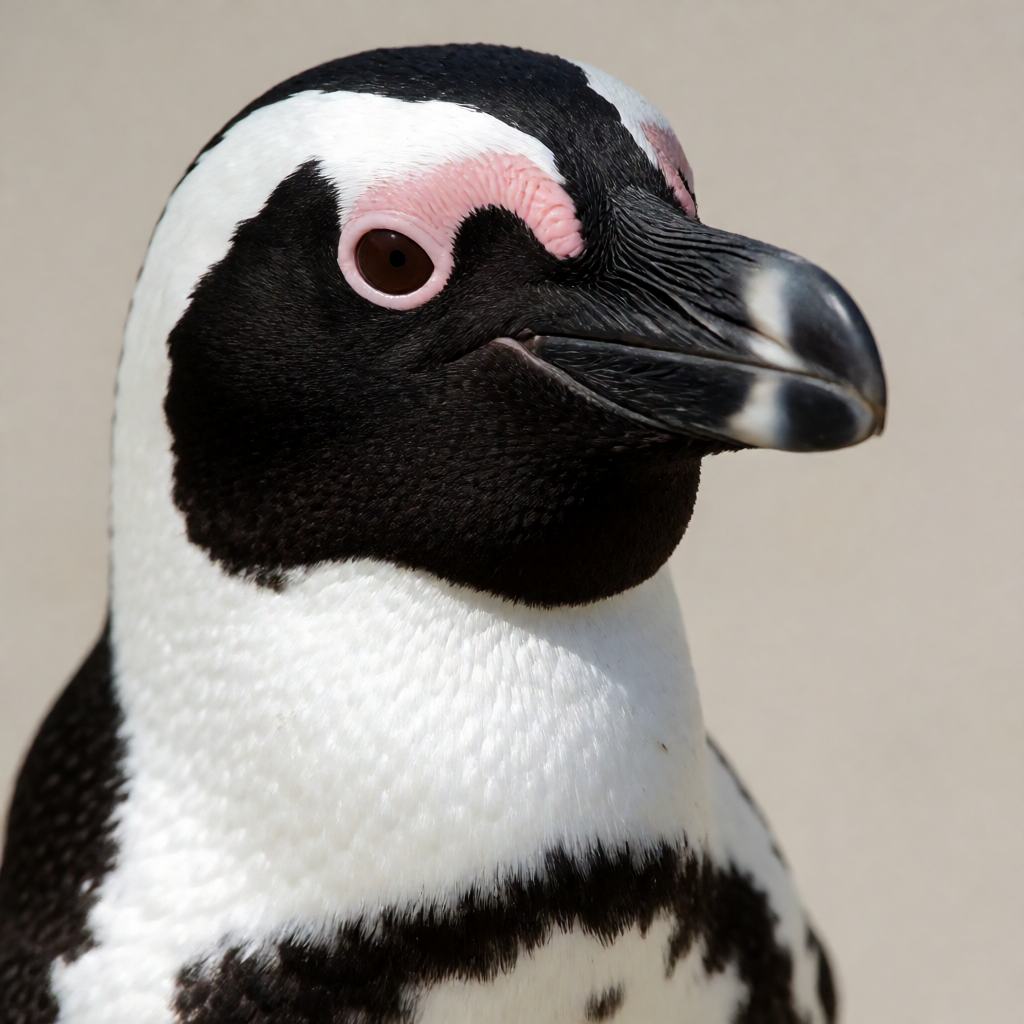
It crosses the chest as well. The head carries a black mask. The mask covers the crown and the face. It is separated from the black of the back. A narrow stripe of white does the work. That stripe curves from the bill over the eye. It goes around the cheek too. The most remarkable feature of the head is the patch of bare skin. The skin is unfledged. It lies above and around the eye. The patch is a pale pink in the ordinary state. It turns to a bright and a vivid pink when the bird is hot. The colour is produced by the blood in the skin. The blood is pumped through the skin in order to lose the heat. The gland is therefore the radiator of the bird.
It is one of the most important of its adaptations. The adaptation suits the warm and the temperate climate of its home. The plumage is dense. It is covered with a layer of the oil. That oil is spread from the gland at the base of the tail. A thick layer of the fat beneath the skin completes the insulation. The whole of the system allows the penguin to hunt in cold water. That water is very much colder than the air of the colony. The bird has the same upright stance of the family. It has the same shuffling walk as well. It climbs the rocky slope of the island. It uses the bill and the strong claws for the climb. The eye is dark. The bill is black with a pale band across the upper mandible.
1
2
3
Cold water and rocky shore
Where it lives
The African penguin is a bird of the cool coastal sea. That sea is a nutrient-rich one. It uses the rocky and the sandy shore of the islands. It uses the shore of the mainland too. The whole of the range of the species lies in one system. That system is the influence of the Benguela current. The current is a cold and an upwelling system. It runs northward along the west coast of the south of the continent. The upwelling brings the deep and the mineral-rich water to the surface. It produces the enormous blooms of the plankton. The sardine and the anchovy depend on those blooms. The whole of the food chain of the region rests on that feature.
The penguin rests on it with the rest of the chain. The feature is a single and a very local one. The species breeds on the offshore islands of the coast of Namibia. It also breeds on the islands of South Africa. A small number of the mainland sites are used as well. The great majority of the colonies of the world are now in South Africa. About 7 of the 8 greatest colonies lie in the south-west of that country. The whole of the world population is concentrated into a few sites. That concentration is one of the most dangerous features of the species. A single oil spill can affect a very large part of the total. A single year of the food shortage can do the same. The nest site is a burrow in the guano and in the sand.
It can also be a shallow depression in the shade of a boulder. A bush gives the same shelter. The species prefers the cover of the vegetation and of the rock. The colonies have been stripped of the guano. The cover is therefore absent at those sites. The nests are exposed to the sun and to the rain. They are exposed to the gulls as well. The success of the breeding at those sites has fallen very greatly. The artificial nest box has therefore become a standard tool. It is one of the main tools of the management of the species.
A diver of the surface layer
What it eats
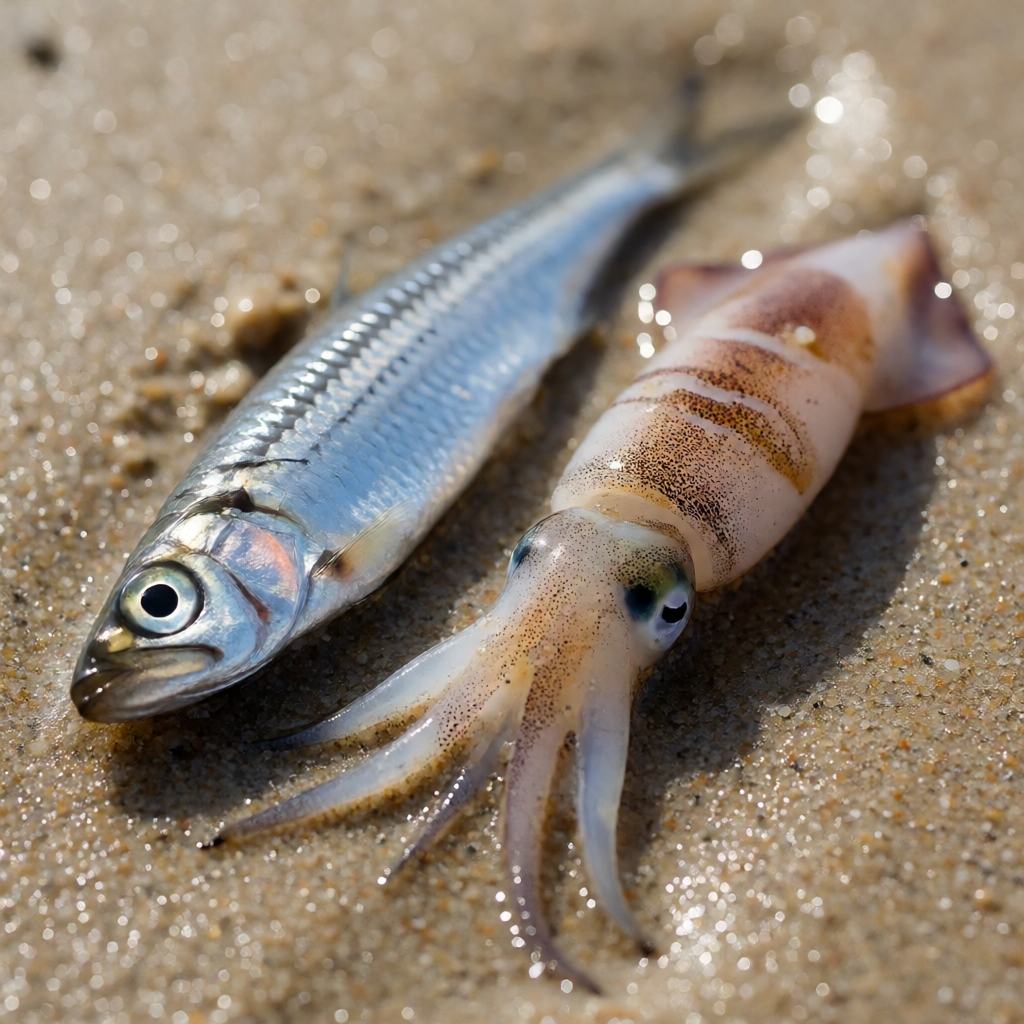
The African penguin is a pursuit diver. It hunts the surface and the middle layers of the sea. It feeds on the small shoaling fish of the cool water. That water is the upwelling water of the region. The diet is dominated by the anchovy and the sardine. The species also takes the horse mackerel. It takes the round herring and the lantern fish too. It takes the small squid and the crustaceans as well. The composition of the diet changes with the age of the bird. It changes with the season and with the availability of the prey. The bird takes smaller and younger fish than the commercial fishery.
It takes a larger proportion of the squid than is often appreciated. The bird hunts by swimming under the water. It uses the wings as paddles and the feet as rudders. It can reach a speed of about 20 kilometres an hour. That speed is used in the pursuit of the shoal. The dives are usually made to a depth of between 20 and 60 metres. The bird can remain under the water for between about 1 and 3 minutes. The whole of the hunting is done near the colony in the breeding season. The bird must find all of the food that it needs within that area. It must find all of the food that its chick needs there too. The restriction of the foraging range is the key to the vulnerability.
The commercial purse-seine fishery of the region works on those shoals. It works within the same small area. So the competition for the fish is direct. It is concentrated where the bird cannot move away. The bird feeds its chick by regurgitating the fish. The fish are partly digested. The food goes into the mouth of the young bird. The adult makes many journeys between the fishing ground and the colony. Those journeys fill the whole of the rearing of the chick.
Two eggs in a burrow
The breeding cycle
The African penguin breeds in colonies. Those colonies vary from a few pairs to several thousand. The species has a long and a complicated breeding season. The birds of the South African colonies breed in 2 peaks. The first peak falls in the early months of the year. The second falls in the last months. The timing of the breeding is tied to the abundance of the fish. It is not tied to the calendar. The bird is monogamous. The pair bond is a lasting one. The members of the pair return to the same burrow. They return to the same site year after year.
The pair performs a greeting display at the nest. The 2 birds stand face to face. They sway the head and call together. That display is one of the most characteristic sights of the colony. The clutch contains 2 eggs in the usual case. The eggs are laid 2 or 3 days apart. They lie on the bare floor of the burrow. They can also lie on a thin lining of the feathers and the debris. The incubation lasts for between 38 and 42 days. It is shared by both parents. The sitting bird is relieved by its partner. The relief comes at intervals of 1 or 2 days.
The off-duty bird can then go to the sea to feed. The chicks are covered in a grey down. They are brooded by the parents for the first 2 or 3 weeks. Both adults feed them by the regurgitation of the fish. The young bird leaves the colony at between 60 and 130 days of age. The length of the rearing period depends on the abundance of the food. The chicks of a year of the scarcity take much longer to fledge. The chicks of a year of the plenty fledge far sooner. That delay is one of the ways in which the shortage reduces the numbers. The young bird goes to the sea in a grey-blue plumage. It returns to the colony to breed at the age of about 4 years.
A crash in a single century
Conservation
The African penguin is assessed as Critically Endangered on the global Red List. The species was moved to that category from the category of the Endangered. The total population of the world fell below 10,000 breeding pairs. That fall happened for the first time in 2023. The bird is now in the highest category of the threat. Only the extinction itself is worse. The decline is one of the most rapid on record. It is one of the fastest of any of the seabirds. The scale of the loss is best understood from the last century. The population of the early 1900s has been estimated at several million birds. The modern total is less than 1 per cent of that figure. The decline of the last 30 years alone has removed about 78 per cent. The rate of the loss has been put at about 8 per cent a year. At that rate the species could be extinct in the wild by about 2035. The causes of the collapse are several. They have acted in sequence and together. The first and the oldest is the removal of the guano.
The European traders of the 19th century took the guano of the islands. The guano had accumulated over a very long time. The traders wanted the fertiliser of the farms of Europe. That trade stripped the colonies of their nesting material. The birds had dug their burrows in that material. The loss of the guano removed the nesting substrate. It removed the shade at the same time. The second cause is the collection of the eggs. Many millions of eggs were taken in the course of a few decades. The third cause is the greatest of the modern pressures. It is the shortage of the food. The purse-seine fishery of the region takes the anchovy and the sardine. The penguin depends on those fish. The fishery works in the same small area. The birds must hunt in that area during the breeding season. The oil spill is a further and a very serious pressure. The spill of the year 2000 came off the coast of South Africa.
It oiled about 19,000 of the birds. It required one of the largest rescue operations of its kind. That operation was one of the largest in the history of wildlife conservation. Disease has become a new and a growing problem. The outbreak of the avian influenza began in 2018. It has killed more than 1,000 of the birds. The disease spreads through a colony that is concentrated into a few sites. That is a threat of a very serious kind. The conservation of the species now rests on the closure of the fishing grounds. The closure applies around the breeding colonies. The organisations of the conservation ran a long campaign. The government of South Africa approved a 10-year agreement in 2025. That agreement established no-fishing zones around the 6 greatest colonies. The zones extend to a radius of 20 kilometres around the island of Robben alone. The rehabilitation of the oiled birds is another main strand of the work. So is the rehabilitation of the abandoned birds. So is the provision of the artificial nest boxes.
Quick hits
Five things to remember
- The old English name of the species is the jackass penguin. The call of the bird is a braying sound. It is startlingly like the sound of a donkey.
- The pink patch above the eye is a patch of the bare skin. The bird uses it to lose the heat. It turns a much deeper pink when the bird is hot.
- Every bird carries a pattern of the small black spots on the white of the breast. The pattern is unique to the individual. It works in the same way as a fingerprint.
- The colony of the year 1907 was photographed with the birds covering the hillside. The total population of that period has been put at about 3 million. That is more than 100 times the number of the breeding pairs today.
- The spill of the year 2000 oiled about 19,000 birds. The rescue that followed was one of the largest ever carried out.