 By Iris
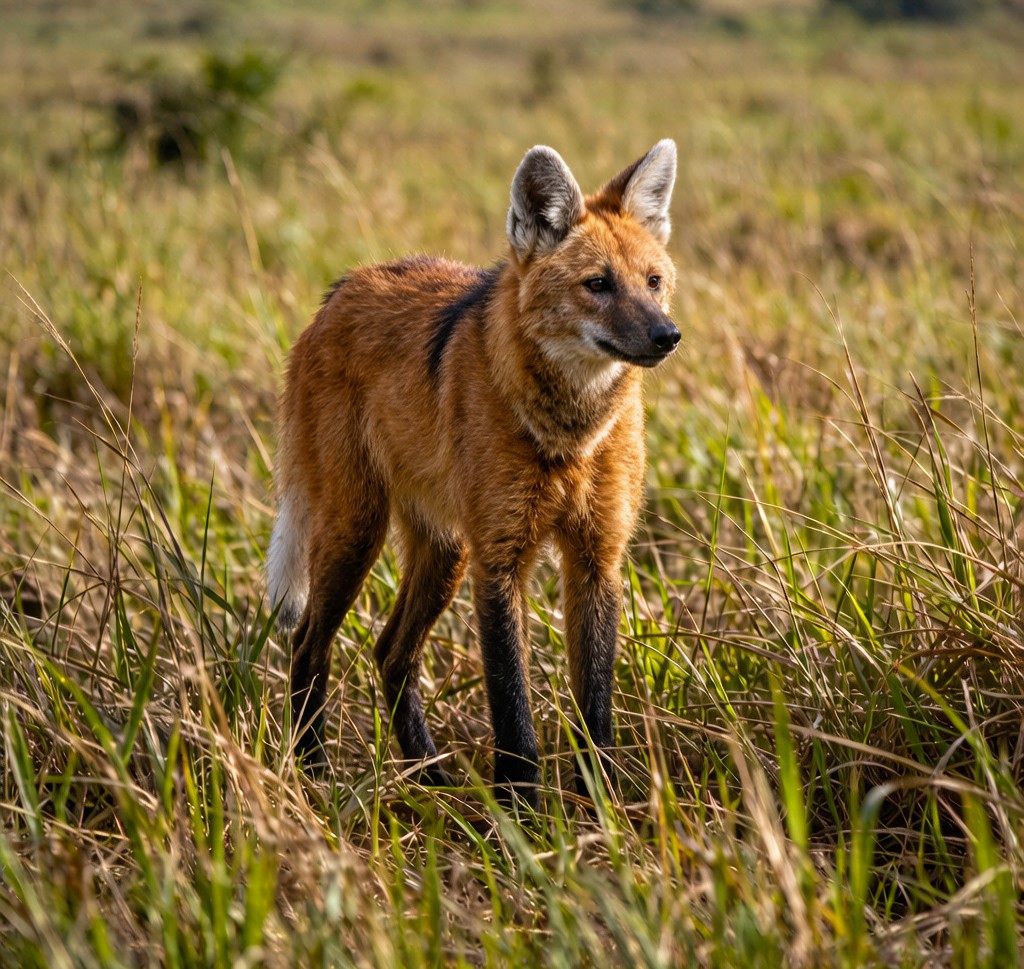
Chrysocyon brachyurus | Maned Wolf
Species Profile · Canidae
Maned Wolf
A canid on black stilts patrols the Brazilian savanna, and it eats more fruit than meat in the dry season.
Near Threatened
Weight
Shoulder
Range
Fruit
Territory
Rating
A fox on black stilts
The canid that looks like no other
A tall canid on thin black legs walks the open grass of central Brazil. People call it a wolf, yet it hunts alone and eats fruit. Its legs are the longest of any canid for its body size. Adults stand about 90 cm at the shoulder and weigh 20 to 30 kg.
That height keeps the head above the grass. Fewer than 20,000 remain in the wild. Numbers keep falling as the cerrado is cleared for soy and cattle. One early writer called it a fox on stilts.
The name fits, though the animal is neither fox nor wolf. Nothing else in South America looks quite like it, because no other canid there grows legs of this length.
One genus, no close cousin
Where it sits in the dog family
Chrysocyon brachyurus is the only living member of its genus. Genetic work puts it on an old South American branch of the dog family. Its nearest kin died out long ago, so no close cousin survives.
The Gray Wolf sits on a different line that spread north. Both share a name and little else. Early naturalists grouped it with foxes because of the narrow face and the short jaw.
Skull shape and tooth rows later moved it away from that group. No subspecies is recognised today, although early writers named several. The species has stood alone for roughly two million years, which is long enough to lose every close relative.
Legs, mane and huge ears
How to tell one at a glance
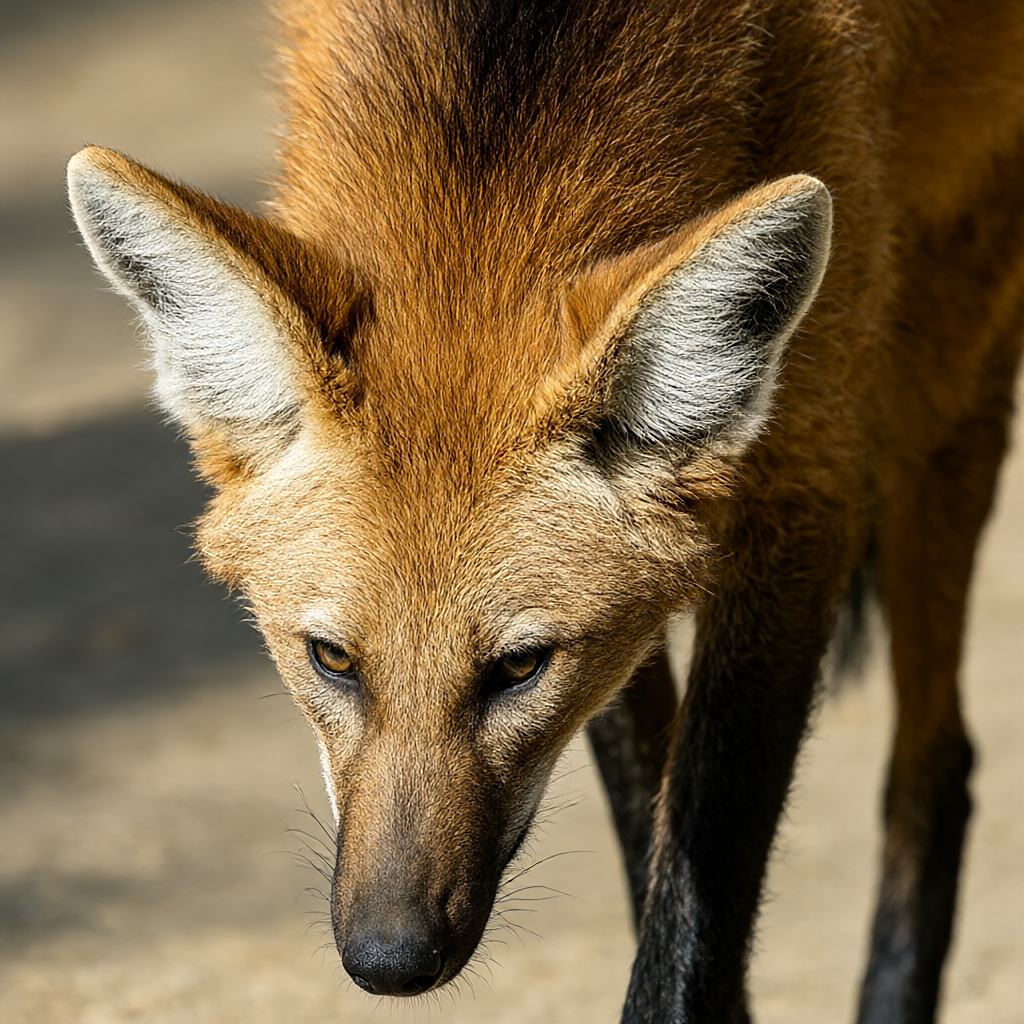
Full grown adults weigh 20 to 30 kg. Shoulder height reaches about 90 cm. Long black hair covers the legs, and the body stays rust red. The mane runs along the neck and shoulders as a strip of erect black fur.
Raised hair makes the animal look larger when a threat appears. Those black legs carry almost no fat at all, which helps the animal shed heat on very hot days. Large ears stand upright, because sound carries far across open grass at night. Ears that wide also dump heat, and the animal uses them the way a desert fox does.
A narrow muzzle and small teeth suit a mixed diet of fruit and small prey. Males and females look much alike in the field, though males run slightly heavier. On cold nights the thick coat holds heat, while the long legs lose it fast.
1
2
3
Tall grass and river strips
The cerrado it cannot leave
Open grassland, scrub and river woodland hold the species across central South America. Brazil holds most of the range. Smaller groups still live in Paraguay, Bolivia and northern Argentina. The cerrado once covered about 2 million square km.
Yet more than half of it has gone to soy fields and pasture. Each adult needs 30 to 80 square km. Patches that small cannot hold a breeding pair once roads cut them apart. Grass that stays tall through the wet months gives cover for the night hunt, and the animal needs that cover badly.
The Giant Anteater shares the same grassland and suffers the same squeeze. Fires sweep the dry grass each year, yet the roots survive and green up again.
Wolf apple and small prey
What it eats
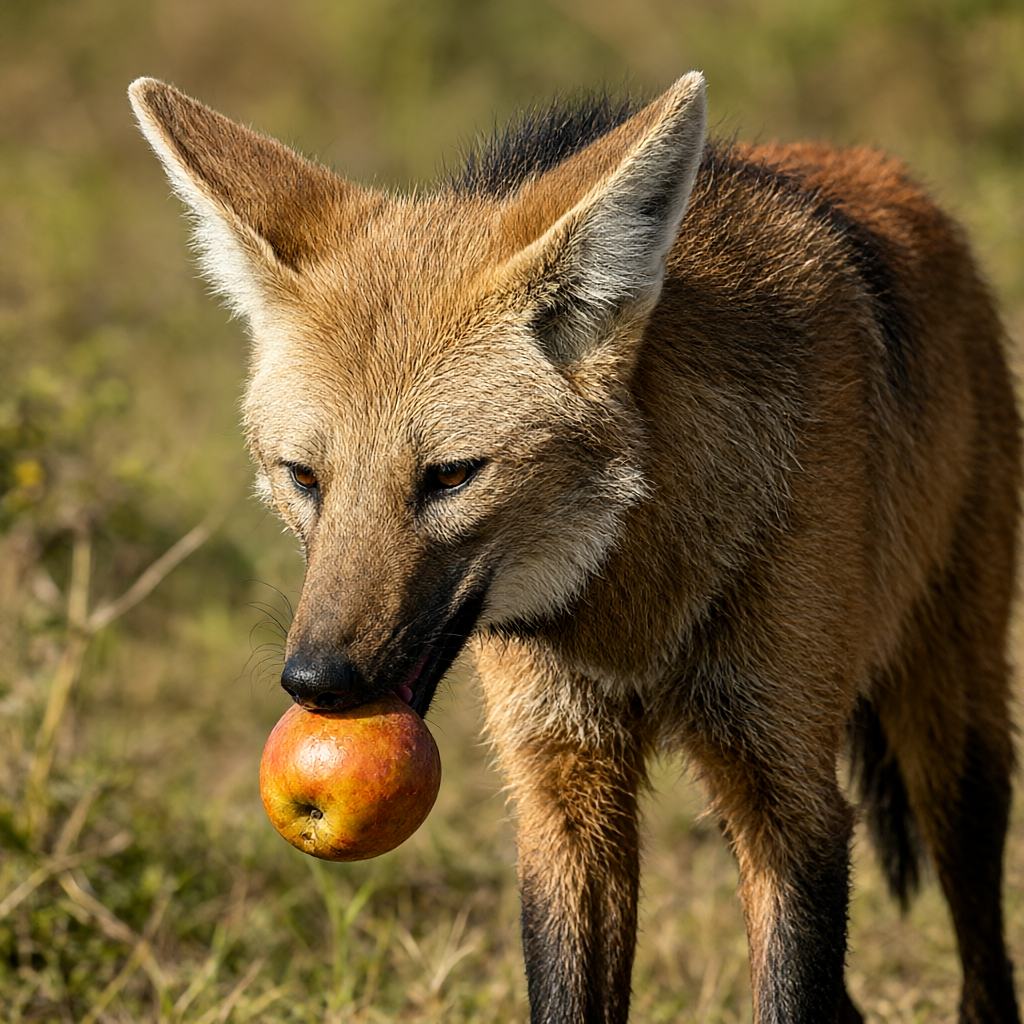
Fruit makes up a large part of the diet, which is odd for a canid this size. In the dry season fruit can reach half of the food taken by weight. The lobeira, or wolf apple, matters most. Its seeds pass through the gut intact and sprout in new ground.
Rodents, rabbits, birds, lizards and fish fill out the rest, while fruit stays the staple. Hunting happens at night and alone, with a hard pounce. Long legs let the animal scan the grass tops while it walks. Unlike a pack hunter, it rarely takes prey bigger than a rabbit.
Because the jaw is weak for its size, the animal cannot break big bones the way a northern wolf does. Pouncing ends with both front feet coming down together, and that weight pins a rodent before it can bolt. Farmers lose chickens to it, and that loss costs the species dearly.
A bellow in the dark
The breeding cycle
Solitary adults meet only to breed. Low bellows carry about a kilometre across the open grass. Pairs stay together through the season and share the rearing. Pregnancy lasts about 65 days.
Litters run from 2 to 5 pups. Pups are born in a den with eyes shut and legs already dark. A female picks a dense patch of grass for the den, and she moves the pups if something disturbs them. Both parents bring food, and the male guards the den mouth.
Young stay about a year, but most then scatter into empty ground. Few pups reach adulthood, because roads and dogs press on every side.
Fewer than 20,000 left
Conservation and status
Assessors now place the species at Near Threatened. Habitat loss drives the fall, since the cerrado is being converted faster than any other Brazilian biome. Vehicles kill many animals on roads that cross the remaining grass. Farmers shoot adults that take poultry.
Domestic dogs carry disease into the fragments, and inbreeding weakens what survives. Parks protect core areas, and fencing along the busiest roads cuts the toll. Zoos hold a managed captive group, so that the line survives a bad year. Corridors between fragments may decide whether the species keeps its range, though nobody knows the size needed.
Researchers now argue that the animal can hold on in farmland, provided natural strips link one fragment to the next. Under 20,000 animals remain, so each lost patch matters more than the last.
Side by side
How It Compares
| Trait | Maned Wolf | Gray Wolf |
|---|---|---|
| Weight | 20-30 kg | 30-50 kg |
| Legs | longest of any canid | shorter, built for snow |
| Diet | fruit and small prey | large hoofed prey |
| Voice | low bellow, never a howl | long rising howl |
| Range | cerrado of South America | northern hemisphere |
| Standing | Near Threatened | Least Concern |
Common misreadings
What People Get Wrong
- Most people assume the animal howls like a northern wolf, yet its throat produces a low bellow. That low call can travel a full kilometre over open grass on still nights.
- Popular accounts treat it as a pack hunter, though it lives and hunts alone. Adults keep territories of 30 to 80 square km and meet mostly in the breeding season.
- Many field guides call it a wolf, yet genetics place it far from Canis. Its closest living relatives sit in a separate South American branch of the dog family.
Going further
Sources and Further Reading
Five things to remember
Quick hits
- Long black legs work like stilts in tall grass.
- Fruit can fill half the stomach in the dry season.
- No other canid has legs this long for its size.
- Its call is a bellow, never a howl.
- A raised mane makes the animal look twice its size.