 By st20113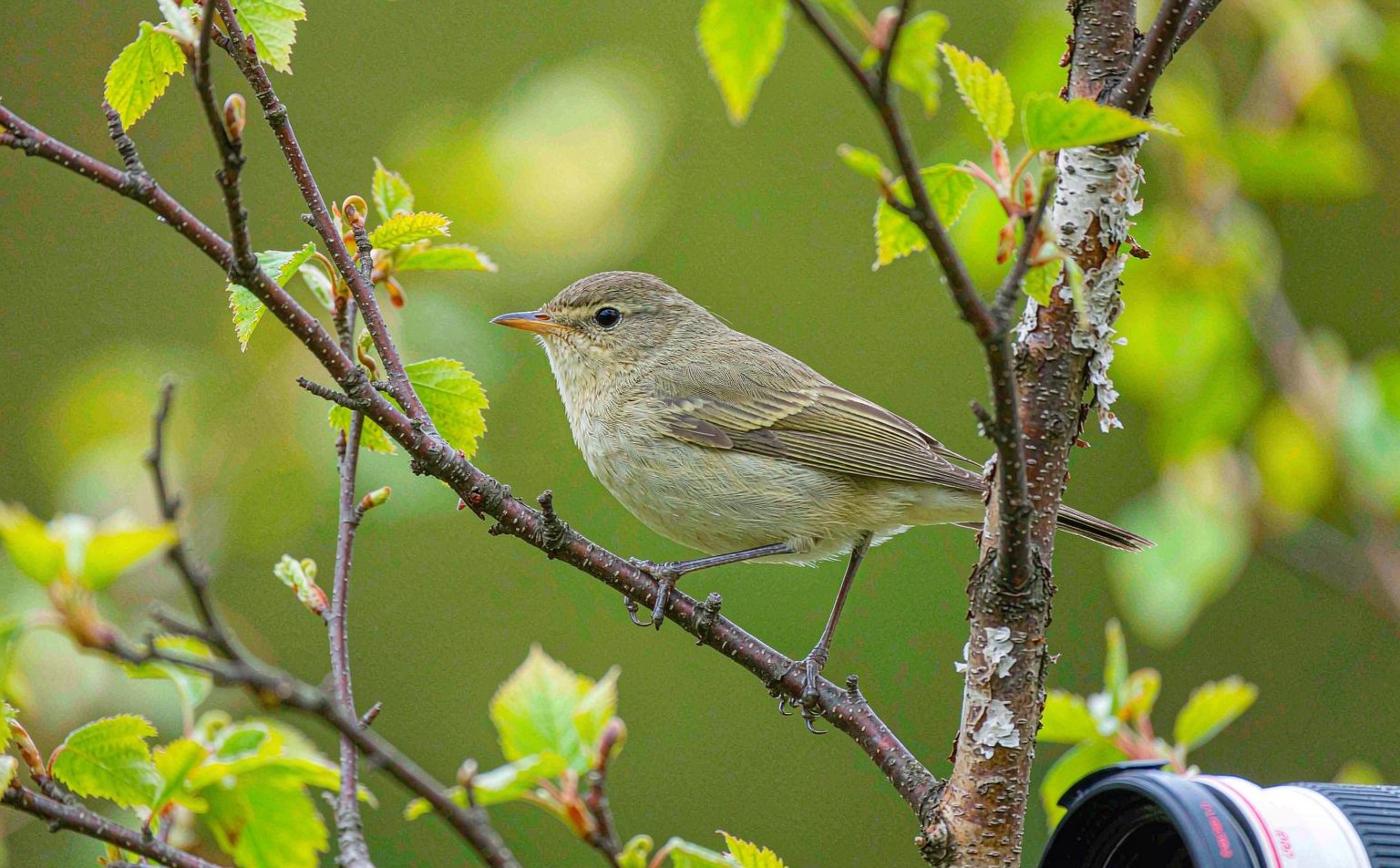
Phylloscopus trochilus | Willow Warbler
Introduction
The Willow Warbler (Phylloscopus trochilus) is one of the most numerous and widespread songbirds of the northern European summer, a tiny leaf-green bird whose descending, silvery song rings from woodlands, hedgerows, and heaths from April onward. Weighing little more than a coin, it undertakes one of the most remarkable migrations of any European bird, travelling each autumn to sub-Saharan Africa and back.
Although outwardly similar to the chiffchaff, the willow warbler is distinguished by its song, its brighter colour, and its habit of building a domed nest on the ground. It is a familiar part of the returning spring, sharing the canopy with other summer visitors such as the Sedge Warbler.
Taxonomy
The Willow Warbler belongs to the genus Phylloscopus, the leaf warblers, within the family Phylloscopidae. It was first described by the Swedish naturalist Carl Linnaeus in 1758 under the binomial Motacilla trochilus, and later moved to Phylloscopus. The genus name combines the Greek for “leaf” and “watch”, a reference to these restless, foliage-gleaning birds, while trochilus is an old name for a small bird.
Within its genus it is closely related to the chiffchaff and the Iberian and Canary Island chiffchaffs, with which it was long confused. The three were only firmly separated by voice and genetics, a reminder that among leaf warblers song is often a more reliable guide than appearance. The willow warbler also belongs to the great assemblage of long-distance migrants that link European woodlands with African savannas.
Physical Characteristics
An adult Willow Warbler measures 11 to 12.5 centimetres in length, with a wingspan of about 16 to 22 centimetres and a weight of just 7 to 11 grams. The upperparts are a soft olive-green, the underparts pale yellow to whitish, and a faint, narrow pale stripe runs above the eye. The bill is small and dark, and the legs are brownish rather than the dark blackish legs of the chiffchaff.
The wings are relatively long, an adaptation to its lengthy migration, and the primary feathers show a slightly rounded tip. Juveniles are brighter yellow below and browner above, but the basic pattern is constant. In the hand, the willow warbler can be told from the chiffchaff by its longer, paler legs and by the shape of a small feather on the wing, but in the field its song is the surest clue.
Despite its delicate build, the bird is a tireless flier, capable of covering thousands of kilometres twice a year between its breeding and wintering grounds.
Habitat
Willow Warblers breed across a broad range of open and semi-open habitats: young deciduous woodland, coppice, heathland with scattered bushes, wet meadows, and the edges of bogs and forests. They favour places with low, dense vegetation for nesting and taller perches for singing, and they are less tied to mature forest than many warblers.
On migration they use almost any green cover, from coastal scrub to gardens, before continuing south. Their wintering grounds lie in the savannas and woodlands of sub-Saharan Africa, where they join mixed flocks of local and other migratory warblers. The species avoids dense mature forest and treeless desert alike, needing the mosaic of low cover and open space typical of early-successional and managed landscapes shared with the Common Blackbird and the Great Tit.
Diet
The Willow Warbler is almost entirely insectivorous, gleaning small caterpillars, flies, aphids, and other invertebrates from leaves and twigs. It moves restlessly through the outer foliage, sometimes hover-gleaning or snatching tiny prey on the wing, and it rarely feeds on the ground.
During migration and on the wintering grounds it supplements insects with small berries and other soft fruits when available, but animal prey remains the core of its diet. The abundance of caterpillars in spring and early summer is critical for raising chicks, and a cold, late spring that delays leaf emergence can severely reduce breeding success. Like other canopy gleaners, it plays a useful role in controlling defoliating insects in woodlands.
Reproduction
The Willow Warbler builds a domed, ball-shaped nest on or near the ground, woven from grass, moss, and leaves and lined with fine material, with a side entrance. This ground-nesting habit separates it from the chiffchaff, which nests off the ground in a more open cup. The female lays five to seven white eggs speckled with red, and incubates them alone for about 12 to 14 days.
Both parents feed the chicks, which fledge at roughly 13 to 15 days and become independent soon after. Because the nest is on the ground, it is vulnerable to trampling, mowing, and predation by mammals and snakes, but the large clutch and the parents’ discretion help offset losses. After breeding, the adults and then the young depart on the long southward migration, with the Barn Swallow making the same journey a little later in the season.
Conservation
The Willow Warbler is classified as a species of Least Concern by the International Union for Conservation of Nature, with a very large population across the northern Palearctic. In some western European regions numbers have fallen as mature and scrub habitats have been lost or over-managed, but overall the species remains abundant.
Threats include the loss of early-successional woodland, intensive forestry, and changes on the African wintering grounds that affect survival away from the nest. Because it depends on insects, declines in invertebrate abundance could pose future risks. Conservation that maintains a variety of woodland ages and connected scrub habitats benefits the willow warbler alongside many other migrant songbirds.
Fun Facts
- The willow warbler weighs about the same as a teaspoon of sugar yet flies to Africa and back every year.
- Its song is a long, gently falling cascade of notes, quite different from the sharp “chiff-chaff” of its close relative.
- Unlike the chiffchaff, the willow warbler builds a roofed, spherical nest on the ground.
- The species was only reliably separated from the chiffchaff by its voice and genetics, not by its looks.
- Willow warblers moults completely before migration, replacing every feather to withstand the long journey.
[…] the leaf warblers, a large group of small, insect-eating songbirds. It is a close relative of the Willow Warbler, which looks almost identical but sings a descending, rippling song instead. The two were once […]
[…] contextual comparison, Cetti’s Warbler shares habitat preferences with the Willow Warbler (Phylloscopus trochilus), though the two species occupy different microhabitats within the same general area. The Willow […]