 By st20113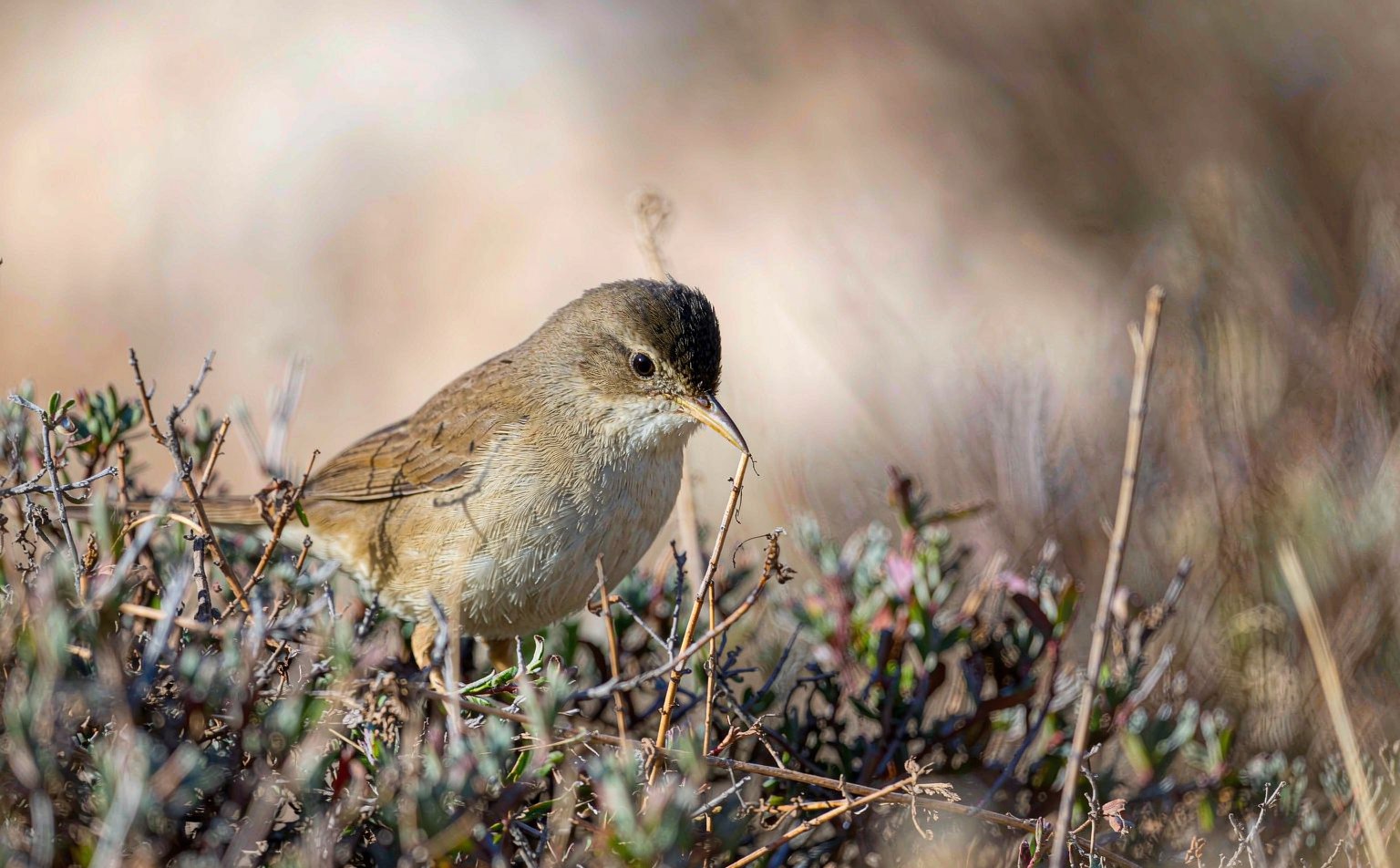
Cettia cetti | Cetti’s Warbler
Introduction
Cetti’s Warbler (Cettia cetti) is a small, plump warbler belonging to the family Cettiidae, a group of passerine birds that were recently separated from the traditional warbler assemblage based on molecular phylogenetic studies. Measuring approximately 12–14 cm in length with a wingspan of 18–22 cm, Cetti’s Warbler is one of the most distinctive warblers in Europe, easily recognized by its powerful, loud, and explosive song that can be heard from dawn until dusk throughout the breeding season. The bird’s appearance is generally unremarkable—dull brown upperparts and pale buff underparts—but its vocal performance has made it one of the most celebrated songsters in the European avifauna.
The species is strongly associated with dense, impervious thickets and scrub along waterways, where it spends the majority of its life concealed within the impenetrable vegetation. Cetti’s Warbler is notoriously difficult to observe, and most encounters are limited to auditory detection of the male’s distinctive song, which has been described as a loud, accelerating series of notes that culminates in a raucous rattle. The bird’s secretive habits and preference for dense cover have earned it the nickname “the warbler that sings but cannot be seen.”
Cetti’s Warbler has undergone a remarkable expansion across Europe over the past century, spreading from its original range in southern and eastern Europe to establish breeding populations across the United Kingdom, Ireland, and much of western and northern Europe. This expansion has been facilitated by the bird’s adaptability to a range of scrub and thicket habitats, as well as its ability to exploit human-modified landscapes such as railway embankments, road verges, and garden scrub. The species is now one of the most common warblers in many parts of Europe, though it remains elusive due to its secretive habits.
Taxonomy
Cetti’s Warbler was first described by the Italian naturalist Tommaso Salvadori in 1869, who named the species after Italian military officer and naturalist Roberto Cetti. The bird was originally placed in the genus Sylvia, but molecular phylogenetic studies in the early 21st century revealed that it belongs to a distinct lineage that warrants recognition as a separate family, Cettiidae. The family Cettiidae now includes Cetti’s Warbler and its closest relatives, the bush warblers and superciliated warblers, which are found across Asia and Africa.
The genus Cettia is monotypic, containing only Cetti’s Warbler. The species is recognized as a single, cohesive unit with no subspecies currently accepted by major taxonomic authorities. Molecular studies have confirmed that Cetti’s Warbler is most closely related to the Yellow-browed Warbler (Phylloscopus inornatus) and other leaf warblers, though the phylogenetic relationships within this group remain incompletely resolved.
For contextual comparison, Cetti’s Warbler shares habitat preferences with the Willow Warbler (Phylloscopus trochilus), though the two species occupy different microhabitats within the same general area. The Willow Warbler prefers woodland edges and young forest, while Cetti’s Warbler favors dense, impenetrable scrub and thicket along waterways. The two species can be distinguished by their songs, with the Willow Warbler delivering a sweet, warbling phrase compared to Cetti’s Warbler’s explosive and raucous performance.
Physical Characteristics
Cetti’s Warbler is a compact, plump warbler with a relatively long tail and a stout bill. The plumage is uniformly dull brown above, fading to a warmer buff on the crown, supercilium, and rump. The wings and tail are darker brown, with the tail feathers narrowly edged with buff. The underparts are pale buff to whitish, with a slightly darker throat and breast. A prominent pale supercilium extends from the base of the bill above the eye and merges with the buff crown, giving the bird a distinctive facial pattern.
The head is broadly rounded, and the bill is relatively short, straight, and pointed, with a dusky upper mandible and a paler lower mandible. The lores are dusky, and the eye is dark brown. The legs and feet are fleshy pink to pale brown, strong and well-suited for moving through dense vegetation. The overall appearance is deliberately cryptic, providing effective camouflage among the brown stems and leaves of dense scrub.
In flight, Cetti’s Warbler displays broad, rounded wings and a relatively long tail that is often held cocked upward. The wing feathers show faint buff edging, creating a subtle pale bar across the wing. Juvenile birds are similar to adults but duller and more streaked on the underparts, with less distinct coloration and a more variable pattern of buff and brown. The plumage of juveniles also tends to be softer and less structured than that of adults, reflecting the more downy texture of their first coat.
Measurements of adult Cetti’s Warblers typically include a total length of 120–140 mm, a wing chord of 60–72 mm, a tail length of 50–62 mm, and a bill length of 10–12 mm. Body mass ranges from 8 to 14 grams, with males averaging slightly heavier than females. The bird’s cryptic coloration and secretive behavior make direct observation difficult, and most encounters are limited to auditory detection of the male’s distinctive song.
Habitat
Cetti’s Warbler is associated with dense, impenetrable scrub and thicket along waterways, particularly in areas where willow, alder, blackthorn, and bramble form a dense, continuous cover. The preferred habitat consists of riparian scrub, wet willow carr, and dense thickets along rivers, streams, and canal banks. The vegetation must be sufficiently dense to provide concealment from predators and suitable material for nest construction, and it must be adjacent to open water or damp ground for foraging.
Cetti’s Warbler breeds across a vast range that extends from western and southern Europe across temperate Asia to the Russian Far East. In Europe, the species was originally restricted to southern and eastern Europe, but has undergone a remarkable expansion over the past century to establish breeding populations across the United Kingdom, Ireland, Scandinavia, and much of western and northern Europe. The expansion has been facilitated by the bird’s adaptability to a range of scrub habitats, including human-modified landscapes such as railway embankments, road verges, and garden scrub.
During migration and winter, Cetti’s Warbler undertakes a relatively short journey to southern Europe and North Africa, where it spends the non-breeding season in dense scrub, thicket, and wet woodland across the Mediterranean basin and the Sahel region. The migration route takes birds southward through Europe, with some populations dispersing across North Africa and others reaching as far south as the Sahara Desert. Migration is typically undertaken during the day, with birds exploiting favorable wind conditions to cross desert and semi-desert regions efficiently.
The conservation status of Cetti’s Warbler is generally favorable, reflecting its wide distribution and adaptability to a range of scrub habitats. The species is listed as Least Concern on the IUCN Red List, and populations have increased significantly across Europe due to habitat expansion and favorable conservation measures. However, the species remains dependent on dense scrub habitats, which have declined in some areas due to habitat management and succession to woodland.
Diet
Cetti’s Warbler is an insectivorous species that feeds primarily on insects and other invertebrates during the breeding season. The diet consists of beetles (Coleoptera), flies (Diptera), moths and butterflies (Lepidoptera), grasshoppers and crickets (Orthoptera), spiders (Araneae), and other small invertebrates. The bird forages by gleaning prey from dense vegetation, using its stout bill to probe among leaves, stems, and twigs. Cetti’s Warbler is an active forager, moving rapidly through the dense understorey and often hanging upside down or adopting extreme postures to access prey hidden within foliage.
Foraging behavior in Cetti’s Warbler is characterized by a “glean-and-probe” strategy employed within dense vegetation. The bird moves actively through the scrub, clinging to horizontal and vertical stems and probing among leaves and twigs to capture hidden insects. It often forages low to the ground, within 1 meter of the soil surface, but will also climb higher into the vegetation when pursuing prey. The bird’s strong legs and curved claws are well-adapted for this arboreal foraging mode, allowing it to navigate the complex three-dimensional structure of dense scrub with ease.
Nesting birds have particularly high energy demands, and the parents must capture large quantities of insects to feed themselves and their growing chicks. A nesting pair of Cetti’s Warblers may consume thousands of insects during the breeding season, playing an important role in regulating invertebrate populations within scrub and thicket ecosystems. The bird’s preference for larger, more nutritious prey items such as caterpillars, beetles, and spiders ensures efficient energy transfer through the food web.
During migration and winter, Cetti’s Warbler supplements its insectivorous diet with berries and fruits from scrub and woodland plants. This dietary flexibility allows the species to exploit diverse habitats across its extensive range and adjust to seasonal fluctuations in food availability. The bird’s ability to switch between protein-rich insect prey and energy-dense plant material is a key adaptation that supports its successful colonization of habitats across Europe and North Africa.
Reproduction
Cetti’s Warbler is a solitary nester that establishes breeding territories within dense scrub habitats during spring. Males arrive on breeding grounds in April and May, depending on latitude, and begin singing almost immediately to attract mates and establish territory boundaries. The male’s song is delivered from a concealed perch within the dense vegetation, typically 0.5–2 meters above the ground, and is repeated incessantly throughout the day and into the evening during the breeding season. The song is one of the most powerful and distinctive in the European avifauna, consisting of a loud, accelerating series of notes that culminates in a raucous rattle.
Nest construction is undertaken solely by the female, who builds an intricately woven dome-shaped structure from grass stems, leaves, and rootlets, secured firmly within the dense vegetation of willow, alder, or blackthorn. The nest is typically placed 0.3–1.5 meters above the ground, hidden deep within the impenetrable tangle of branches and leaves where it is well concealed from predators. The interior of the nest is lined with fine grass, hair, feathers, and moss, providing insulation and comfort for the incubating female and subsequent brood.
The typical clutch size is 4–7 eggs, though clutches of 3–9 eggs are not uncommon. The eggs are whitish to pale buff with fine reddish-brown or grey speckles concentrated at the broader end, measuring approximately 15–18 mm in length. Incubation lasts 12–14 days and is undertaken solely by the female, who is fed by the male during this period. The chicks are altricial and naked at hatching, with their eyes closed and dependent on parental care for warmth and food.
Both parents feed the chicks, and the nestling period lasts approximately 11–13 days. After fledging, the young remain dependent on their parents for an additional 1–2 weeks while they learn to forage and navigate the complex scrub environment. Cetti’s Warblers are usually univoltine, producing a single brood per season, though second broods are occasionally recorded in favorable years with abundant food resources. The species typically begins breeding in its second year of life, reaching sexual maturity at approximately 12 months of age.
Conservation
The global population of Cetti’s Warbler is estimated at 25–50 million breeding pairs, making it one of the most abundant warblers in Europe. The species is listed as Least Concern on the IUCN Red List, reflecting its wide distribution and generally increasing population trends across much of its range. Cetti’s Warbler is one of the few European bird species to have undergone significant range expansion over the past century, spreading from its original stronghold in southern and eastern Europe to establish breeding populations across the United Kingdom, Ireland, Scandinavia, and much of western and northern Europe.
The primary factor driving population growth is the availability of suitable scrub habitat, which has increased in many parts of Europe due to changes in land management and the creation of new scrub habitats along railways, roads, and waterways. The bird’s adaptability to human-modified landscapes has facilitated its expansion, as it readily exploits railway embankments, road verges, garden scrub, and other anthropogenic habitats that provide dense cover. This adaptability has also made Cetti’s Warbler one of the most successful colonizers of new territories in Europe.
Conservation efforts for Cetti’s Warbler focus on the protection and management of scrub habitats, particularly along waterways and in riparian zones. In the United Kingdom, organizations such as the Royal Society for the Protection of Birds (RSPB) manage riverine scrub reserves specifically for the benefit of warbler species, employing techniques such as coppicing and scrub management to maintain habitat heterogeneity. Across Europe, Cetti’s Warbler is protected under the European Union Birds Directive, and many suitable habitats are designated as protected areas under the Natura 2000 network.
The continued expansion of Cetti’s Warbler populations is likely to depend on maintaining and creating suitable scrub habitats across Europe. The species’ ability to exploit human-modified landscapes suggests that it may continue to expand its range in the future, particularly in urban and suburban environments where dense garden scrub and roadside verges provide suitable breeding habitat. However, the species remains dependent on dense cover, and habitat loss in key areas could limit further expansion.
Fun Facts
- Cetti’s Warbler’s song is one of the most powerful and distinctive in the European avifauna, consisting of a loud, accelerating series of notes that can be heard from dawn until dusk throughout the breeding season. The song has been described as a “machine-gun rattle” and is easily recognizable to experienced birdwatchers.
- Cetti’s Warbler has undergone one of the most remarkable range expansions of any European bird species over the past century. Originally restricted to southern and eastern Europe, the species has established breeding populations across the United Kingdom, Ireland, Scandinavia, and much of western and northern Europe, often exploiting human-modified habitats such as railway embankments and road verges.
- The nest of Cetti’s Warbler is one of the most intricately constructed dome-shaped nests in the European avifauna. It is typically built within dense, impenetrable scrub and can weigh up to 50 grams when dry, constructed from hundreds of individual grass stems and leaves woven together with remarkable precision.
- Despite its fame as a songster, Cetti’s Warbler is notoriously difficult to observe due to its secretive habits and preference for dense, impenetrable vegetation. Many bird enthusiasts consider it a privilege to spot one, as the bird often remains hidden within the thicket even when singing loudly.
- Cetti’s Warbler is named after Roberto Cetti, an Italian military officer and naturalist who first collected the species in the 18th century. The bird was described by Tommaso Salvadori in 1869, who honored Cetti’s contribution to natural history by giving the species its current name.