 By Iris
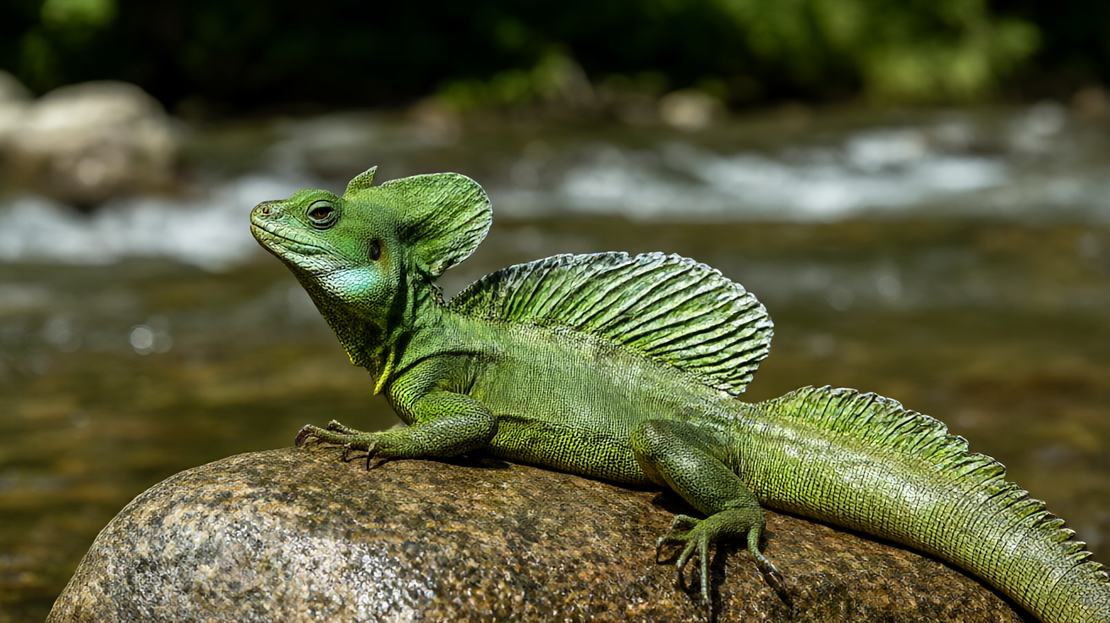
Hydrosaurus amboinensis | Sail-fin Lizard
Species Profile · Agamidae
Sail-fin Lizard
A lizard sits on a branch above a river with a tall fin along its tail.
Least Concern
Length
Sail
Weight
Clutch
Range
Rating
The Sail-fin Lizard
A sail above the water
A lizard sits on a branch above a river with a tall fin along its tail. The fin looks like a sail. It is skin, held up by a row of spines.
Sail-fin lizards grow larger than most of their relatives, and old males reach a metre in total length. They live on islands of eastern Indonesia and New Guinea. Because it dives at the first sign of danger, a watcher usually sees a splash and nothing more.
Family tree
Agamidae, dragons with a sail
Its proper name is Hydrosaurus amboinensis, one of a handful of sail-fin lizards. Agamidae is the family, the dragon lizards. A Common Wall Lizard belongs to a different family altogether, though it shares the same basic body plan at a fraction of the size.
A Green Iguana carries a crest along its back, and that crest serves a similar purpose in display. Both use height and posture to settle arguments before anything escalates.
A fin of skin and spine
How to tell one
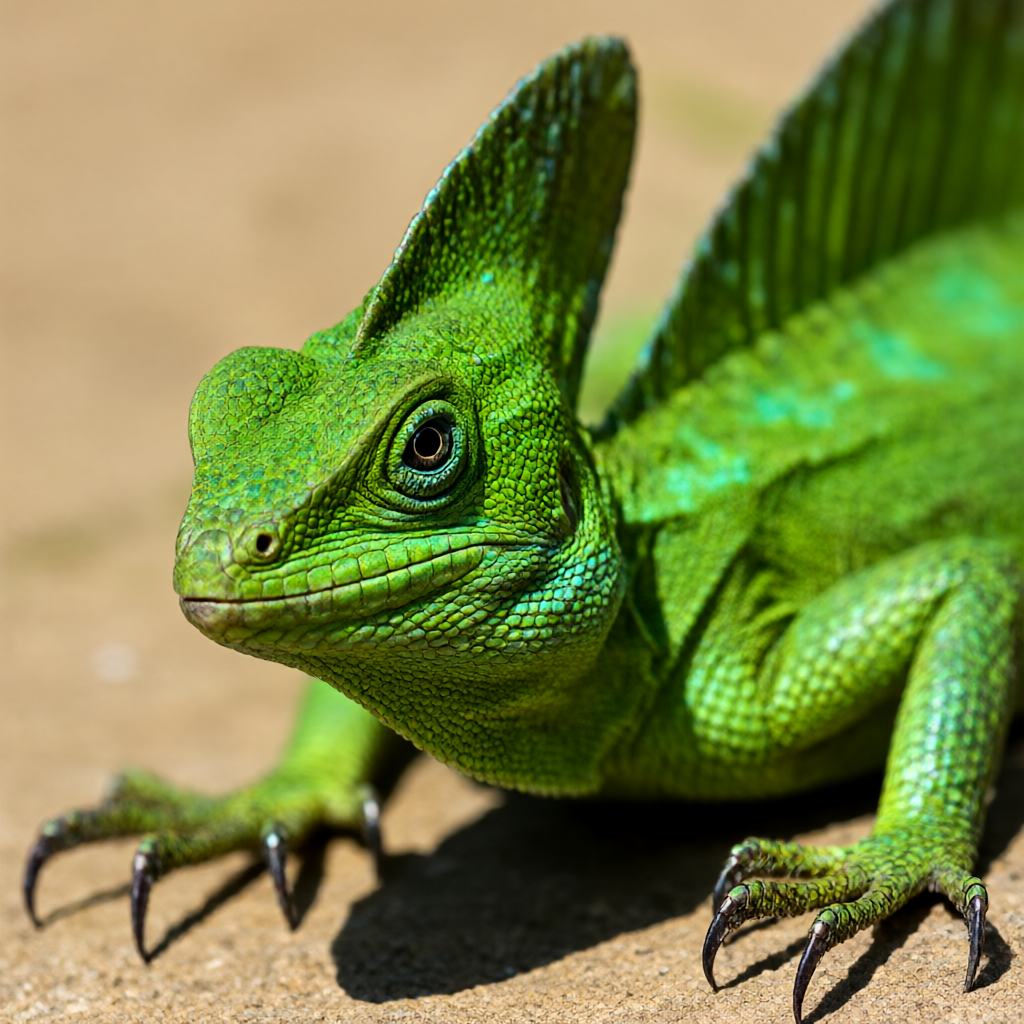
Total length reaches 120 cm in large males, and most of that is tail. Females stay smaller and carry a shorter fin. The sail rises along the front half of the tail, and it grows taller with age.
Body colour runs grey-brown with darker bands, and the sail often shows a warmer tone. Because the sail sits high above the water, a swimming lizard still shows a sliver of colour at the surface. Its legs are long and strong, and the toes carry curved claws.
The head is blunt and short. The eyes sit high.
1
2
3
Banks with deep water
Where it lives
Riverbanks and forest streams on Sulawesi, the Moluccas and New Guinea hold the species. Warm lowland water still suits it best. Because it needs both a perch and deep water below, it keeps to stretches with branches above them.
It also uses roadside ditches and farm ponds. Trees near the bank provide basking sites. Cover matters most.
Fruit and insects
What it eats
Plant material makes up much of the diet. Fruit, leaves and flowers come first. Insects, snails and small vertebrates add protein. Because it eats almost anything, it does well near people.
A feeding lizard may stay in one tree for an hour. Juveniles take far more insects than adults do. Fruit goes first.
Eight to fourteen eggs
The breeding cycle
A female digs a hole in soft soil and lays a clutch of eggs. Eight to fourteen eggs go into the hole. Because the nest sits in warm ground, incubation takes about two months.
The female leaves after covering the hole, and she takes no further interest. Hatchlings look like small adults. They head for water within minutes.
Least Concern
Conservation
Red List status is Least Concern. Its range covers several islands and a wide stretch of New Guinea. Because it tolerates disturbed ground, it lives on in farmland and villages.
The pet trade takes them from some islands, though numbers remain high. Habitat loss along rivers matters locally, since a cleared bank offers no basking site.
Side by side
How It Compares
| Trait | Sail-fin Lizard | Common Wall Lizard |
|---|---|---|
| Family | Agamidae | Lacertidae |
| Length | up to 120 cm | about 20 cm |
| Tail fin | tall sail | none |
| Habit | semi-aquatic | rock climber |
| Diet | fruit, leaves, insects | insects |
| Rating | Least Concern | Least Concern |
Common misreadings
What People Get Wrong
- Not a dinosaur, whatever the profile suggests. The sail is skin. Spines hold the fin upright along the front of the tail, and nothing about the structure connects it to any extinct reptile.
- Not a fish eater by habit. Plants carry most of the diet. Fruit and leaves make up the bulk, and insects and small prey appear as a supplement rather than as a staple.
- Not a lizard that stands and fights. Water ends most disputes. It drops from its perch at the first approach and stays under long enough that a pursuer gives up.
Going further
Sources and Further Reading
Quick hits
Five things to remember
- The sail is skin stretched over spines, and it can fold slightly when it swims.
- A sail-fin lizard can run across the surface for a short distance before it sinks.
- Old males carry the tallest sails, and the height grows with age.
- It dives rather than fights, and it stays under for a long time.
- Its tail, though, makes up more than half of its total length.
[…] arctos | Brown Bear Canis lupus | Grey Wolf Lepus europaeus | European Hare Dama dama | Fallow Deer Triturus cristatus | Common Newt […]
[…] Lynx lynx | Eurasian Lynx Martes martes | European Pine Marten Ursus arctos | Brown Bear Canis lupus | Grey Wolf Lepus europaeus | European Hare Dama dama | Fallow Deer Triturus cristatus | Common Newt […]
[…] hunting success rate, which far exceeds that of lions and other large predators. Unlike the Grey Wolf, which is known for its pack cooperation, the African wild dog takes social hunting to an even more […]
[…] populations of native herbivores. Despite its name, this species was more closely related to the Grey Wolf than to true wolves, representing an isolated branch of the canid family tree that evolved in […]