 By Iris
Rupicola rupicola | Guianan Cock-of-the-rock
Species Profile · Cotingidae
Guianan Cock-of-the-rock
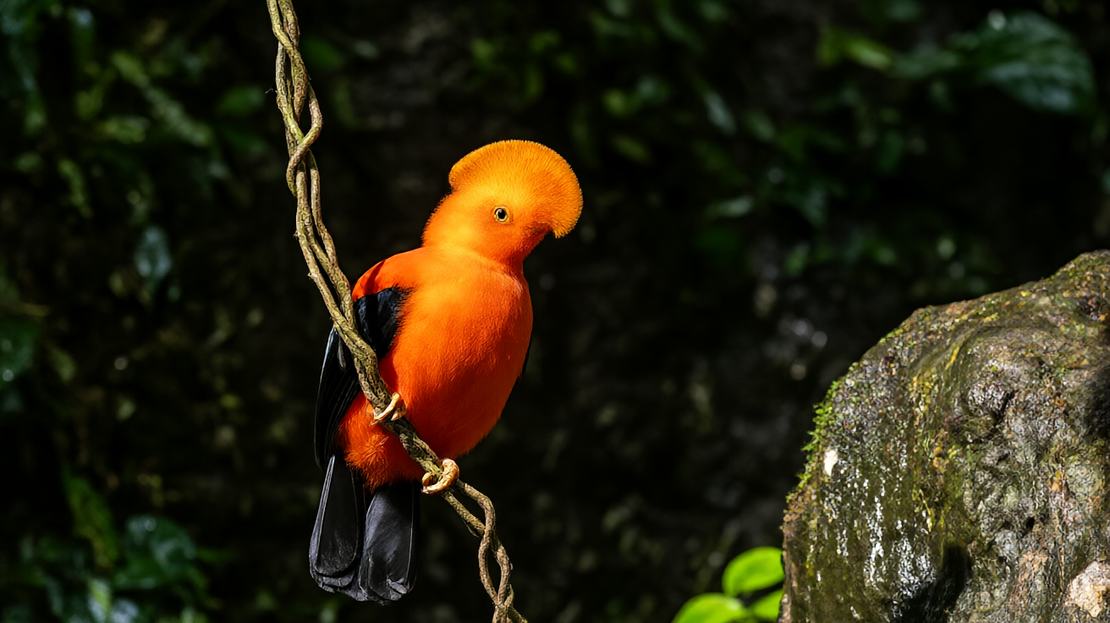
An orange bird displays on a thin liana, and the crest spreads across its whole head.
Least Concern
Length
Weight
Crest
Eggs
Lek
Rating
The Guianan Cock-of-the-rock
A bird built for display
An orange bird sits on a liana above a forest stream. A crest spreads over the head and reaches the bill. Nothing else in the forest carries that colour.
Males gather at a display ground and call in turns. Because the orange comes from feather structure rather than pigment, it shifts with the light. Females sit dull brown nearby, and they watch the display without a sound.
Family tree
Cotingidae, the cotinga family
Its proper name is Rupicola rupicola, the Guianan cock of the rock. The family holds the cotingas, and most of them live in South America. A Raggiana Bird of Paradise displays at a lek in New Guinea, and both males gather to be judged by females. Because the two families split long ago, the shared habit arose twice rather than once.
Males of both families clear a patch of forest floor, and each one calls from the same perch until a female arrives. Two species are named in the genus, and the other lives in the Andes. Early writers put the bird with the manakins, which later work moved apart.
Crest, colour and bill
How to tell one
Adults reach 30 cm from bill to tail tip. Males weigh about 280 g, and females run lighter. Plumage covers the body in orange, and the wings and tail stay black.
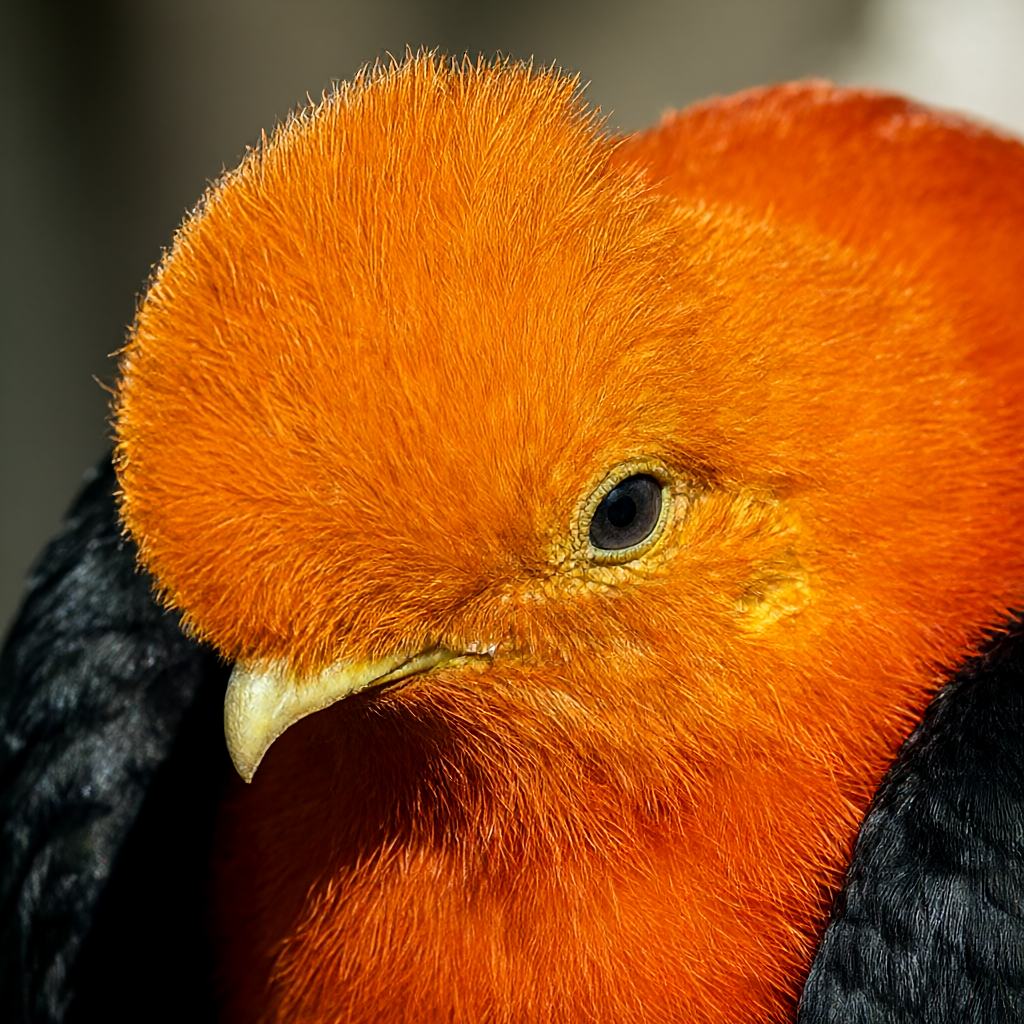
The crest rises from the crown, and it hides the bill from the front. Because the wing feathers stay stiff, they whistle when the bird flies. Females carry brown plumage, and faint bars cross the breast.
Its eyes sit large and dark, and they show against the orange. Legs stay short and strong, and they grip a thin stem.
1
2
3
Rock and rainforest
Where it lives
Rain forest near rock outcrops holds the species. Guyana, Suriname and French Guiana make up most of the range. Its display needs dark understory, and the bird avoids open canopy. Because the nest sits on rock, a river gorge draws birds in.
Pairs keep to a small area, and they return to the same ground each year. Because the display ground sits in deep shade, a treefall that opens the canopy makes the site useless within a season. An Emerald Toucanet feeds in the same forest, and both birds take fruit from the mid storey.
Fruit, mostly
What it eats
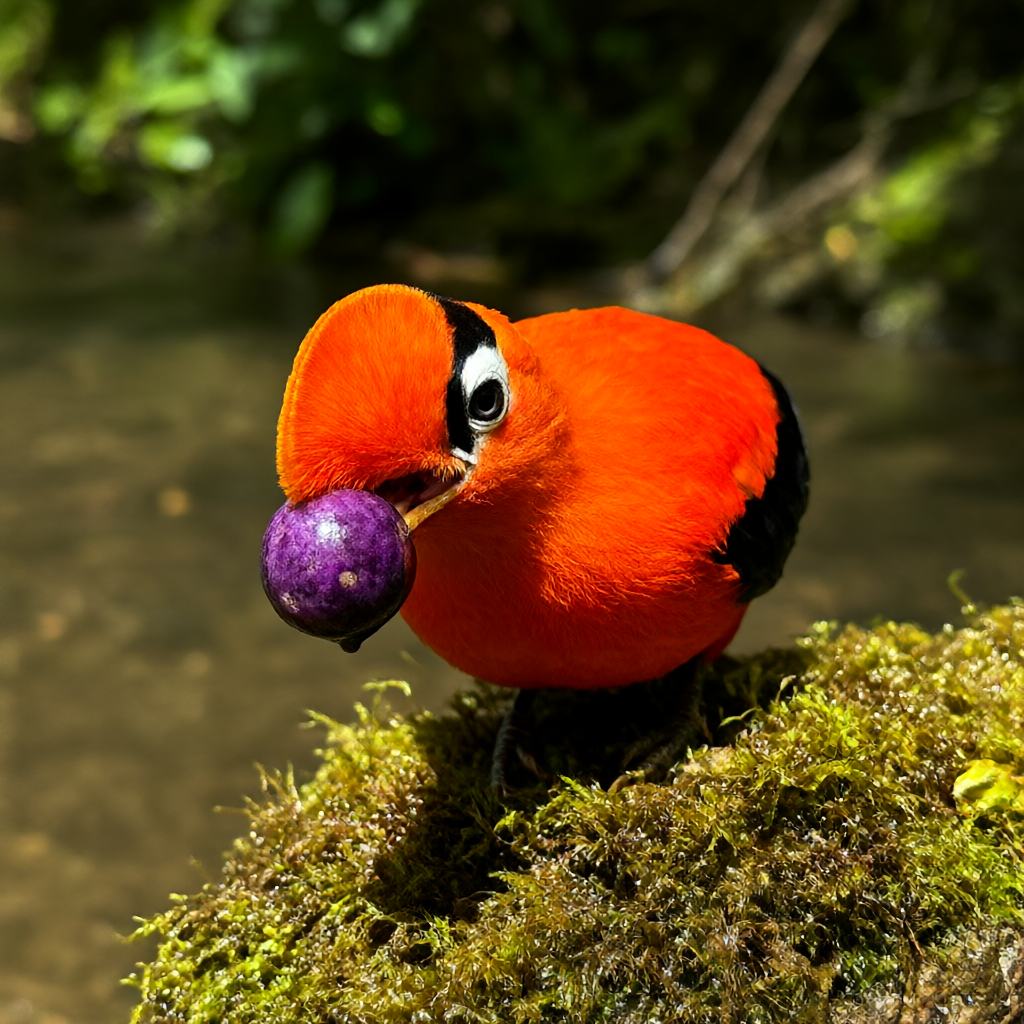
Fruit makes up most of the food. It takes berries and drupes, and it swallows them whole. Insects matter for the young, and they supply the protein that fruit lacks.
Because the bird feeds in the understory, it rarely joins mixed flocks. Fruiting bushes draw birds from across the territory. It never drinks, since the fruit carries enough water.
She builds alone
The breeding cycle
Males gather at a lek and display in turns. Each male holds a small cleared court, and he calls from a low perch. Females visit, then leave without a sign.
Because the female builds alone, the male takes no part after mating. A nest of mud and plant fibre sits on a rock face, and water keeps it damp. Two eggs hatch after about a month, and the chicks stay for weeks, because the nest needs guarding.
Intact forest matters
Conservation
The Red List calls the species Least Concern. Forest clearance takes the understory that display grounds need. Because the bird needs dark forest, a logging road opens the canopy and ends the lek. Gold mining pollutes the streams below the nest cliffs.
A pair needs a rock face above running water, and because few gorges offer both, the bird never spreads far from a river. Nothing suggests a rapid fall across the range. Protected areas hold stable groups, and tourism brings income to some sites.
Side by side
How It Compares
| Trait | Guianan Cock-of-the-rock | Raggiana Bird of Paradise |
|---|---|---|
| Family | Cotingidae | Paradisaeidae |
| Length | 30 cm | 34 cm |
| Range | the Guiana Shield | New Guinea |
| Display | a lek near the ground | a lek in the canopy |
| Plumage | orange with a fan crest | orange with flank plumes |
| Rating | Least Concern | Least Concern |
Common misreadings
What People Get Wrong
- Not a bird of paradise. Two families sit far apart. The cock-of-the-rock belongs with the cotingas of South America, while the birds of paradise form a family of their own across New Guinea and its islands.
- Not a canopy bird. Display happens low. A male keeps a cleared court near the ground, and because the forest floor stays dark the orange crest shows against wet rock rather than sky.
- Not a pair bond. Males leave after mating. The female builds the nest alone on a damp rock face, and because water keeps the mud together the site needs a stream or a seep nearby.
Going further
Sources and Further Reading
Quick hits
Five things to remember
- It is bright orange.
- Males gather at leks.
- Females are plain brown.
- Its nest sits on rock.
- Its wings whistle in flight.
[…] of the rich European bat fauna, it shares the night sky with a variety of relatives, including the Daubenton’s bat and the northern bat, each exploiting a slightly different slice of the same aerial hunting […]
[…] greater horseshoe bat is the largest species in Europe. A close relative is Daubenton’s Bat, a much smaller European bat. That species belongs to a different family, the vesper bats. It has a […]
[…] ears, the teeth and the wing bones tell them apart. Natterer’s bat is a close relative of the Daubenton’s bat, a species that skims the water. The two share a genus, a body size and much of Europe. They often […]