 By Iris
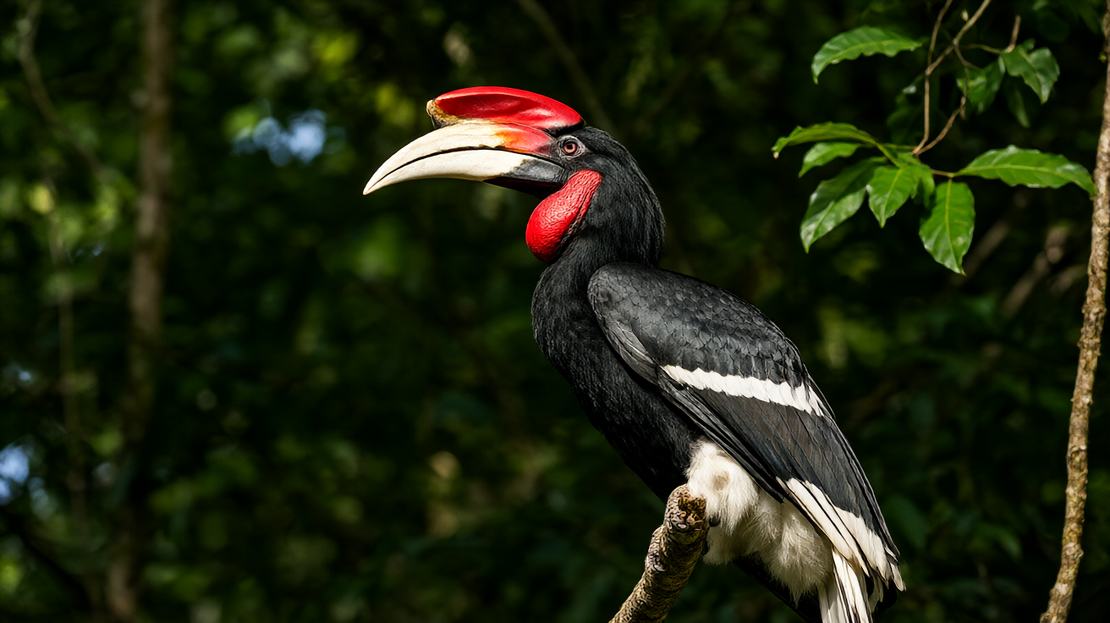
Rhinoplax vigil | Helmeted Hornbill
Species Profile · Bucerotidae
Helmeted Hornbill
A huge black and white bird lands on a high branch, and a solid red casque sits over its bill.
Critically Endangered
Length
Weight
Casque
Tail
Chick
Rating
The Helmeted Hornbill
The hornbill with a helmet of bone
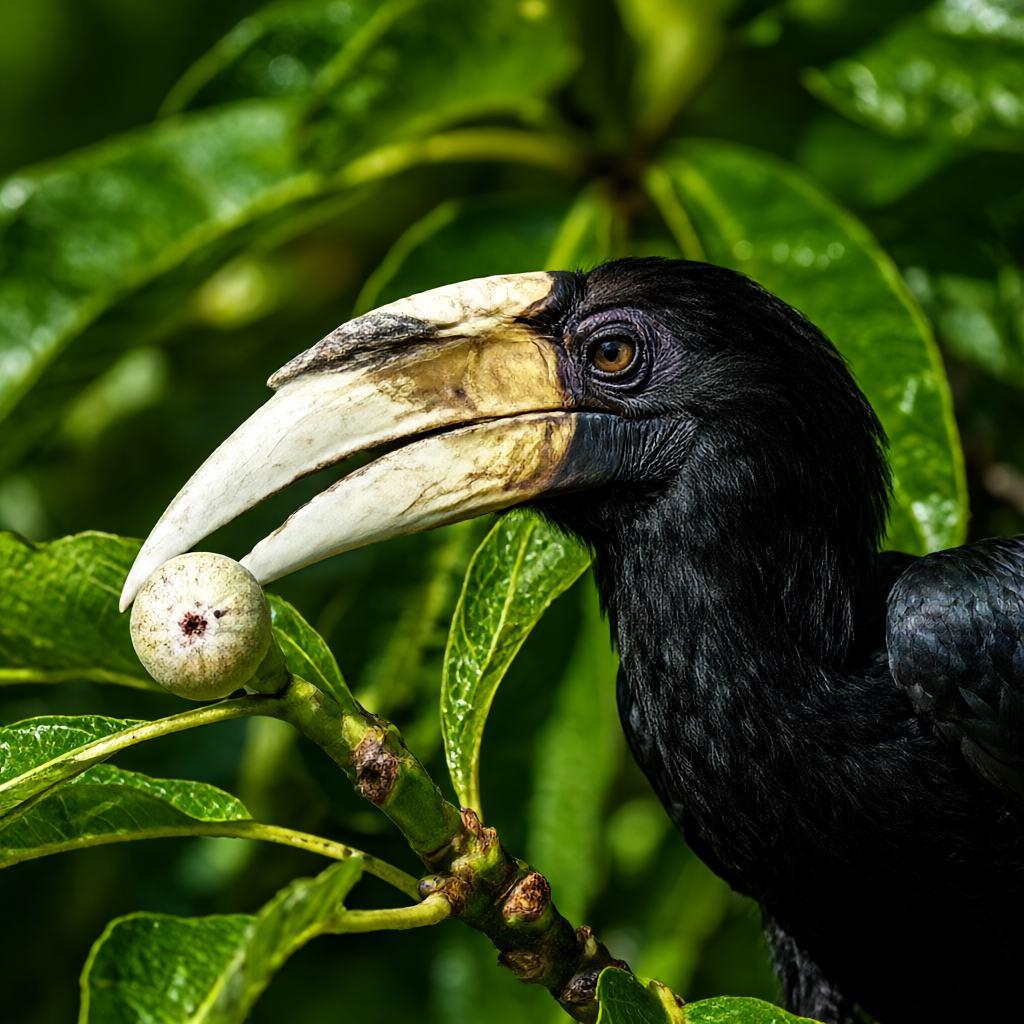
A huge black and white bird lands on a fruiting fig and calls with a laugh that carries a kilometre. Its casque runs solid throughout. It weighs more than the skull beneath, and it shields the head.
That block of keratin gave the species its value, and the value now threatens it. No other hornbill carries a casque this heavy. Two long tail feathers hang well past the body.
When two males meet above the canopy, they knock casques for minutes at a time, and one of them eventually drops. Because the bird needs tall forest, logging removes it faster than hunting does.
Family tree
Bucerotidae, the large forest hornbills
Its proper name is Rhinoplax vigil, the only member of its genus. Hornbills split into two groups, and this species sits with the large forest forms. A Great Hornbill carries a casque that stays hollow, and that difference in weight explains the price.
Because the casque works as a shield in flight, two males collide head to head above the canopy. Its family holds about sixty species, and most of them live in Africa. Early writers placed it with the ground hornbills, which later work rejected.
Casque, throat and tail
How to tell one
Adults reach 110 cm from bill to tail tip. Weight falls between 2.5 and 3 kg, though a large male tops 3 kg. Its casque covers the top of the bill.
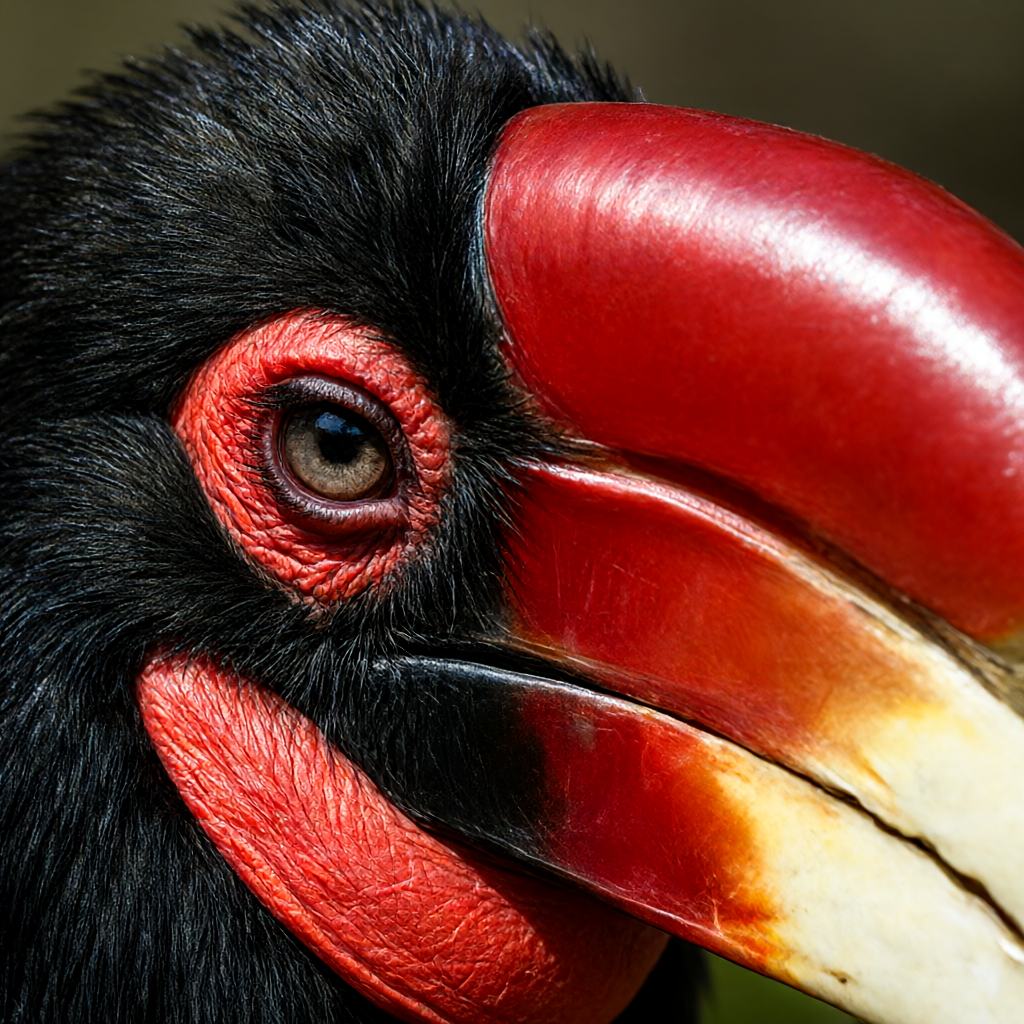
It turns red toward the front, and old birds show the wear. Bare skin covers the throat, and it wrinkles with age, so that old birds look scarred. Central tail feathers reach 50 cm beyond the rest.
Because the wings beat with a heavy whoosh, a flying bird is heard before it is seen. Plumage runs black over the body, and white bars cross the wings and tail. Females carry a shorter casque, and theirs stays free of red.
1
2
3
Tall lowland forest
Where it lives
Lowland rain forest holds the species across the Malay Peninsula. Sumatra and Borneo carry the strongest groups, though neither island holds many. Tall trees supply both fruit and nest holes.
It feeds high in the canopy, so a logged forest loses it at once. Pairs keep a territory through the year, and they defend it with the call. Ridge tops matter, since the bird crosses between valleys there.
Figs, and animals
What it eats
Figs make up most of the food. Other fruit gets taken as well. It hunts small animals when fruit runs short, and it robs nests too.
Its casque strikes prey, and a hornbill can kill a squirrel in the air. A fruiting tree draws several birds, and they feed in the same crown. Because the bird needs a wide circuit of fruiting trees, a forest that loses its figs loses the hornbill within a season.
Fruit goes down whole, and the seed drops later. Its feeding range covers a wide circuit, and the route changes with the fruiting season.
Sealed in for months
The breeding cycle
A pair nests in a hole high in a tall tree. The female seals herself in with mud and droppings, and she leaves a narrow slit. Because the male feeds her through the slit, the pair stays bound through the season.
One chick leaves the nest after about four months. Males bring fruit and insects, and they work without rest. Rates stay low, and a pair may nest every other year.
The female stays inside the hole until the chick can fly. Because she depends on the male, a lost partner ends the brood.
Carved for its casque
Conservation
The Red List calls the species Critically Endangered. Poachers shoot birds for the casque, and the trade runs from Borneo into China. Because the solid keratin carves like ivory, buyers pay more for it than for elephant tusk.
Forest loss takes the tall trees that hold nest holes. Nothing suggests the fall has slowed, since the trade continues. Protected forest holds the remaining groups, and patrols now watch the known nesting trees.
Side by side
How It Compares
| Trait | Helmeted Hornbill | Great Hornbill |
|---|---|---|
| Casque | solid bone | hollow and light |
| Length | 110 cm | 95-130 cm |
| Weight | 2.5-3 kg | 2-4 kg |
| Tail | 50 cm central feathers | white with a black band |
| Status | Critically Endangered | Vulnerable |
| Use | carved like ivory | no trade in the casque |
Common misreadings
What People Get Wrong
- Not a hollow casque. This one is solid to the core. The casque of a helmeted hornbill is bone throughout, which makes it the only hornbill worth carving, and that single fact drives the whole trade.
- Not a fruit eater only. Hunting happens too. Figs make up much of the diet, though the hornbill takes insects, frogs and small animals, and it will rob a nest when the chance comes.
- Not safe in a reserve. Buyers reach inside protected forest. A single casque sells for more than a month of farm work, and because the forest is hard to patrol the killing goes on inside reserves.
Going further
Sources and Further Reading
Quick hits
Five things to remember
- Its casque is solid keratin.
- Two males collide in mid air.
- Its call carries a kilometre.
- The female seals the nest.
- Its tail feathers run 50 cm long.