 By st20113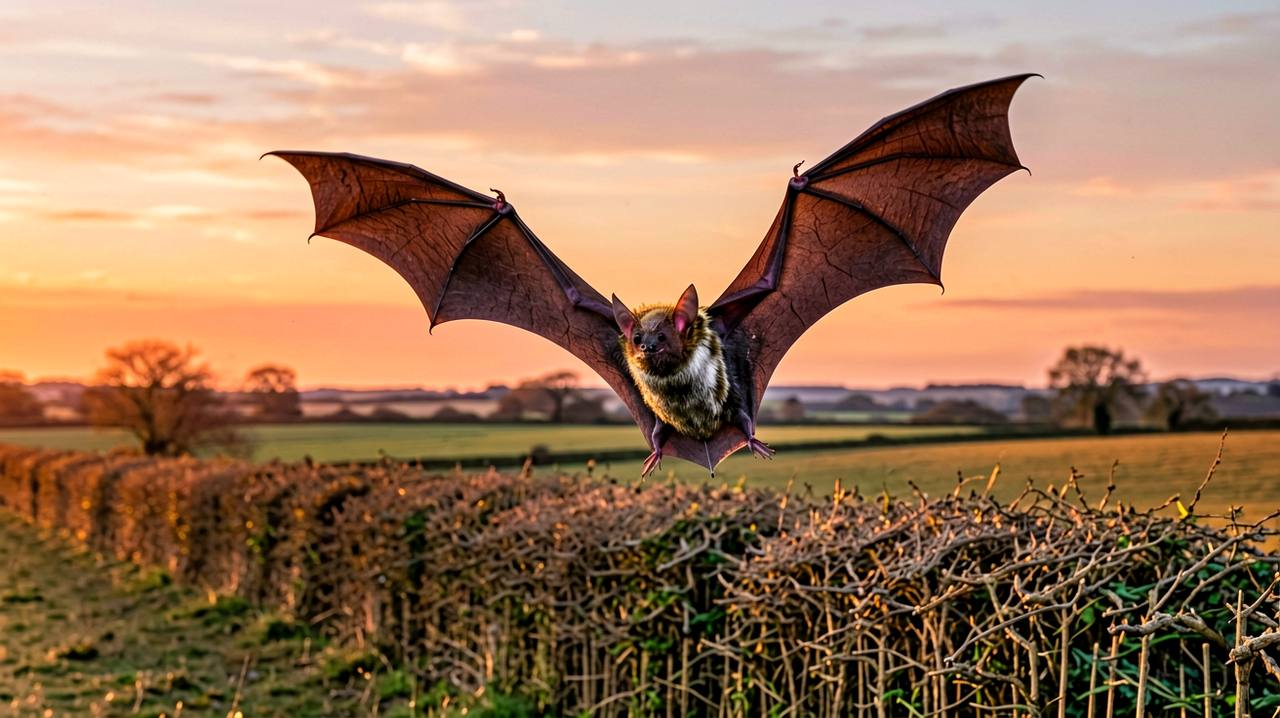
Rhinolophus ferrumequinum | Greater Horseshoe Bat
Species Profile · Rhinolophidae
Greater Horseshoe Bat
A big European bat that calls through its nose and can live for thirty years.
IUCN: Least Concern
Range
Weight
Wingspan
Life
Status
A bat with a horseshoe
Sound shaped by the nose
The greater horseshoe bat is one of the largest horseshoe bats in Europe. It is named for the odd flap of skin around its nose. That flap is shaped like a horseshoe. It is not just decoration. It helps the bat focus the sound it uses to find its way. The bat sends out a steady, high call through its nostrils.
The call is far too high for people to hear. It bounces off objects and returns as an echo. From that echo the bat builds a picture of the dark. A greater horseshoe bat weighs about 17 to 34 grams. Its wingspan reaches roughly 35 to 40 centimetres. Its fur is grey-brown on top and paler underneath.
The animal can live a very long time. Some individuals have reached 30 years old. That is remarkable for such a small mammal. It hunts big beetles and moths at dusk. It spends the winter deep in caves and mines.
Family tree
Cousins in the dark
The greater horseshoe bat sits in the genus Rhinolophus. It belongs to the family Rhinolophidae, the horseshoe bats. The family takes its name from the nose-leaf shared by all its members. Horseshoe bats are found across Europe, Africa, Asia, and Australia. Around 100 species are known.
The greater horseshoe bat is the largest species in Europe. A close relative is Daubenton’s Bat, a much smaller European bat. That species belongs to a different family, the vesper bats. It has a plain nose and no horseshoe. It hunts low over water instead of around trees.
Both bats share one skill, though. Each uses echolocation to hunt in the dark. The greater horseshoe bat is also related to the lesser horseshoe bat. The lesser species is only half its size. The two sometimes share the same cave in winter.
Nose-leaf and broad wings
Built for careful flight
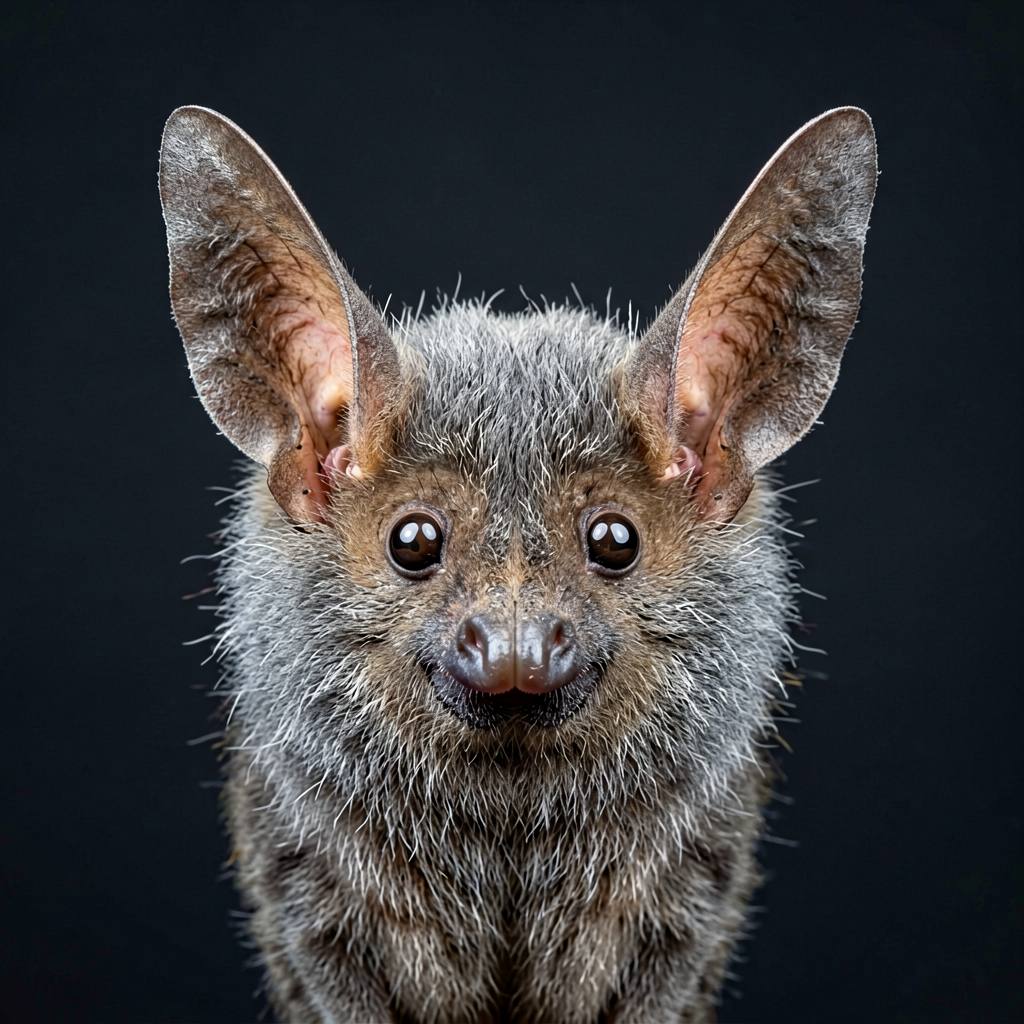
The greater horseshoe bat has broad wings and a sturdy body. Its ears are large and pointed. They do not join across the top of the head. Its fur is soft and long. The upper parts are grey-brown, sometimes with a reddish tinge. The underside is much paler.
Its most striking feature is the nose-leaf. The lower part is shaped like a horseshoe. Above it sits a pointed, spear-like ridge. The bat uses the whole structure like a megaphone. It shapes the beam of sound the bat sends out. That makes its echolocation very precise.
Females are slightly larger than males. Its wings are wide, which suits slow, agile flight. It is not built for speed. Instead, it can twist and turn among branches. It often snatches prey straight off leaves. Its teeth are sharp and strong, made for crunching beetle shells.
1
2
3
Caves and old roofs
Warm roosts, cold winters
This bat lives in warm, varied countryside. It needs trees, hedges, and open pasture. Old buildings and caves are vital too. In summer, females gather in warm roofs and attics. These maternity roosts must stay hot for the pups. Males often roost alone or in small groups. They use caves, cellars, and old tunnels.
In winter the whole population moves underground. Caves and mines give the steady cold the bats need. They hang in clusters to save heat. The species is found across southern and central Europe. Its range stretches into North Africa and across Asia to Japan. It is rare in northern Europe and has vanished from some countries. In Britain it survives mainly in the south-west.
The bats travel many kilometres from roost to hunting ground. They follow lines of trees and hedges as they fly. Some roosts have been used for more than a hundred years. Generation after generation returns to the same cave. That loyalty makes the species easy to count. It also makes it easy to lose, because a single disaster can wipe out a whole colony.
What it eats
Big beetles at dusk
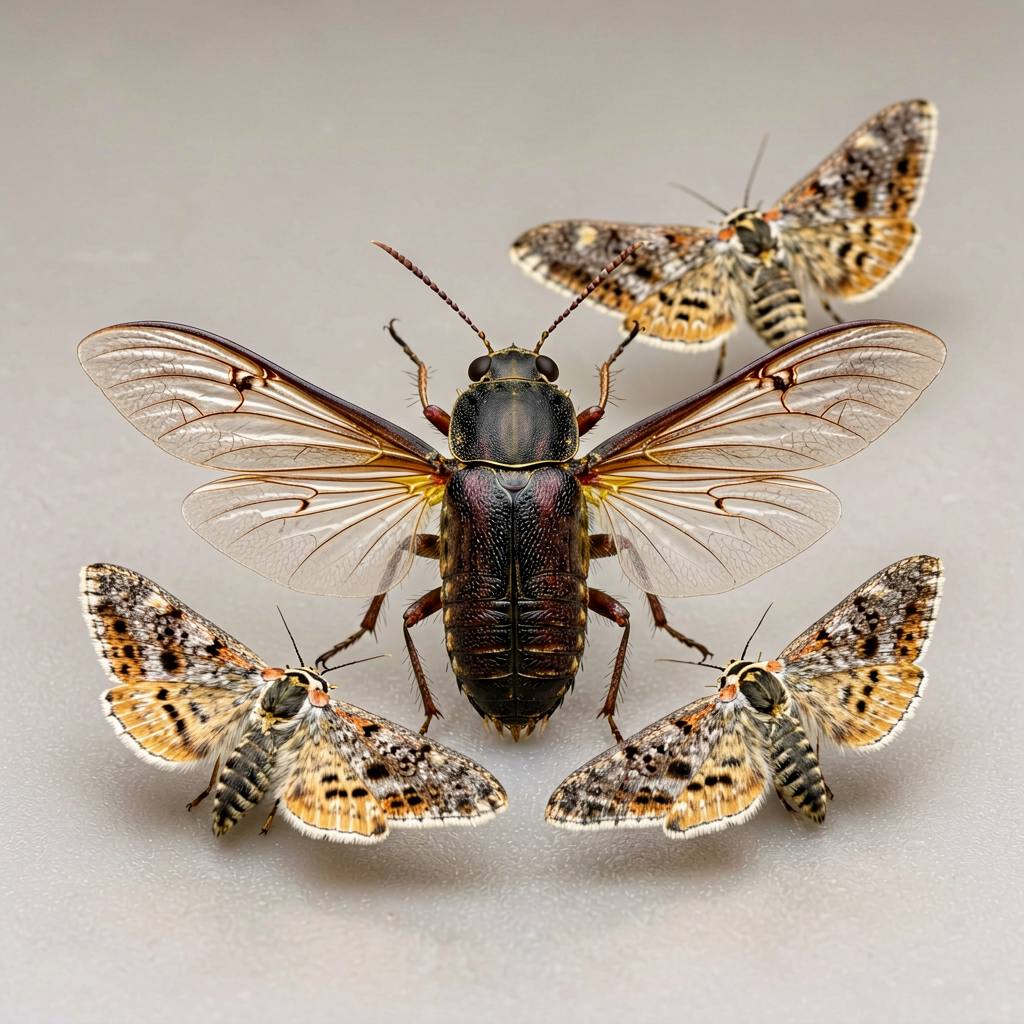
The greater horseshoe bat eats large insects. Its favourite prey are beetles. Cockchafers, also called May bugs, are a special treat. Dung beetles and chafers are taken as well. It also eats moths and crane flies. It hunts at dusk and again before dawn.
It flies low and slowly among trees. When it finds an insect, it may chase it in the air. Often it takes prey straight from a leaf. Some items are grabbed off the ground. It then carries the food to a perch to eat it. There it drops the hard wing cases and legs.
These leftovers collect under favourite feeding spots. Scientists use them to work out what the bats eat. The species needs large insects, so it needs rich pasture. Cattle dung supports the beetles it depends on. Its echolocation is tuned to pick out fluttering wings.
One pup a year
Late breeding, long life
Greater horseshoe bats breed in autumn. Mating often happens at the winter roost. The females store sperm until spring. Only then does fertilisation take place. In summer the females gather in maternity colonies. These may hold dozens or even hundreds of bats.
Each female gives birth to a single pup. Birth usually happens in June or July. The pup is blind and naked at first. It clings to its mother for warmth. She leaves it in the roost while she hunts. On her return she finds it by its call and its smell.
The pup learns to fly at about three weeks old. It starts hunting on its own soon after. Females do not breed until they are two or three years old. A female may raise only one pup a year. That slow rate makes the species fragile.
Slow to recover
Lost roosts and lost insects
The greater horseshoe bat is rated Least Concern worldwide. In Europe, however, it has suffered badly. Numbers fell sharply during the twentieth century. The bats vanished from several countries. Several pressures caused the decline. Renovation of old buildings destroyed many roosts. Repair work also disturbed colonies. Pesticides killed the beetles the bats eat. Intensive farming removed hedges and pasture.
Underground sites were disturbed by visitors. Disturbance in winter can wake bats and burn their fat. That can kill them before spring. The species is now protected across Europe. Many roosts have guards and fences. Farmers are paid to keep cattle grazing. Warmer summers may help the species spread north again. Yet recovery is slow because it breeds so late. Modern bat workers use new tools to help.
They count bats leaving roosts at dusk with hand-held counters. They also listen for calls with ultrasonic detectors. Small radio tags show where the animals feed at night. Those studies revealed that the bats travel far from their roosts. Some fly more than ten kilometres to reach good pasture. Protecting only the roost is therefore not enough. The surrounding countryside must stay rich in insects. That means keeping old hedges, rough grass, and grazing cattle.
Quick hits
Five things to remember
- It hunts by sending sound through its nose, focused by a horseshoe-shaped nose-leaf.
- Its resting call is a steady tone around 83 kilohertz, far above human hearing.
- It can live for 30 years, one of the longest lives of any small bat.
- Females store sperm through the winter and only fertilise in spring.
- It often carries a beetle to a favourite perch and drops the wing cases below.